This series, originally intended to focus on the US midterm elections, has veered into international politics because, without a doubt, the ripples of our choices here are keenly felt across the world stage. The last couple times I’ve been in Japan, it’s been during election season, and as much as I want to unplug and avoid conversations about US politics while I’m on vacation, it seems to be all anybody wants to talk about. Exhausting though it can be sometimes, it’s also unsurprising that people want to hear an American’s perspective about what’s happening in Washington DC. What did surprise me was how much it came up in conversations at the conference I attended ten days after the “blue tsunami” hit the US. [1]
Attendees and moderators kept asking speakers and panelists how the elections would impact a “Free and Open Indo-Pacific” (FOIP) – the topic of the forum – but ambassadors and political experts were quick to deflect that question by stating that the US midterms were an internal matter and wouldn’t play a large role in impacting foreign policy. From my understanding, that is largely true, with the executive branch typically having more of a hand in foreign policy, though the legislative branch may now be more likely to serve as a check against the executive branch in the coming two years.
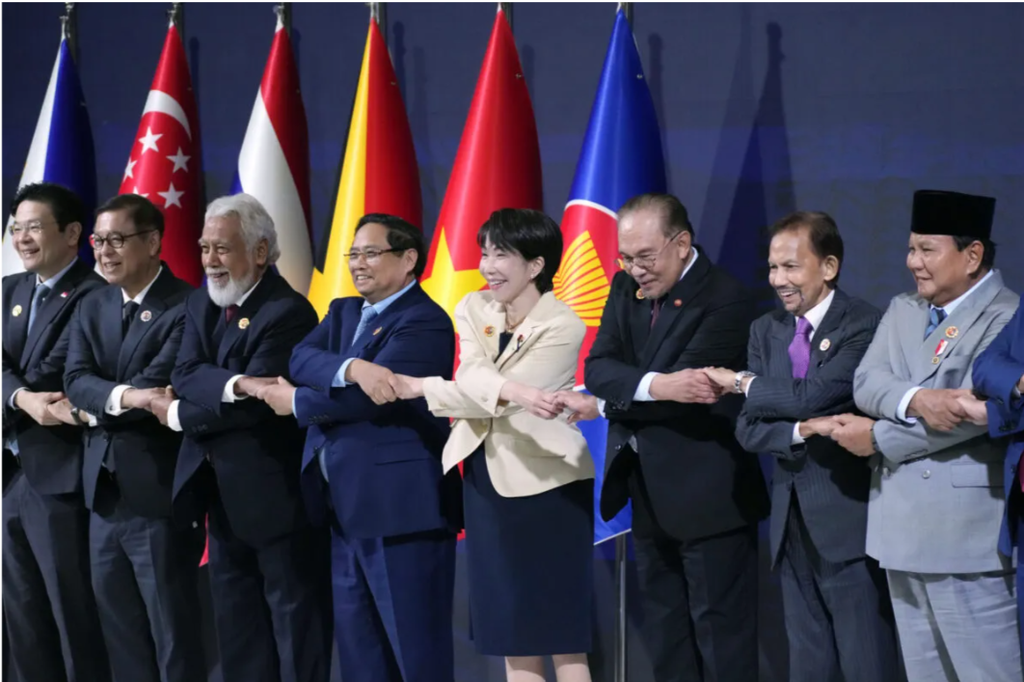
Image credit: [2]
But it’s clear that US power and policy play a significant role across the globe, and it’s usually only when I am abroad, chatting with friends from other countries about their perspectives, experiences, and concerns, that I understand how truly privileged I am to be an American and how much influence my country has on the world stage. For example, as I was being introduced to this concept of FOIP in a strategic discussion group, I asked a pretty straightforward question: whether it is possible to have a free and open Indo-Pacific without US involvement. And I got a pretty straightforward answer: no.
American Influence
The concept of FOIP was first introduced by Japanese Prime Minister Shinzo Abe in 2016, with the goal of making the Indo-Pacific region a “free and fair international community, free from force and intimidation.” [3] Japan, the US, India, and Australia were instrumental in bringing forth this framework, which supports rule of law and peaceful settlement of disputes, economic prosperity through infrastructure investment and protection of intellectual property, and a commitment to peace and stability through functions such as maritime law enforcement and humanitarian assistance. [4]
As I mentioned in last week’s post, [5] there was one major political and economic force not present for the discussion and barely mentioned by name. That isn’t to say that FOIP is an anti-China framework, but there is a clear desire to ensure that other countries in the region (particularly those that are small in population or economic influence) have the ability to operate freely and fairly, without any one large country dominating the playing field or dictating the terms of engagement. And for that reason, proponents of FOIP become increasingly nervous when Trump gets increasingly friendly with Xi.
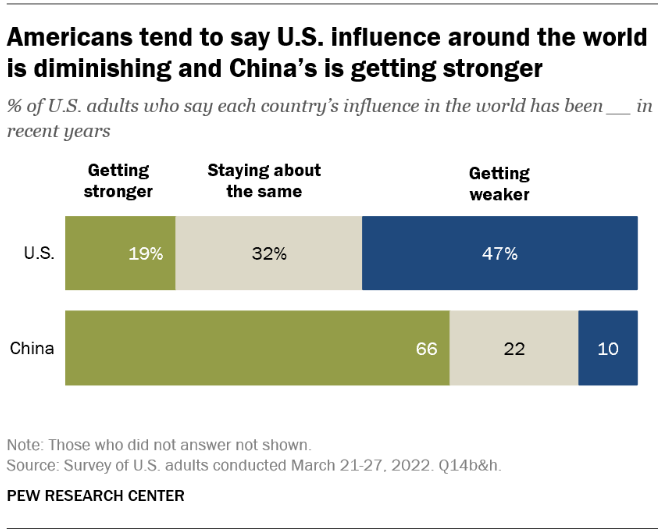
Image credit: [6]
These ideas reminded me of what I heard Boris Johnson say just weeks earlier: that there are more people in the world who want a strong United States than those who don’t. He also said that the United States is looking particularly weak in the world right now, especially given our reluctance to stand up to authoritarian leaders. (Note: he mentioned Putin by name in that context, not Xi, though he saw neither Russia nor China as a legitimate long-term threat to US or global interests.) Boris was surprisingly optimistic, I thought, though I at least tend to agree that “the worst will not happen,” and that we will have political and economic freedom, “provided we want it.”
As a politician (and a good one at that – don’t let his mannerisms fool you), it used to be Boris’ job to make his audience feel a certain way, whether that was based on facts or his opinion. And I would say that he certainly made us feel hopeful about the likelihood of democracies to outlast autocracies, provided we can overcome our human inclinations to cede our own power to a small few at the top. It is harder, certainly, to stay involved in a representative democracy when you’re burned out on politics or tired of fighting what feels like a neverending uphill battle. But as Pete Buttigieg had stressed just two weeks prior, now is not the time to check out.
A Great Divide?
Like Boris’ speech, Pete’s was similarly hopeful and optimistic, though tinged with some doses of caution and realism. As I mentioned in last week’s post, both were surprisingly grounded in history and the importance of using times of social and political upheaval as lessons for where we are now and how we proceed forward. Pete specifically noted that for those of us who are upset about how things stand at the moment, we can’t try to go back to “normal” because “normal” wasn’t working for everybody. The choice, he explained, shouldn’t be between the current chaos and the previous status quo; we need to be building a third option, a better option, informed by what worked, what didn’t, and what we need to do differently.
One of the biggest points he stressed was the role that news media and social media have played in making us think that we have less in common than we do. He explained that a majority of Americans agree on things such as higher minimum wage, better health care access and affordability, a secure border paired with legal immigration, background checks for guns, getting money out of politics, and getting rid of partisan gerrymandering. But – and I’ve said as much before in my own posts – we are unlikely to realize how much we have in common with each other if we’re reluctant to have civil, curious conversations with each other or – even better – to work together to overcome a common obstacle.

Image credit: [7]
Reflecting on his time as an intelligence officer in the Navy Reserves, he said that the other men in his group didn’t care about his politics or his sexual orientation; they cared about whether he read the briefing on the mission and had the intel to keep them safe. As he said, “you can form trust in a hurry if you’re doing something hard and important.” But with the level of media fragmentation we have today and the flattening of complex issues into superficial sound bites, it is extremely easy to assume we have little to no common ground with those on the other side of an issue (or an aisle), and that there is nothing we can hope to do together.
That concept is objectively not true. Just five years ago, the Bipartisan Infrastructure Bill was passed, addressing significant issues affecting people across the political spectrum, including roads, rails, internet, water systems, public transit, and electricity grid modernization. How was it passed, you ask? Through persistence, Pete explained: by continuing to highlight perennial pain points in the existing system that affected people, regardless of party, and by laying out opportunities to address those pain points and explaining how they would benefit people, regardless of party. It’s important to remember that in our recent memory, politicians from opposing parties came together and created a bipartisan plan to alleviate non-partisan issues – and we can do it again if we’re willing to try.
And that’s where we’ll pick up next week – with a look at who has the power to make changes and what strength means in different contexts. Again, please feel free to leave your thoughts below – and proceed with curiosity, not judgment, as we’re all here to learn.
Thanks for reading!
[2] https://eastasiaforum.org/2026/09/18/linking-interests-in-a-free-and-open-indo-pacific/
[3] https://japanupclose.web-japan.org/policy/p20230825_1.html
[4] https://modeldiplomat.com/learn/glossary/free-and-open-indo-pacific
[5] https://radicalmoderate.online/song-of-democracy-part-1/
0 Comments