Disclaimer: this post contains spoilers for “9 to 5” – if you haven’t already seen it, you really should. For Dolly.
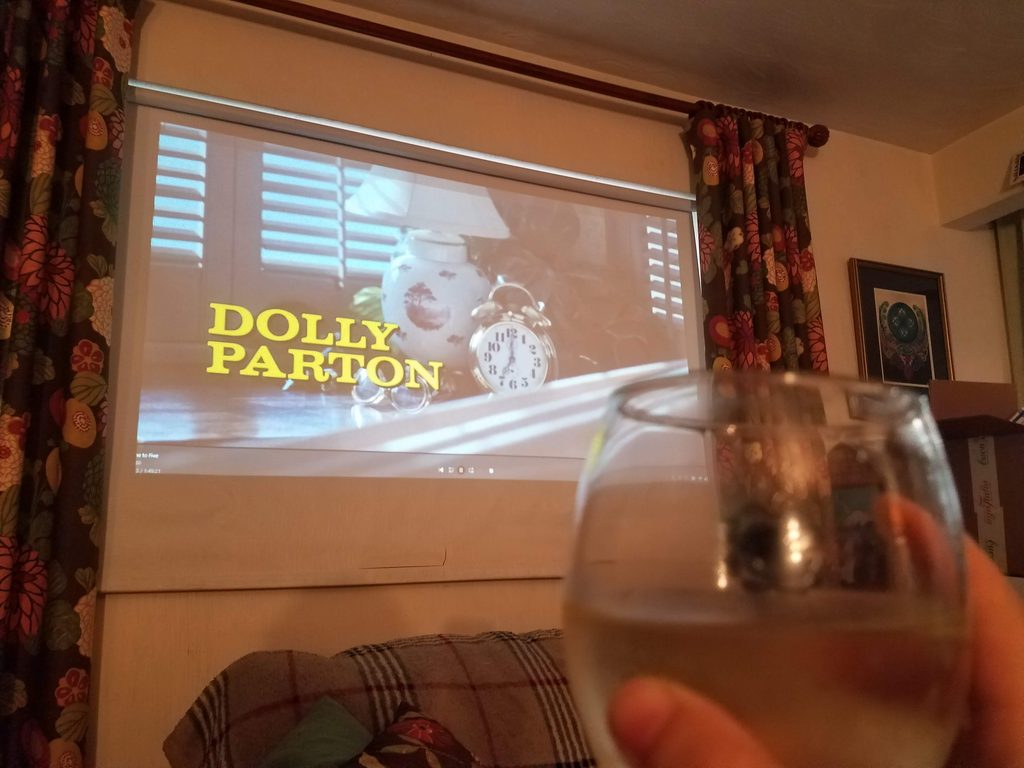
I watched “9 to 5” for the first time this week, [1] with a glass raised to Dolly Parton. I knew the premise and had seen a few scenes from the movie over the years, but I was not expecting to laugh, shout, or applaud to the extent that I did. When I learned that this rallying cry for working women came in second in 1980’s box office totals (after the best movie of the Star Wars franchise), I can’t say I was surprised. Like many other women my age, I’ve spent decades in the workforce, dealing with unfair double standards, sexism, and inappropriate comments from male superiors, and even, occasionally, female colleagues who are willing to stab other women in the back in order to improve their own positions.
With as bad as my own workplace experiences were in the first two decades of this century, I knew things were far worse in the middle of the last one. In the 1970s, 12 million women entered the workforce, mostly filling clerical roles in offices. At that time, casual chauvinism by male managers was taken for granted, and the term “sexual harassment” did not even exist yet. In a “Planet Money” interview, Karen Nussbaum, co-founder of the labor organization 9to5, described inappropriate demands by bosses (e.g. mending a pair of torn pants) and the lack of basic protections for workers (e.g. non-discrimination on the basis of pregnancy or childbirth). [2]
The Next Generation
Conditions have certainly improved since then, but we still have a long way to go. The positive workplace reforms showcased in the 1980 movie (e.g. flex time, job sharing, and on-site daycare) were revolutionary at the time but also demonstrated the benefits of increased productivity that comes with higher job satisfaction and lower absenteeism. Sadly, concepts such as these remain rare, representing perks at progressive companies, rather than the standard. [3] Women still make an average of 84 cents on the dollar compared to men (though that gap is greater for women of color), [4] and unconscious biases still work in favor of less qualified men over more qualified women when it comes to positions of power. [5]
Despite these discouraging conditions (or, perhaps, because of them), we are seeing more young women get involved in opportunities for leadership. A couple years ago it felt like there was a wave of fresh faces and youthful optimism cropping up in political races at multiple levels of government, and that continues to be the case in my neck of the woods. But that can’t just be my own confirmation bias because a recent study of almost 10,000 girls and young women across 19 countries examined what leadership means to them, and the results were encouraging, with 76% of respondents aspiring to be leaders of some kind, “in their country, community or career,” and 62% expressing confidence in their ability to lead. [6]
At the same time, these respondents largely identified gender discrimination and traditional gender roles as barriers, with the majority believing that “women have to work harder than men to be respected, and that, overall, women leaders receive harsher criticism.” Clearly, the solutions here cannot simply come from a place of policy change. There are deeply ingrained beliefs and cultural norms that will need to continue to be challenged in order to remove some of these barriers, and challenging norms often makes people uncomfortable and defensive. Even more equitable representation in media can seem to some like an attack on the status quo, to say nothing of more explicitly proactive efforts, such as mentorship programs for young female leaders and education programs to identify and dismantle gender bias in work environments.
Defining Power
It came as no surprise to me that young women in this survey viewed the concept of “leadership” differently than how we often see it play out in spheres of power. The trend in their responses focused far more on an approach “that is collaborative and brings about positive change, rather than authoritarian and controlling.” To me, that sounds very much like the leadership modes Brené Brown describes in her work, specifically “power over,” which limits the opportunity for creative solutions by consolidating decisions at the top of the hierarchy, and “power with,” which allows for collaborative decision making that happens closer to the work. [7]
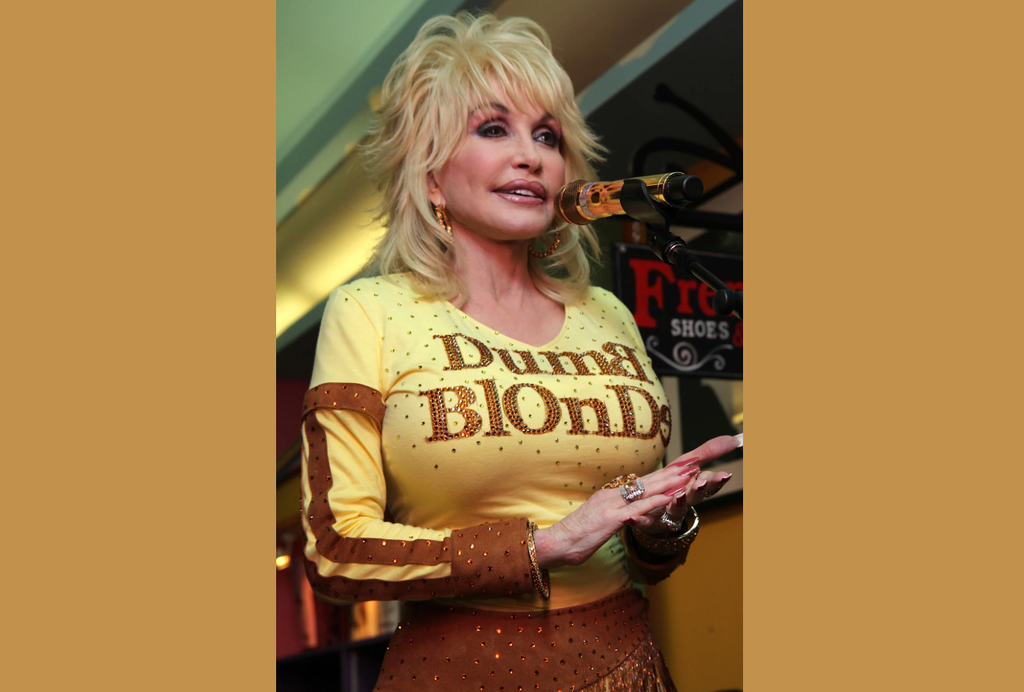
Image credit: [8]
We do see trends in research indicating that concepts such as power, leadership, and success look different depending on gender, with men typically holding more authoritative, “power over” roles and women holding more collaborative, “power with” roles. [9] That trend can be a result of hiring biases or a result of what types of leadership roles we pursue; it can even make those of us who want to be leaders act in ways we think we “should” but that aren’t the right approach for a given situation. I was fortunate enough to follow up some of my most toxic office work years with a safe and healing environment under a manager who helped me break some bad habits I had learned out of self preservation and become a more authentic leader.
There are many, many reasons to believe that success in the world today requires a cutthroat, zero-sum-game mentality and perfected, focus-group-tested content; that the key to success is hardness and ambition that comes at the cost of joy and kindness. It is easy to believe those things, except for the fact that this past week the world paused to remember someone who attained super-human levels of success by being kind and authentic in a world that should have forced her to be anything but. [10] Dolly Parton died at the age of 80 with a nine-figure net worth, one of the best-selling discographies of all time, a theme park, a child literacy program that operates in five countries, and a public status that bordered on secular sainthood. She deftly navigated a male-dominated industry for almost six decades, paving the way for others as she went, and never even considered herself a feminist.
From “Backwoods Barbie” to “The Book Lady”
I’ve read more Dolly tributes than I can count this week, from short tweets to an hour-long video essay, and most have made me pause to wipe my eyes. I don’t plan to recreate an exhaustive list of her accomplishments here, but I will summarize aspects of what made her special to so many, largely thanks to a well-researched and lovingly constructed piece by author, essayist, and fellow Tennessean, Lindsay Ellis. [11] Dolly’s talent alone would be impressive: she wrote over 3,000 songs, had 25 #1 songs herself, as well as 44 top-ten country albums. But aside from her talent, she had what was described by some as a benevolent power: she was genuinely kind and seemed to be present with whomever she was talking to.
She was easy to make fun of (and often was when I was growing up), but because she crafted her own image, it was as though she selected the ammunition she offered to her critics and didn’t seem to care when it was used; Dolly even made frequent fun of herself in a lighthearted way, reminding us all not to take ourselves too seriously. She was unapologetic about her identity and her opinions, but she stayed away from politics, not wanting to alienate fans; instead of criticizing individuals, she instead turned her energy toward addressing ongoing problems in society, such as illiteracy and diseases. Her philanthropy was extensive but quiet, in other words, done out of a desire to give back, not to be featured in a public relations campaign.
American historian and biographer Robert Caro is widely credited with the maxim “power doesn’t corrupt, it reveals.” Dolly’s goodness was not performative or transactional; from the people who knew her in her life, it was clear that she genuinely cared about others and used her position to “lift others up,” whether by creating economic development opportunities in Tennessee, [12], [13] sending free books to babies, [14] funding vaccine research, [15] or simply making others feel seen. [16] She refused to be pigeonholed with labels: she didn’t participate in political conversations and declined the Presidential Medal of Freedom from both Donald Trump and Joe Biden. Of herself, she said “I don’t think of myself as a feminist; I see myself as a woman in business.”
“Versus” is the Wrong Mentality
While some people were no doubt disappointed by her reluctance to take more of a public stance on various issues, it seems that her ability to dodge polarizing labels also gave her a stronger, broader platform on which to be clear about her values. She seemed to operate largely outside of the “us vs. them” paradigm whenever she could, even in times of personal conflict, instead focusing on how she could contribute to a solution. It’s a lesson I know I could take to heart in this divided world, especially when scarcity mentality in the workplace fuels division, kills creative collaboration, and encourages leaders like me to fall back into more of a “power over” management style.
For up-and-coming leaders and those of us who can still learn some new tricks, I’ll close by saying that Dolly Parton is an excellent case study in personal, professional, and humanitarian success, fueled by authenticity, kindness toward others, and willingness to challenge traditional power structures. Dolly was able to connect with so many diverse people simply by speaking to common human experiences, such as love, loss, and hard work. Connecting with other human beings over common values, hopes, and fears is something we could be a lot better at doing these days… and it’s a wonderful reminder that Dolly did the things she did because she genuinely cared about people and wanted to leave the world better than she found it – and she succeeded.
Thank you, Dolly.
[1] https://www.imdb.com/title/tt0080319/
[2] https://www.npr.org/2021/04/14/987333798/workin-9-to-5
[3] https://www.huffpost.com/entry/movie-9-to-5-film-dolly-parton_l_5db6fa34e4b079eb95a7299a
[4] https://nationalpartnership.org/fifteen-years-after-ledbetter-why-we-need-paycheck-fairness-act/
[5] https://chief.com/articles/hiring-for-potential
[6] https://geenadavisinstitute.org/research/taking-the-lead/
[7] https://www.neonleadership.com/post/brene-brown-leadership-styles-guide
[9] https://www.sciencedirect.com/science/article/pii/S1364661325002839
[11] https://www.youtube.com/watch?v=uJuKN0chAZk
[12] https://en.wikipedia.org/wiki/Dollywood
[14] https://imaginationlibrary.com/
[16] https://x.com/Eminem/status/2092367272891310482
1 Comment
Garrod · August 31, 2026 at 4:49 am
Another brilliant blog, thank you.
Yes the world definitely needs more people like Dolly…… as you say she was an excellent example of how to be successful whilst showing kindness to her fellow human beings. RIP Dolly.