Christian and I could never agree whether the tree in our front yard was a plum or a cherry, but we could agree that it was dying a slow death. A friend and former roommate of Chrstian’s (who predated me in our house) worked in the tree industry for a while and said (more than a decade ago) that the tree didn’t have long. But it held on longer than anyone expected: every spring, a little less of it would sprout flowers and leaves, and a little more of its dead, brittle skeleton would remain, holding visual space in the center of the front yard. This April we had an incredibly strong wind storm, and the last 10% of the tree that was still alive split off at the base. It was time.
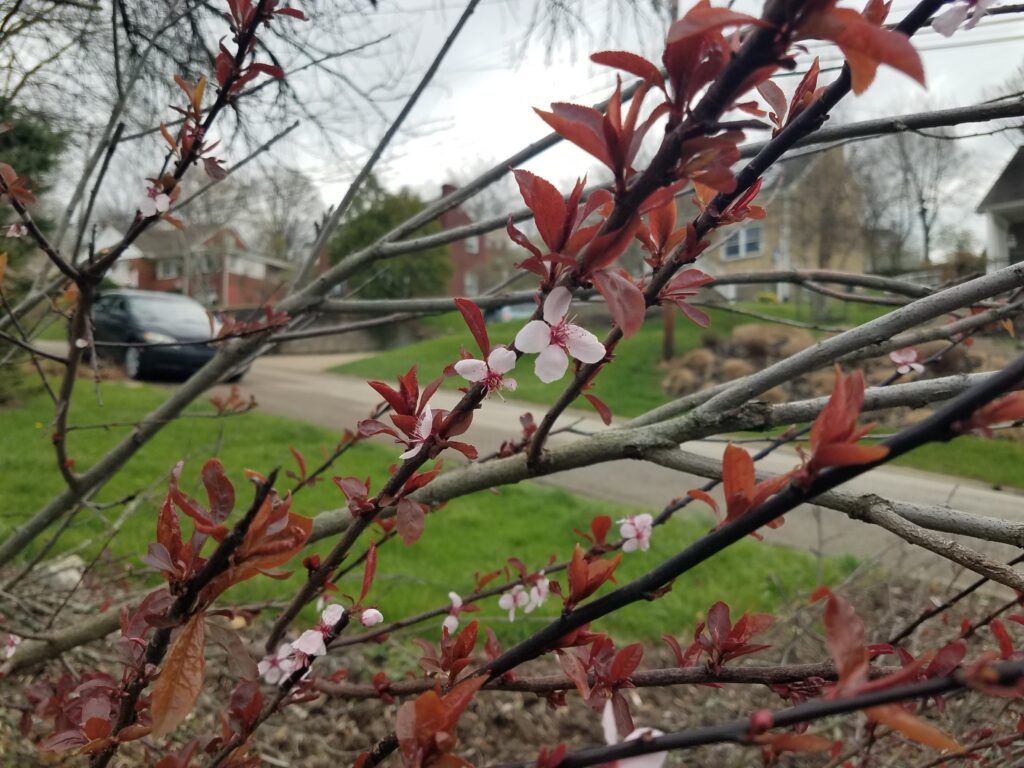
I hated the idea of killing the last bit of this tree that had brought me joy every spring for the last decade – the last bit that was still flowering even as it lay on the ground – but we now had the opportunity to bring new life into the yard. To do that, there were a few questions to answer:
- How do we remove the old tree?
- What do we do with it?
- What do we do with the space?
Between the two of us, I feel like we should have been better prepared to answer these questions: we have a whole garage and shed full of power tools, my father was also a tree man for many years, my aunt has a degree in ornamental horticulture and a garden center, [1] and we also knew this day was coming for years, meaning we theoretically had time to plan and research. But no, we were woefully unprepared for any of the necessary next steps or the appropriate timeline, which was accelerated less by the weather and more by my own enthusiasm, optimism, and stubbornness.
Out with the Old
The tree was easy enough to take down once our neighbor offered us his chainsaw (the dull blade on ours literally wouldn’t cut it). Christian, smartly, donned his bike helmet for the job. I had never seen anyone wear a helmet while felling a tree, but it makes perfect sense: tree work is one of the most hazardous occupations in the United States, and one of the biggest aspects of risk is being struck by falling limbs. [2] He probably would have been fine, as the tree was only about 20 feet tall, and the limbs weren’t very thick, but it absolutely never hurts to wear PPE. I hauled the limbs out of the way (they were incredibly light because they were so dry) and broke them up by hand (they were also incredibly brittle) for future burning in our fire pit.
A note on wood burning: yes, I recognize the irony of someone who talks about air quality on a regular basis at work burning wood in her fire pit. It is true and important to remember that wood releases chemical compounds that are hazardous to human health when burned, such as benzene and formaldehyde, as well as fine particulate matter, or soot. These outputs can contribute to respiratory issues (e.g. asthma), cardiovascular disease (e.g. heart failure), reproductive health issues (e.g. preeclampsia) and cancer. [3] Anyone who burns wood – either for home heating (as my father still does) or recreation (as my friends and I do) should do so with the knowledge of the health risks it poses and avoid inhaling the smoke as much as possible.
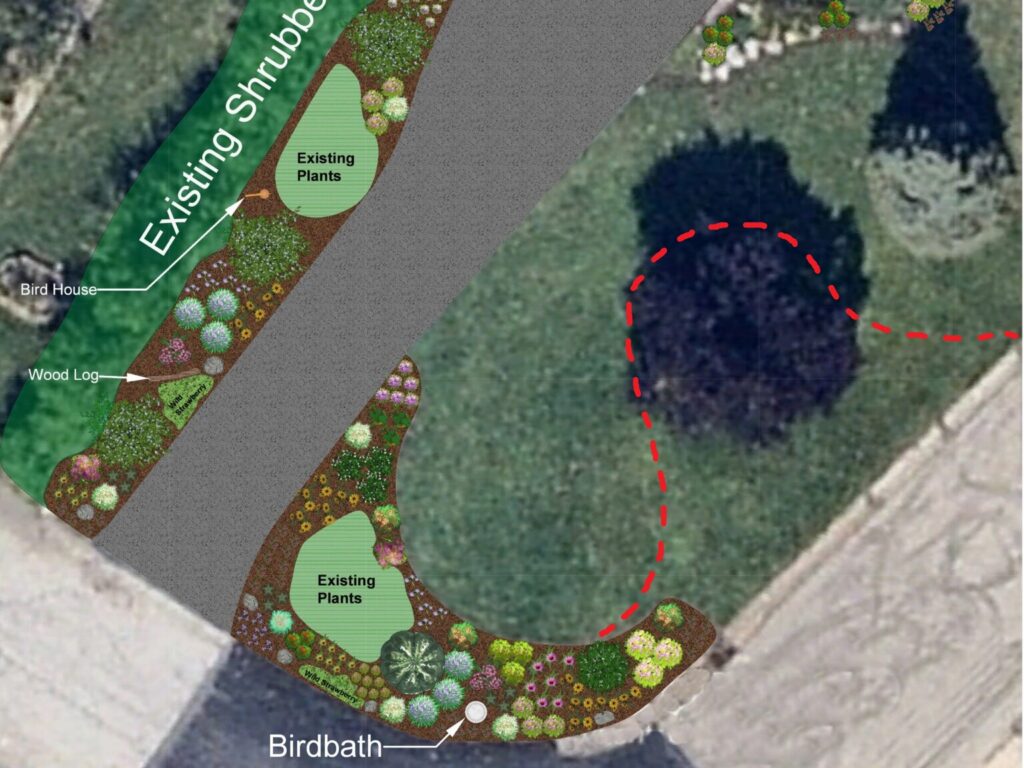
As for the larger pieces of the trunk, I am holding on to those to put back in the garden near the tree’s old location so they can provide visual interest to humans, shelter to small animals and insects, and eventual nutrition to the soil. [4] Long-time readers of this blog may remember that the landscape plan I commissioned four years ago included a tree trunk, [5] which I was sad to provide from my own garden. [6] Readers may also remember that I abandoned many aspects of that plan, especially once I changed the shape of the garden itself, extending it across the yard and around the tree (which was not dead at the time). If I had been a little more forward-thinking, I probably could have planned something else for when the tree met its ultimate demise; if I had been a little less stubborn, I wouldn’t have insisted on keeping a tree in that exact spot… but you already know that’s exactly what happened.
Stumps and Soil
For the record, planting a new tree directly on top of an old tree is not encouraged. It takes years for the old stump to decompose, limiting the new tree’s ability to grow; once the old stump and roots start to break down, the soil shifts downward, destabilizing the ground for the new tree; the decaying wood chips from the stump pull nitrogen from the soil, and therefore food from the new tree; and decaying wood can be a target for ants and termites, which can harm the new tree. But several sites explaining why you shouldn’t do it made the mistake of also describing how to go about it if you must: remove as much of the stump and wood chips as possible, refill the hole with compost or topsoil, and let it settle for at least a year or two. [7] That was all the encouragement I needed to move forward with my ill-advised plan.
Unfortunately, stumps are notoriously difficult to remove – it’s kind of their job in keeping the tree alive. I have successfully dug out the stumps of small trees and large shrubs in the past: it is time consuming, mentally frustrating, and physically exhausting, but it is doable. Given my miles-long to-do list, limited time, and newfound “fuck it” midlife crisis attitude, I decided to hit the easy button and hire a tree guy. [8] After he described how the stump grinder worked and how much more he could take out (about a foot more, based on what I had already dug out), I proceeded to expand and deepen the hole around the stump: about 18 inches deep with three-foot-wide ramp in order to get the stump grinder down there. (I’m pretty sure he didn’t know what to make of me – most contractors we’ve had at the house don’t.)
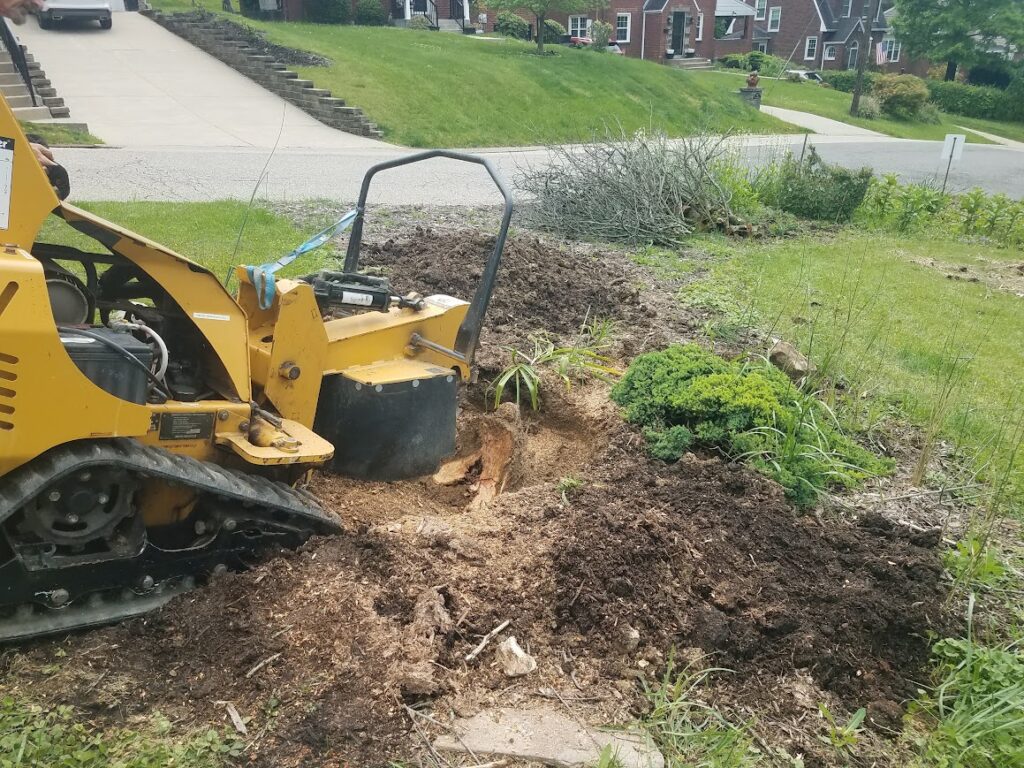
After he was done, I shoveled out as many of the wood chips as I could and refilled the hole by alternating shovelfuls of the clay-heavy soil I had just removed and the mushroom compost I had just ordered for my annual mulching frenzy. I tamped down the new contents of the hole multiple times as I was refilling it, but I am sure that the ground will do a lot more settling in the months to come. Unfortunately, before reading anything about these recommendations for what to do (and not) when replacing a tree, I went and bought a new one. As I write these words from my porch, my new tree sits not 10 feet away, languishing in a plastic pot, waiting for me to decide what to do with it. But more on that next week.
For now, I’d love to hear any (mis)adventures you’ve had with tree removal or replacement in your yard. What are some pitfalls others should avoid?
Thanks for reading!
[1] https://pharo-garden-centre.place-all.com/
[2] https://tcimag.tcia.org/safety/tree-work-safety-by-the-numbers/
[3] https://www.heart.org/en/news/2019/12/13/lovely-but-dangerous-wood-fires-bring-health-risks
[4] https://www.natlands.org/news/life-of-dead-trees/
[5] https://radicalmoderate.online/pollinator-garden-update-2022/
[6] https://radicalmoderate.online/shaka-when-the-walls-fell-part-1/
3 Comments
Planting and Pruning Trees – Radical Moderate · June 14, 2026 at 1:03 pm
[…] original plan when removing the dead plum tree in our front yard [1] was to put in a new tree where it was. That plan hasn’t changed, but it has expanded. I had […]
Life, the Universe, and Everything – Radical Moderate · October 3, 2026 at 10:35 pm
[…] Removing and Replacing TreesJune 7, 2026 […]
Garden Update, 2026; or, A Weed by Any Other Name – Radical Moderate · October 4, 2026 at 12:11 pm
[…] big activity this year was taking out our old plum tree [4] and designing a new garden, [5] which extends up into the yard from the corner of our property, […]