Wishing you a Happy Easter, Happy Passover, and peace on Tomb Sweeping Day as this series wraps up.
This blog series was intended to focus on food and help me identify more culinary options for vegan cooking while lowering my carbon footprint. The intersection between religion and food at a time when various religious observances were intersecting seemed like a nice opportunity to frame the series – but as already tense international situations have escalated over this time, it feels like a more poignant and timely exploration (unintentional though it may have been). During my Lenten effort, I was fascinated by commonalities I discovered between different religions – and it was somewhat encouraging to think of these similarities and the convergence of various holidays at a time when there is so much anger and division in the world.
Fire Horse
This spring marked a rare convergence of Lent, Ramadan, and Lunar New Year: [1] something that hasn’t happened since 1863 and that we won’t see again until 2189. Those who stayed awake in history class will remember that 1863 was a tumultuous time for America. Americans probably weren’t thinking much about Ramadan at that point (though there were significant reforms going on within the Ottoman Empire that year [2]), but in addition to our own civil war, we were seeing a large influx of Chinese laborers to build the Transcontinental Railroad. For them, that difficult year was the year of the Water Pig – matching the Pig’s friendliness with Water’s adaptability.

Note: I was happy to support this artist and purchase this image on Etsy. [3]
This year we are in now, however, is the year of the Fire Horse – doubling the Horse’s dynamic and passionate nature with Fire’s intensity. Between a trade war with China and an actual war (in all but name) in the Middle East, our world will likely look very different on the other side of this year. In times of great turmoil, it can feel meaningless or at least silly to focus on things as small as the carbon footprint of one’s food choices… but, on the other hand, it is nice to have something in my life over which I feel I have some small measure of control. And, for as trite as it may sound, it is important during times of significant change to consider what we want systems to look like on the other side of that change so we can make sure they get built accordingly.
I, personally, want to see systems that consider the long-term impacts of our consumption (including the impacts on our environment as well as our people), not simply focus on short-term benefits for those in charge. I want to see systems in which businesses achieve long-term profitability by balancing the needs of all their stakeholders (including their employees, their host communities, and the environmental resources they use). I was studying the Triple Bottom Line (“People, Planet, Profit”) [4] as an idealistic grad student 15 years ago, and even as a semi-jaded professional today, I still believe that approach is possible… because I’m seeing more examples of it over time.
Personal and Universal Ethics
About three quarters of the world’s population is religiously affiliated in some way, [5] and we’ve covered all major religious slices of that pie chart during this blog series. Religion has extreme influence over perceptions and behavior, and there is more than enough to be said about opportunistic human leaders warping the actual tenets of a religion for the sake of power – I am not going there in this post. I am focusing on what is considered ethical, correct, or encouraged behavior according to major world religions, including the Abrahamic faiths and religions in the world’s two most populous countries. And here are the trends I noted across those groups, just through the lens of food guidance (whether in everyday life or for specific religious observances):
- Reduce harm to other living things / show respect for other living things
- Reduce excess consumption / limit environmental impact
- Promote physical health / limit foods that can cause health harms
- Voluntarily go without in order to share with others / cultivate empathy for others
- Achieve spiritual and moral growth / prepare for prayer or meditation
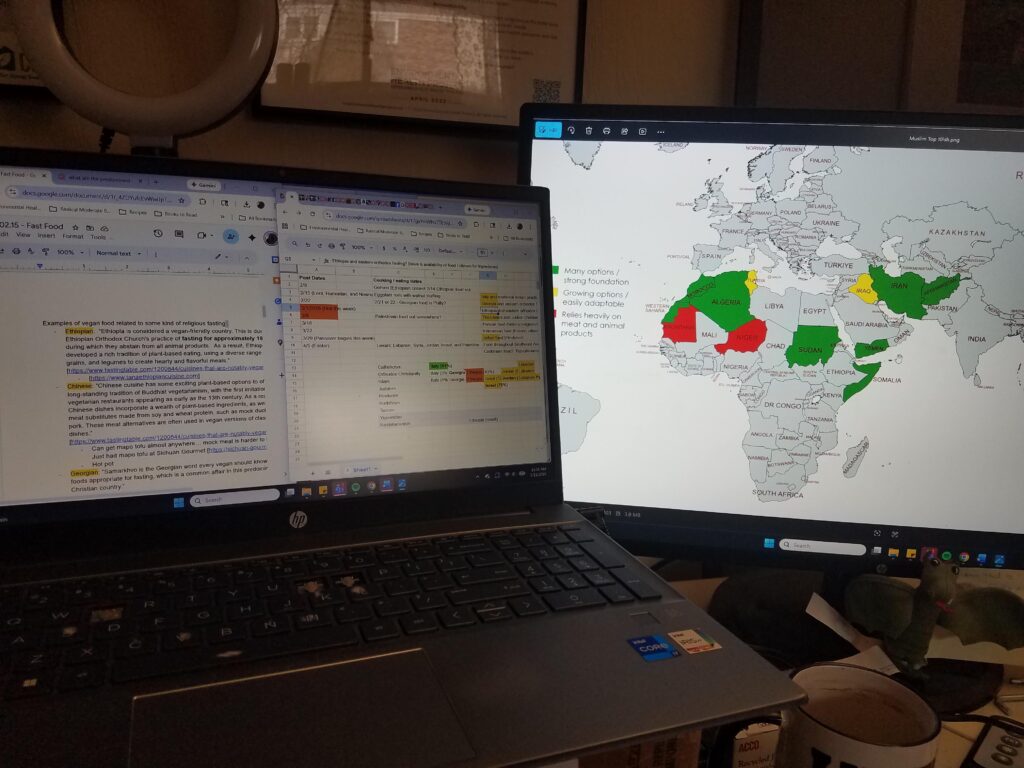
As a member of the remaining quarter (the “religiously unaffiliated”), most of those reasons resonate with me as well. I believe in something greater than humans that exists outside the realm of our comprehension, but I try to live an ethical life because it’s the right thing to do and I want to leave the world better than I found it. Similarly, I know atheists who are extremely ethical people, who do what’s right precisely because there is nothing else to make us do it, if not ourselves. Religion can (if used as directed) serve as a good framework for moral behavior, but it isn’t a requirement. Like many systems, it can be great in theory but less than great in practice, especially wherever humans are involved.
When originally researching this series, I was hoping to find an easy overlap of delicious vegan cuisine that was developed to accommodate strict religious guidance. Of course it wasn’t that easy because there are other factors involved too, including limited availability of plant-based ingredients in inhospitable climates, which corresponded with shifts in religious guidance in Northern Europe and Asia, as well as mountainous countries in South America. What I found most frustrating during my research was when I was told that a certain cuisine lent itself to veganism only to find that its ability to adapt traditional foods to vegan-friendly analogs was a modern affectation, found most often in cities as a response to rising demand. This finding indicated a lack of influence from a longstanding religious tradition, but it did indicate influence from what some could wryly consider a religion, of sorts: capitalism.
The “C” Word
A bad word to some, capitalism is a system that, again, works fine in theory. At its core, individuals produce goods and services that are needed by other individuals. The producer values money more than the product / service, and the customer values the product / service more than their money. Demand influences supply, and price settles at an equilibrium point between the two. Competition between suppliers leads to quality, affordability, and innovation. [6] Over time, however, capitalism has evolved through stages with power and influence becoming concentrated in different realms of society, from merchants, to industries, to financial markets, to governments. For those so-inclined, the system enables accumulation for accumulation’s sake, with more power and money concentrated in the hands of fewer and fewer entities. [7]
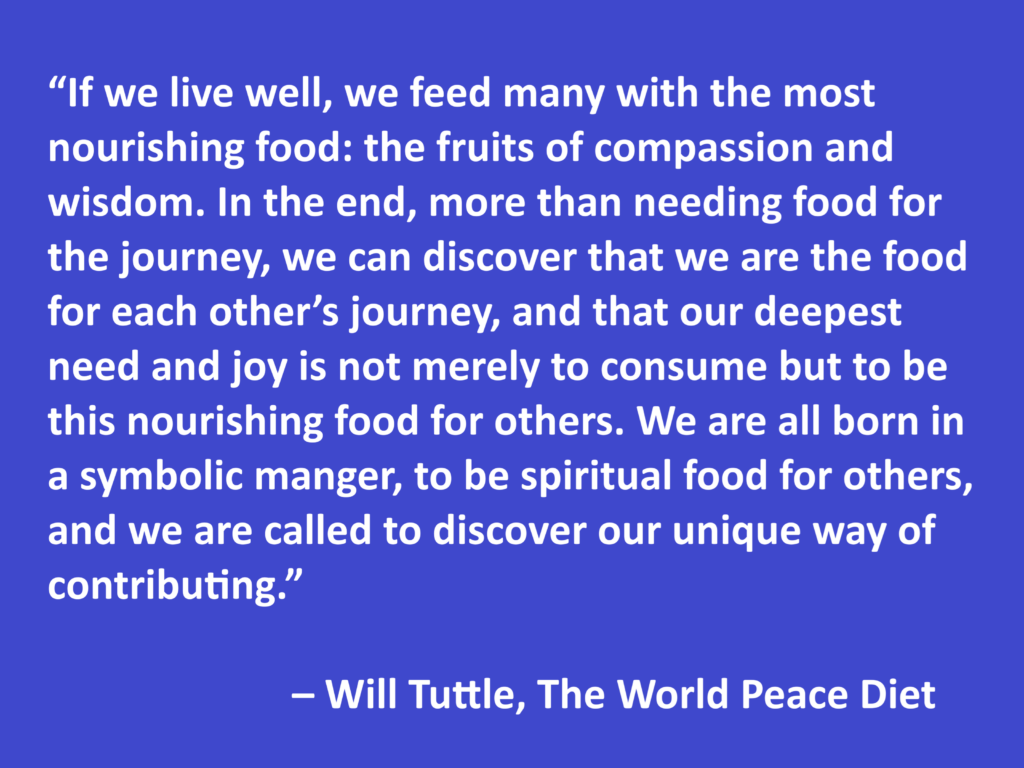
Quote source: [8]
I am not going to do a deep dive into critiques of capitalism here (though I’m sure you will find it on this blog in the future); I will say, from my perspective, it is a system – one of many that can be abused by humans who want to accumulate power. Without saying whether capitalism is good or bad, I will say that it has played a role in the growing availability of vegan options in many of the cuisines I explored for this series. [9] No matter the reasons why customers are demanding more vegan food (e.g. animal welfare, carbon footprint, health benefits), restaurants and product manufacturers are taking advantage of that demand, which is expected to continue to grow in the coming years. [10]
So that brings us back to us, the individuals, and what we want to see from our systems. I’m aware that we lack a level playing field in many parts of our society and that there are many entities with their thumbs on the scale to promote their own interests. However, I continue to believe that if we expect better of our markets, our governments, and our society, things will trend in that direction. That was my belief as an idealistic sustainability student, and it is still my belief in my half-jaded, half-idealistic professional opinion. So, again, at the risk of seeming trite, I will conclude this series with a recipe for an American staple, evolved and made available in response to changing times.
Recipe: Vegetarian Chili
I’ve never had luck with reconstituting dried beans, no matter how long I soak or cook them. I’ve been told that using an Instant Pot works wonders on dried beans, but I’m also trying to limit the number of appliances that come into my kitchen, so I tend to stick with canned beans when I can. (That, and there are arguments to be made for canned beans being a more environmentally friendly alternative… but the difference seems marginal when considering the environmental benefits of making vegetarian chili instead of beef chili.) I’ve had luck with this America’s Test Kitchen chili recipe in the past [11] but have modified it over the years to add some ease to the process and “oomph” to the flavor.
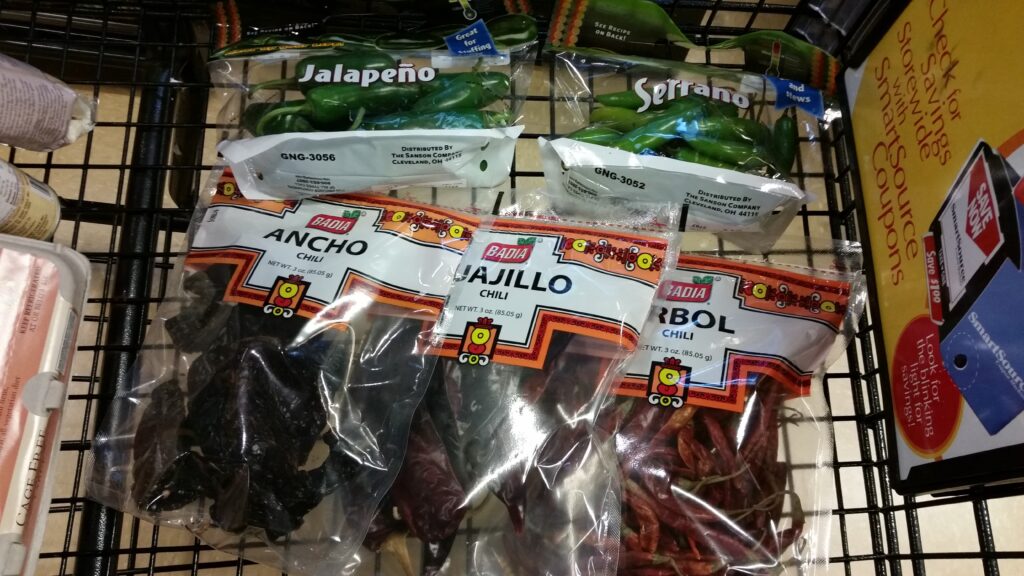
Ingredients:
- 5 different 15 oz cans of beans – I use pinto, black, kidney, cannellini, and navy
(Note: dried beans are considered better from a texture standpoint but add significant time to the recipe – don’t overcook the canned beans, and you should be fine.) - Dried chiles, whole to start:
- 2 ancho
- 2 New Mexico
- 2 guajillo – not in the original recipe but a common addition for a more complex flavor and more heat
- 2? chiles de árbol – not in the original, but add for higher heat as needed
(For reference: ancho and New Mexico chiles are rated at ~1k Scoville Heat Units [12]; guajillo chiles about ~5k SHU; chile de árbol, ~15-30k SHU)
- ½ oz dried shiitake mushrooms, coarsely chopped
- 4 tsp dried oregano
- ½ c walnuts, toasted
- 28 oz can diced tomatoes, drained with juice reserved
- 3 Tbs tomato paste
- Fresh chiles, coarsely chopped:
- 2 jalapeños
- 2 serranos – not in the original recipe but a common addition for a more complex flavor and more heat
- 1? habanero – definitely not in the original, but add for more intense heat as needed
(For reference: jalapeño chiles are rated at ~3-8k SHU; serrano, ~10-25k SHU; habanero, ~200-300k SHU)
- 6 garlic cloves, minced
- 3 Tbs soy sauce
- ¼ c cooking oil (I use sunflower or avocado)
- 2 lbs onions, chopped
- Salt
- 1 Tbs cumin
- 4 cups liquid (reserved tomato juice, water)
- ⅔ c medium grind bulgur
- Serve with any/all of the following: chopped cilantro, lime wedges, diced avocado, chopped red onion, tortilla chips
Heat oven to 300 F; arrange dried chiles on a rimmed baking sheet and toast until puffed, about 8 minutes; let cool; stem and seed (reserve seeds to add to chili later, if desired). Grind toasted chiles, mushrooms, and oregano in a spice grinder or with mortar and pestle until finely ground.
Process walnuts in food processor about 30 seconds, until finely chopped; transfer to bowl. Process drained tomatoes, tomato paste, fresh peppers, garlic, and soy sauce about 45 seconds, until tomatoes are finely chopped.
Heat large Dutch oven over medium high heat; add oil and heat until shimmering; add onions and 1 ½ tsp salt; stir occasionally for about 8-10 minutes, until onions begin to brown. Lower heat to medium, add ground chile mixture and cumin; stir about 1 minute, until fragrant. Add beans, tomato mixture, bulgur, walnuts, and liquid; bring to boil. Cover and transfer to oven, cook for 30 minutes.
Remove from oven, stir well, and let stand uncovered for 20 minutes before serving. Garnish as desired.
~
Thank you for sticking with me through this adventure across religion, history, agriculture, and economics, and how they have influenced our interaction with food in different parts of the world. I hope you enjoyed it and tried a recipe or two. I’m still learning on all these fronts, so if I got something wrong, please let me know in the comments.
Thank you for reading – and happy eating.
[1] https://www.npr.org/2026/02/17/nx-s1-5716213/lunar-new-year-ramadan-and-lent-converge-this-week
[2] https://en.wikipedia.org/wiki/Tanzimat
[3] https://www.etsy.com/listing/4297746254/inspirational-dumpster-fire-png-mental
[4] https://online.hbs.edu/blog/post/what-is-the-triple-bottom-line
[7] https://sociology.institute/sociological-theories-concepts/stages-economic-functions-capitalism/
[9] https://www.tastingtable.com/1200844/cuisines-that-are-notably-vegan-friendly/
[10] https://www.futuremarketinsights.com/reports/plant-based-food-market
[11] https://www.americastestkitchen.com/recipes/14276-four-chile-vegetarian-chili
[12] https://en.wikipedia.org/wiki/Scoville_scale
1 Comment
Fast Food, Part 7 – Buddhism and China – Radical Moderate · October 3, 2026 at 9:56 pm
[…] Fast Food, Part 8 – Capitalism and Our Global SocietyApril 5, 2026 […]