I have a lovely little ritual two Tuesday mornings every year: I walk up the hill to a church in my neighborhood, fill out an election ballot, walk over to a cafe nearby, and enjoy a rare quiet moment with a coffee before going about my day. If my schedule is particularly busy, I’ll drive. But either way, I’m far more fond of that tradition than I usually am of any of the people on my ballot. Unfortunately, dissatisfaction with available candidates leads to incredibly low voter turnout, especially during primary elections.
Super Voter Status At Risk
It’s possible that I’ve missed an election or two since moving back to the States in 2008, but as far as I can remember, I’ve voted in all of them. Indeed, it is one of the subjects on which I most fervently evangelize, especially here on my internet soapbox. In fact, this post is now one of 30 (of 380 total on this blog) to carry the tag “Elections,” meaning almost 8% of this blog’s content touches on them one way or another, usually with a spreadsheet of information that I compile for myself as I do my research.
But this year, as occasionally happens, the candidates on my ballot are few and far between. There are only two contested races: Lieutenant Governor and State Committee (which I actually had to look up). I almost wondered if it was even worth it to create a spreadsheet for myself, let alone for readers who sometimes use my research to compare candidates. It is very tempting to simply vote for the uncontested candidates (who will win their primaries anyway) and save my time by only researching the two races where my vote will influence the outcome of the election. And as much as I hate to admit it, it’s even a little tempting to not vote at all.
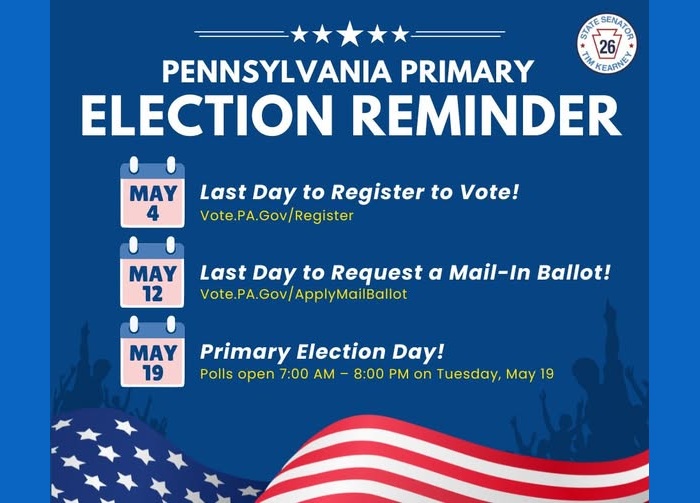
Image credit: [1]
It’s tempting, but it’s not going to happen. I think about the fact that there are still countries in the world that don’t have free and fair elections, [2] and there are countries where women face significant obstacles to voting, even if they have the legal right to do so. [3] I recognize that some of my ancestors fought and probably died for rights I have today, and I recognize that election integrity in the United States, while still intact, is quickly being eroded on several fronts, including through polarization regarding voting procedures, weak cyber security, and lack of impartial election oversight. [4]
The Value of Voting
As the adage goes, “rights are like muscles: if you don’t use them, you lose them.” For that reason, I take every opportunity to cast a ballot so that my local, state, and federal leaders know what my values are and that they hold their offices at the pleasure of their constituents. Indeed, some primary races throughout the country this spring are quite heated, and success for some candidates hinges on their take on rapidly emerging topics, such as data centers. [5] Primary elections can sometimes serve as referendums on incumbents who uphold unpopular policies, which is what happens when someone gets “primaried” – and we’re seeing that in a number of places… elsewhere.
My biggest concern when I have uncontested races on my ballot is that it feels like I don’t actually have a choice. Voting for the one candidate presented, if I don’t like that candidate, feels more like an erosion of my rights than not voting at all – to me, it feels like coercion, not freedom, and that makes me not want to participate. If voters participate in an uncontested election, they will most likely vote for the one option given to them, rather than leave it blank or write in an alternate option. That alone makes it feel like one vote won’t make a difference. It’s probably fair to say that abstaining probably won’t make a difference in the outcome of an uncontested election, but it probably will make a difference in what happens after the election.
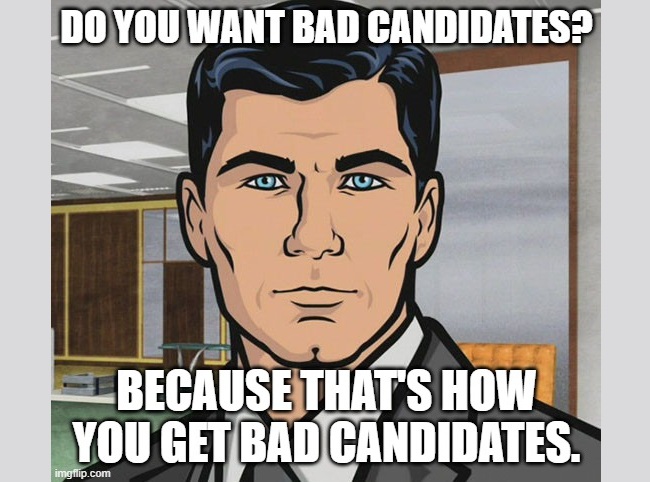
Image credit: [6]
If an unopposed candidate receives an overwhelming majority of votes, even given small voter turnout, that candidate could view the result as a mandate or at least an indication of safety. If, on the other hand, that candidate gets a notably smaller total than the number of ballots cast, that candidate could be more likely to pay attention to constituents’ concerns, and potential challengers may take notice and mount an opposing campaign in the next election cycle. [7] For those reasons, it cannot be said that casting a vote in an uncontested primary will do nothing, small though the impact may be. I also cannot stress enough the importance of exercising your political power between elections by contacting your elected officials to let them know how you feel about certain issues that matter to you and by talking to neighbors about issues that matter to them. [8]
Preparing for Tuesday
But I digress… If you are in Pennsylvania and not thrilled with one or more of your candidates, you are free not to vote for them. As best I understand from the available information, you can leave the race blank entirely, in which case your vote will not be counted for that race, but it will be counted for all the other races in which you vote. [9] Alternately, you can vote for a write-in candidate: if you darken the “Write-in” circle and write a legible name on the line, your vote will be considered properly marked; if you do not write a legible name, your vote will not count toward that race. [10] I have not been able to confirm for Pennsylvania (yet), but “None of the above” does not count as a write-in vote in some other places and may be treated as a blank. As an alternative to “None of the above,” many people make use of politicians they like and pop culture figures as write-ins who clearly won’t win in order to send a message to the candidate who does. [11]
If you happen to be voting as a Republican in Pennsylvania on Tuesday, you are welcome to take a look at my own election research, in case it is helpful:
If you were on the fence about voting on Tuesday, I hope this post encouraged you to get involved in ways that will be meaningful to you. Let me know what you think in the comments below – civilly, of course.
Thanks for reading!
[2] https://www.businessinsider.com/countries-that-arent-free-report-2019-5
[3] https://graziadaily.co.uk/life/real-life/countries-where-women-can-t-vote/
[6] https://imgflip.com/i/6cv45g
[7] https://www.reddit.com/r/chicago/comments/1gg5kns/is_there_any_point_in_voting_for_an_uncontested/
[9] https://ballotpedia.org/Do_you_have_to_vote_for_everything_on_your_ballot%3F_(2024)
1 Comment
Fossil Phaseout, Part 2 – Radical Moderate · October 3, 2026 at 10:12 pm
[…] May 2026 Pennsylvania Primary ElectionsMay 17, 2026 […]