I have to admit that it feels a little silly trying to cram three religions and 15 agro-climatic zones into one little blog post on India (even if it is notably longer than the other posts in this series). For those who have not been there, it is incredibly difficult to convey just how large and diverse a country it is. I would say it’s about one third the size of the United States, but I find a lot of Americans (myself included) tend not to have a good sense of how big our own country actually is. The first time I went to India, I was visiting friends in the south. When I got back to work, my coworkers and students all asked me if I had seen the Taj Mahal while I was there. Short answer: no. Long answer: an equivalent question in the United States would be like asking someone who just got back from Houston if they saw Old Faithful (in Yellowstone).
India today is the most populous country in the world (having surpassed China in 2023) and is home to almost 1.5 billion people. Twenty-two languages are recognized for official purposes, but there are more than 1,600 languages and dialects spoken around the country. It is somewhere that I feel like a monoglot slob – pretty much all of my Indian friends speak English, Hindi, and at least one language or dialect from their home state. The history in that part of the world stretches back to one of the earliest civilizations we know of: the Indus Valley Civilization (3300-1300 BC), in modern-day India, Pakistan, and Afghanistan. [1] Consequently, there has been a lot of opportunity for languages, cultures, and religions to evolve over time.
Hinduism 101
My original plan was to focus just on Hinduism in this post – it is, after all, considered to be the oldest religion in the world that is still practiced today; and, with 1.2 billion followers, it is the third-most popular. [2] (But mentioning some of India’s other religions and how they differ will make this post much more interesting, so buckle up for the scenic route.) Hinduism is a polytheistic religion, with a significant pantheon of gods. Exact counts vary based on interpretation, but there are generally considered to be 33 categories of gods. [3] There is no central authority for the religion (as we see in Catholicism), so there are different denominations and sects that prioritize different deities for worship or philosophies for practice. Again, these differences have had a long time to evolve and diverge.
Some early texts date back to 1500 BC, but the oral tradition goes further back, possibly to the Indus Valley Civilization, a technologically advanced and possibly peaceful society. Hinduism, generally, is built on several core concepts, including that of an individual, divine soul; the cycle of birth, death, and rebirth; future reward or punishment based on prior actions (“karma”); the duty for adhering to moral responsibility and righteous living (“dharma”); and eventual release from the cycle of reincarnation through self-realization. Religious practice may look like worship of deities (or a specific deity), meditation, fasting (or sacrifice), and/or pilgrimages to accumulate good karma. [4]
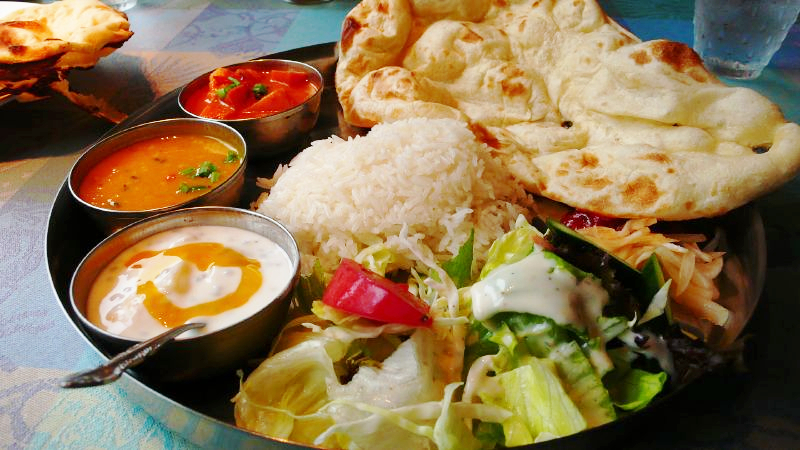
Image credit: By GracinhaMarco Abundo – Vegetarian Curry, CC BY 2.0, [5]
When it comes to fasting, there are (unsurprisingly) variations in practice. A fast could mean complete abstention from food or just from certain foods. Practitioners observe fasts on certain days each month or during certain months in worship or celebration of different gods; participating in a fast is believed to cultivate self discipline and deepen devotion. [6] Similarly, general food prohibitions vary, with dietary practices guided by the principle of “ahimsa,” or non-harm. Lacto-vegetarianism is common among Hindus (with dairy being acceptable, but not eggs), though it is not the rule. There are many Hindus who eat meat (more commonly in the north than the south), though most generally avoid beef, as the cow is seen as a sacred symbol of selfless giving.
More interesting than a simple list of foods that are allowed or not, there are different classes of foods that are encouraged and discouraged, as being helpful or unhelpful for spiritual practice. [7]
- Sattvic foods (“fruits, nuts, whole grains, and vegetables”) are encouraged, as they promote calmness and nobility
- Rajasic foods (“meat, eggs, fish, spices, onions, garlic, hot peppers, pickles and other pungent or spicy foods”) are discouraged, as they promote strong emotions and restlessness in the mind
- Tamasic foods (“stale, overripe, spoiled, or other impure food”) are to be avoided, as they promote negative emotions such as “anger, jealousy, and greed” – also included in tamasic foods are alcohol and drugs, as they dull the senses and cause lethargy.
Other Perspectives on Food in India
I was interested to see similar guidelines around stale and spoiled food in both Hinduism and Zoroastrianism, [8] which shouldn’t be overly surprising, as they are both ancient religions from the same general part of the world. There are certainly some themes emerging in my own research that touch on religious restrictions on foods that could make one sick – either physically or mentally. In doing more reading these past few weeks about rebuilding a healthy gut microbiome, I’ve learned a lot more about the connection between gut health and mental health. [9] And it’s not outside the realm of possibility that people in the ancient world observed trends between food intake and health outcomes, even if they didn’t have the words or technologies to explain why.
Personal health seems to be a big reason why these religious guidelines were in place historically, even if it’s ultimately not the only one. For one of the world’s newest major religions, Sikhism, there is no strict, universal ban on eating meat, but many practitioners still avoid it in order to practice ahimsa and compassion, as well as to promote cultural cohesion. For instance, this monotheistic religion founded in the 15th century emphasizes the equality of all humans and the importance of selfless service. One way that service is realized is through organizing free community kitchens, which frequently serve lacto-vegetarian food in order to meet the needs of many different religious backgrounds. (Note: alcohol, tobacco, and recreational drugs are strictly forbidden for Sikhs because they impair mental clarity and spiritual focus.) [10]

Image credit: [11]
But when the goal is ahimsa, there are much stricter practices for food intake than Hinduism, which we see in Jainism, a radically pacifist religion that was established around the sixth century BC. It is a non-theistic religion, meaning that practitioners do not worship deities, though they do venerate religious teachers. Religious teachings, similar to Hinduism, focus on achieving liberation from the cycle of birth and death, which can be achieved through ethical living. The principle of ahimsa is central to their environmental stewardship, care for animals, and ethical business practices – and, yes, it carries over to their food choices as well. [12]
To define Jain-friendly cuisine as “strict veganism” would be an understatement because ahimsa, for them, carries over to plants and microorganisms as well. [13] First, there is no consumption of meat of any kind or animal products. Other restrictions include root vegetables (e.g. onions, garlic, potatoes, carrots – anything that would kill the whole plant to harvest), honey (because of bee exploitation), fungus (because it lives off decaying matter), fermented food and drinks (particularly because of yeast and other microorganisms involved), and even certain fruits and vegetables during certain times of the year when insects are commonly active in/on them. Jains also avoid eating after dark in order to lower the risk of accidentally eating insects that are attracted to the light. [14]
Not all practitioners are this strict, and ghee (clarified butter) does appear to be allowed by some as an alternative to regular butter. I found the reasons for that interesting, since it really makes no difference to the cow what you do with the milk after the fact. Because ghee does not contain milk solids, it is shelf stable, doesn’t spoil as quickly, and harbors fewer microorganisms; it also has a higher smoke point than butter, making it less likely to create harmful compounds when cooking. [15] Jains who choose to eat dairy still focus on cruelty-free practices, such as letting the calves have their fill of the milk first (again, similar to Zoroastrianism). There are some regular fasting days throughout the year, and individuals may choose to undertake a fast for personal reasons, including penance, but daily dietary practices in Jainism are certainly the most restrictive of any of the religions showing up in this series – and they may be the best example of a restrictive diet still being achievable given the right conditions.
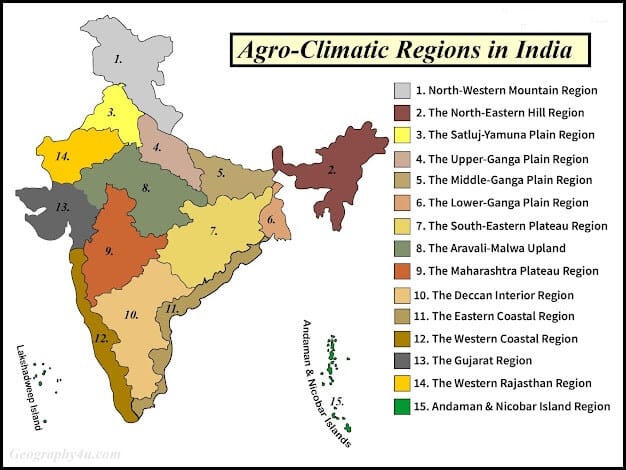
Image credit: [16]
Recipe: Masoor Dal
I’ll return to a concept I laid out in the beginning of this series: if you’ve got good recipes where plant-based ingredients stand on their own, eating vegan food doesn’t have to feel like deprivation. Indian food has been my go-to for satisfying vegetarian food for years, and many recipes are already vegan or can be made vegan very easily. Much of that is thanks to the landscape across the country. There are no fewer than 15 distinct agro-climate zones across this diverse country, and 13 of them support the cultivation of cereals (e.g. millets, wheats, barleys); 11 support rice; 10, pulses (e.g. chickpeas, peas, beans, lentils, and grams); 7, oilseeds, which is great if you’re looking for a plant-based oil to use instead of butter (or even ghee). [17]
So in the name of sharing one of those delicious and easily-made-vegan recipes, I hereby present a staple lentil dish that probably has as many varied preparations as there are homes across the country. This recipe, however, is adapted from India, the Cookbook [18] (Christian bought me two Indian cookbooks for Valentine’s Day last year. He thought he was being very clever because he’d get Indian food out of the deal. In reality, it’s actually part of a larger plan of mine in which I am slowly getting him comfortable with the idea of going to India.)
Ingredients:
- 250g masoor dal (split red or whole black lentils), rinsed and drained
- Pinch of asafoetida
- 1 tsp ground turmeric
- Chili powder to taste (I use Kashmiri – nice and spicy!)
- 1 tsp ground coriander
- 1 inch piece of fresh ginger, peeled and crushed
- 1 cup “rice cooking water” (I used starchy water from rinsing the rice)
- 3 ½ Tbs vegetable oil (could also use ghee if not trying to make it vegan)
- ½ tsp cumin seeds
- 2 cloves
- 1 Tbs dried mint (the recipe called for more, but it seemed like a lot)
- Salt to taste
Soak the dal for an hour.
Drain the dal, transfer to heavy pot, and cover with water. Add asafoetida, turmeric, and salt. Cover and bring to boil, cook for 10 minutes or until water is mostly absorbed and dal is softening. Add about ½ c water, cover, and cook on low for another 10-15 minutes.
When all water has evaporated, stir continuously for five minutes. Add chili powder, coriander, ginger, rice cooking water, and 1 additional cup water (like when making gravy, make sure the water is hot, and add it slowly while stirring to avoid lumps). Continue to cook until dal is thick (the recipe says 5 minutes, but it took a lot longer – it felt like making risotto.)
Heat oil (or ghee) over medium heat, add more asafoetida, cumin seeds, and cloves. Stir for about 1 minute. Pour over dal and sprinkle with dried mint.
Serve over rice (if going vegan) or with some kind of tasty, buttery, Indian bread if not.

Next week we will continue east with some of the concepts introduced here, including certain ingredients being associated with certain behaviors.
Thank you for reading!
[1] https://en.wikipedia.org/wiki/Indus_Valley_Civilisation
[2] https://en.wikipedia.org/wiki/Hinduism
[3] https://www.originalbuddhas.com/blog/hindu-deities
[4] https://www.britannica.com/topic/Hinduism/Karma-samsara-and-moksha
[5] https://commons.wikimedia.org/w/index.php?curid=2678477
[6] https://www.britannica.com/topic/Hinduism/Practical-Hinduism
[8] https://radicalmoderate.online/fast-food-part-5-zoroastrianism-and-persia/
[9] https://www.nature.com/articles/d41586-025-02633-4
[10] https://www.ebsco.com/research-starters/religion-and-philosophy/sikhism
[11] https://www.reddit.com/r/funny/comments/2i8suu/level_5_vegan/
[12] https://en.wikipedia.org/wiki/Jainism
[13] https://www.bbc.com/travel/article/20240104-are-jains-the-original-vegans
[14] https://yja.github.io/YJA/uploads/yjarestaurant.pdf
[15] https://www.health.com/butter-vs-ghee-8756933
[16] https://lotusarise.com/agro-climatic-zones-of-india-upsc/
[17] https://byjus.com/free-ias-prep/agro-climatic-zones-in-india/
[18] https://www.goodreads.com/book/show/8870944-india-the-cookbook
1 Comment
Fast Food, Part 5 – Zoroastrianism and Persia – Radical Moderate · October 3, 2026 at 9:50 pm
[…] Fast Food, Part 6 – Hinduism and India – Radical Moderate · March 22, 2026 at 9:18 pm […]