This post references the finale episodes of Star Trek: The Next Generation, Lost, and The Late Show with Stephen Colbert. Be ye warned: spoilers ahead.
No, I am not quitting this blog or my job – both reasonable assumptions, I realized, that people might make upon seeing the title of this post. Interestingly, I decided on this title right before realizing that the day I sat down to write this post was, in fact, the anniversary of the TV episode it references, the finale of Star Trek: The Next Generation. Captain Jean Luc Picard has been my #1 fictional role model for leadership since I took my current job as executive director of a nonprofit organization. His calm, steady demeanor through existential threats, his support of his colleagues to help them achieve their potential and work together to solve problems, and his utmost respect for justice, fairness, and accountability are all inspiring characteristics and qualities to which I aspire. I even brew myself a cup of earl grey on days when I need to channel some dignified courage… which is most days.
Interestingly, the same day, May 23 (which, I believe, was also my due date), is the anniversary of another beloved (of mine) TV finale: “The End” of Lost, airing 16 years after “All Good Things.” I’ve already waxed poetic about Lost on this blog, specifically after I was lucky enough to visit some of the filming locations on Oahu. [1] Controversial and divisive as the finale was for fans, the show consistently demonstrated the value of cooperation and the dangers of tribalism for a group of plane crash survivors who were literally off the map. Archetypal characters, who often clashed with and mistrusted each other, succeeded when they overcame their differences; audiences built empathy for unlikable antagonists as their backstories were revealed; heroes continued to push forward through their fear, navigating terrifying circumstances that defied logic and didn’t adhere to the rules of the “real world.”
The beauty of science fiction is its role in serving as a mirror for us, illustrating our greatest hopes and fears. [2] It reveals fundamental truths about the human condition through pointed social commentary in contexts that are sometimes more relatable to us than reality. [3] One of my favorite quotes from V for Vendetta is Evey relaying her father’s maxim that “artists use lies to tell the truth.” (The other half of that quote is “while politicians use them to cover the truth up” … but more on that later.) If ever there were a time to look for inspiration from people navigating uncharted territory, whether through the vast reaches of space or on a supernatural island, now feels like it – at least for me.
Ritual and Comfort
Over the past several years, I’ve developed a nice little end-of-May ritual that involves pushing through the discomfort of my annual performance review and the upcoming year’s budget approval process (which usually happen with my board the Friday before Memorial Day), and then leaving that meeting, shutting down my computer, and taking a deep breath to release the tension I’d been holding and enjoy the beginning of my birthday week (yes, only children get a whole week). In previous years, I’ve been able to take that legitimate calming breath and discharge my stress, knowing that the threat we fight remains, but so do we. This year feels fundamentally different. Nonprofit, academic, conservation, and civic institutions are more than a year into weathering the most severe and unchecked attacks on our work we have ever seen. The result is not just that our work is harder than ever, but that support is scarcer than ever.
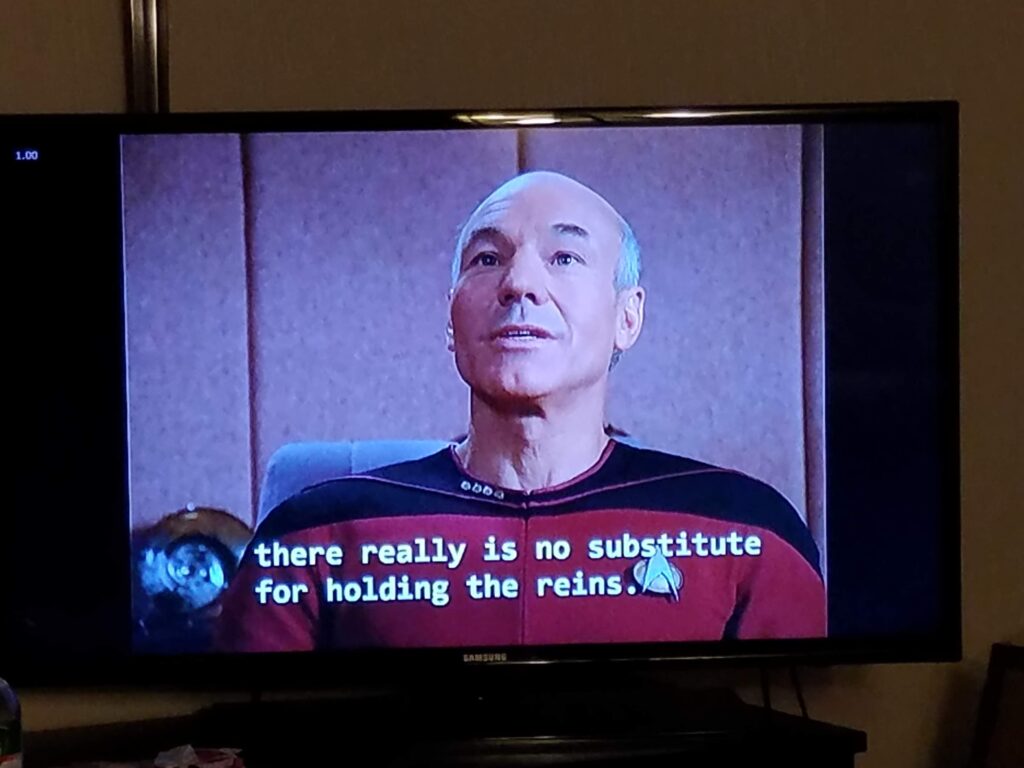
We are, in many ways, in uncharted territory, with limited resources and facing existential threats – not just to our organizations, but in some cases to the people, animals, natural resources, and democratic institutions we are working every day to protect. Leaders are supposed to be the brokers of hope, but it would be disingenuous of me to push a false hope or lie and say that I am not scared right now. While there is every indication that my own organization will once again “live to fight another year,” we have no idea what that year will hold for us or how we will have to adapt to meet new and unforeseen challenges. As such, I left that board meeting, not with my typical sigh of relief but with an air of uneasiness. The uneasiness was not about my amazing team’s ability to meet these upcoming challenges, but about my worthiness to lead them through it.
As things have become more uncertain and unsettled in my life over the last couple years (personally and professionally), I have progressively clung more tightly to rituals and comforts, anything to bolster a sense of stability in my life, creating an illusion that I have any kind of control over what happens to me. First of all, I realize what a futile effort steeped in denial that is, but, more importantly, it has made me wonder how much my grasping for a sense of normalcy and consistency has hindered my own leadership potential at a time when we need innovative approaches to address novel problems. (I always get a kick out of my capacity for understatement, e.g. describing the systematic gutting of our democracy as a “novel problem.”)
Uncharted Waters
The stakes feel higher than ever right now. I put a lot of pressure on myself to make the “right” choices as a leader, worrying consistently about how mistakes of mine will negatively impact my team and our efforts. I try to remind myself that I have seen leaders do everything right and still lose – as Picard once said to Data, “that is not a weakness; that is life.” While that is an important truth to recognize, it is still an uncomfortable one to grapple with. And that is why I’m still not sure if it was a wise decision to come downstairs after my board meeting and watch the final episode of The Late Show, which had aired the night before. Watching someone – a popular, talented someone – get fired for literally doing his job too well was unsettling. But watching the grace and humor with which Stephen Colbert handled it was genuinely inspiring and broke open the dam that was holding back many of my emotions related to uncertainty and unwanted change.
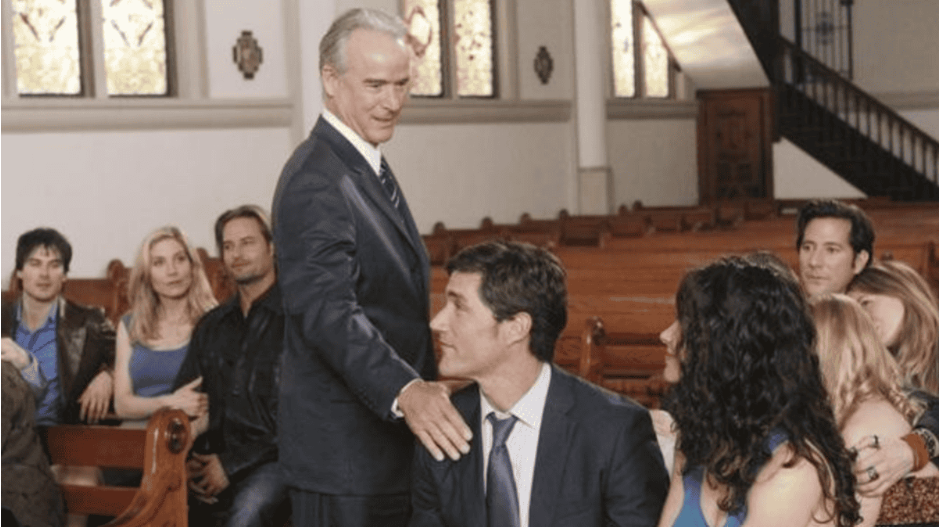
Image credit: [4]
I won’t lie: I greatly preferred The Colbert Report to The Late Show – when it comes to humor, satire is more my thing. But that’s not to say I didn’t enjoy The Late Show, recognize the sheer amount of talent and effort required of the entire 200-member staff there, or continue to love the nerdy, big-hearted person Stephen Colbert is. Regardless of whatever he may have felt about the situation, his persistent public message since the announcement of his cancellation last July has been overwhelmingly one of gratitude for the opportunity to do the show for 11 years – and he led with that sentiment as he kicked off his final opening monologue, imbuing the entire episode with a sense of joy rather than sorrow or anger. [5]
Interestingly, an element of science fiction was central to the fate of the show and the host himself. When technical difficulties interrupted Stephen’s much-anticipated secret final interview (which turned out to be my favorite member of my favorite band), he headed backstage to discover the reason and encountered a wormhole to another reality. One of my favorite physicists appeared to explain the presence of the wormhole being the result of a paradox (for example a #1-rated late night show also getting cancelled) before “accidentally” falling in while critiquing the accuracy of the wormhole’s depiction. Stephen’s old boss at The Daily Show then showed up and explained to him that “it isn’t a hole; it’s a metaphor,” and that his only choice left was how to walk through it.
On the Other Side
It’s ironic how much time I spend on this blog writing about the importance of proactive strategy, anticipating changes and meeting them with creativity rather than the stubborn refusal to adapt… only to be scared and resistant to change myself when the time comes. On the show, Stephen went kicking and screaming through his wormhole (in stark contrast to how he himself has handled the prospect of cancellation for the last 10 months), and what happened on the other side was simple and disarming. He found himself on an empty stage, lit only by the ghost light; he sat down and was joined by three others for a rendition of Elvis Costello’s “Jump Up.”
Although the song itself is cynical commentary on modern life and conveys the sense that nothing is reliable and everyone is fickle (especially politicians), [6] the atmosphere in which it was performed felt like one of contentment and even joy, not cynicism. Stephen’s background is in improv, which relies heavily on the concept of “yes, and” for acceptance of the situation and collaboration with others. [7] As Stephen seemingly manifested this quartet on an empty stage to perform a song that was clearly chosen for a reason, the message I took was not the bitterness of someone who lost his television show because the president can’t take a joke; it was the recognition that, yes, life can deal you a shitty hand sometimes, and what happens next is up to you.
For me, as a former theatre kid, I know the magic of creating a new world on a stage, whether through elaborate sets and costumes or through the sheer force of imagination. The image of the ghost light on an empty stage, for me, evoked a sense of the timelessness of the theatre, recognizing all the worlds that had been created there and all that would ever be; all the spirits that once had a connection to that stage and all that would in the future; all the hardships humanity has seen across the generations, and yet we retain the desire to create, to dream. The other side of Stephen’s wormhole reminded me that, indeed, all the world’s a stage, and that stage is truly what we make of it.
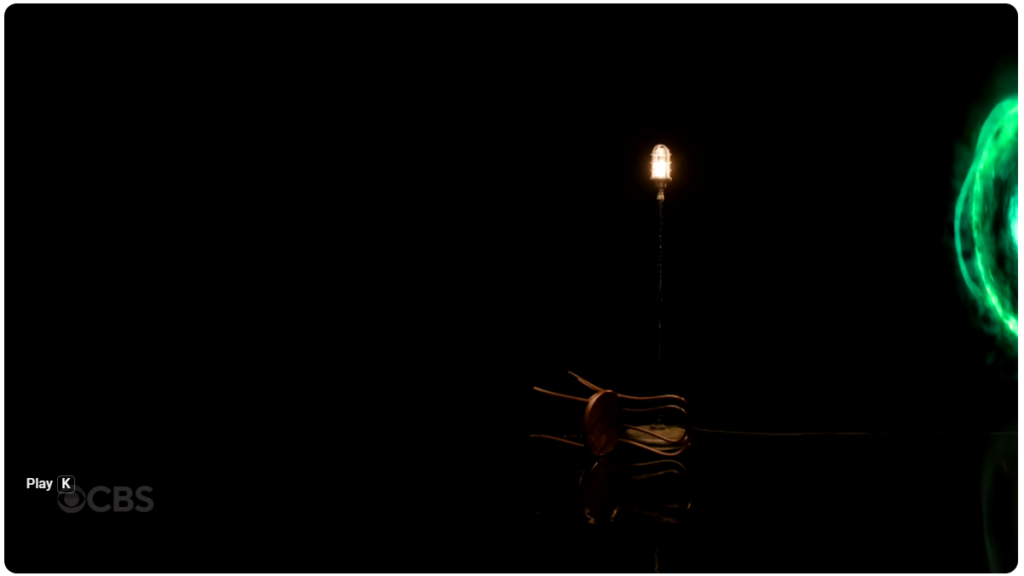
Image credit: [8]
That doesn’t mean any of what’s going on right now is going to be easy (I’m trying to remind myself as much as anyone), but it does mean that even if we don’t have any power over what happens to us, we do have the power over how we respond when we’ve lost. I’d also explore the idea that we even have the power to define what “losing” means and whether we’ve lost. For instance, I like to imagine that Stephen went to bed Thursday night a much more contented man than the person who was probably responsible for his cancellation. It is a continuing challenge for me to grapple with the unpopular truth that everything changes and ends, [9] including all good things, but I suppose the consolation prize is that we can be responsible for figuring out what the next good thing will be.
Thank you for reading.
[1] https://radicalmoderate.online/lost-and-found/
[2] https://www.byarcadia.org/post/science-fiction-genre-as-a-cultural-apparatus
[3] https://medium.com/@arp3348/the-intersection-of-science-fiction-and-social-commentary-13d27b38adac
[5] https://www.youtube.com/watch?v=76Gopgo-4PY&t=4s
[6] https://www.songlyrics.com/elvis-costello/jump-up-lyrics/
[7] https://er.educause.edu/blogs/2015/4/stephen-colbert-on-life-as-an-improv
[8] https://www.youtube.com/watch?v=zG0HFw0edXY&list=PLiZxWe0ejyv8KfXDnd023vRcF8W8_FbDm&index=8
[9] https://www.goodreads.com/en/book/show/555253.The_Five_Things_We_Cannot_Change
1 Comment
May 2026 Pennsylvania Primary Elections – Radical Moderate · October 3, 2026 at 10:13 pm
[…] All Good ThingsMay 24, 2026 […]