“Don’t worry about the hike – it will be easier because you weigh less here.”
– Crazy Ivan, our tour guide
In February, Christian and I found ourselves in Ecuador to celebrate some friends getting married. Aside from the wedding itself and a subsequent brunch with the bride and groom, we had eight days to explore one of my favorite countries – the place that truly whetted my appetite for travel when I was studying anthropology there as an undergrad. But there is so much bandwidth in this small country that is two-thirds the size of California that there was still plenty more I hadn’t yet seen or done.
The Andes
On my first night in Quito, 22 years prior, I was in a lot of pain thanks to the 9,350 ft altitude. (The decreased air pressure outside my body was exacerbated by the increased pressure inside my body, thanks to all the expanding soda I drank during the flight.) Aside from air travel itself, I had probably never been more than about 1,500 ft above sea level, while skiing in the “mountains” of eastern Pennsylvania. Consequently, a rapid transition from New Jersey to the second highest national capital in the world was a rough adjustment for my insides. I kept that discomfort in mind on this second trip, though I had been well above 9,000 ft a few times in the intervening years.
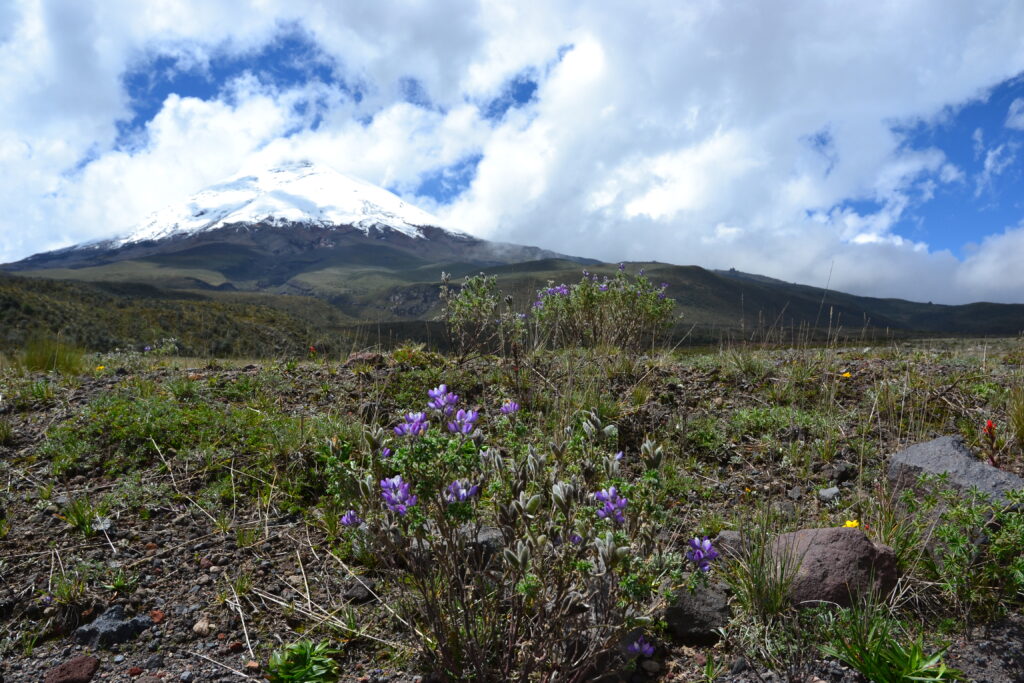
Christian and I landed in Quito two nights before the wedding and purposely didn’t schedule anything on our first day so we could take it easy if we needed to. There was no time change for us to worry about, but we were both now aware of the importance of acclimating to elevation. As it happened, Christian and I both felt surprisingly good when we woke up and decided to make the most of the day. Following the lead and recommendations of other wedding guests who had arrived earlier in the week, we quickly found a tour guide to take us to Cotopaxi, one of the tallest active volcanoes in the world, boasting a summit of 19,347 ft. [1]
I’ve been to the top of Mt. Fuji and Mauna Kea, but attempting to summit Cotopaxi was out of the question (though several people asked us if we did). Fewer than 2,000 people per year reach the summit successfully. As is the case with many mountains higher than 16,000 ft, it is capped with a glacier, so climbers need crampons, ice axes, ropes, harnesses, helmets, and more, to say nothing of extreme mental and physical fortitude. We had neither the physical training nor the gear (nor the desire) to undertake that kind of challenge less than 24 hours into a high-elevation vacation. We were actually under the impression that we would be spending most of our mountain time in a vehicle, observing what we could from the road. But our tour guide Ivan (whom we later dubbed “Crazy Ivan”) had other plans.
Altitude Adjustments
Ivan, a native of Quito and an excellent tour guide, was full of fascinating information and amusing anecdotes – and we got plenty of each on the hour-plus drive south to the mountain from Quito. Most notable among these facts is that the peak of Cotopaxi is farther from the center of the earth than the peak of Mt. Everest. The earth is not perfectly spherical and actually bulges a little bit in the middle, so, for that reason, sea level on the equator is farther from the earth’s core than sea level at the poles. And, as a result, tour guides and national park employees alike are very excited to boast this fact, much like people from Pittsburgh who proudly announce that we have more bridges than Venice. [2]
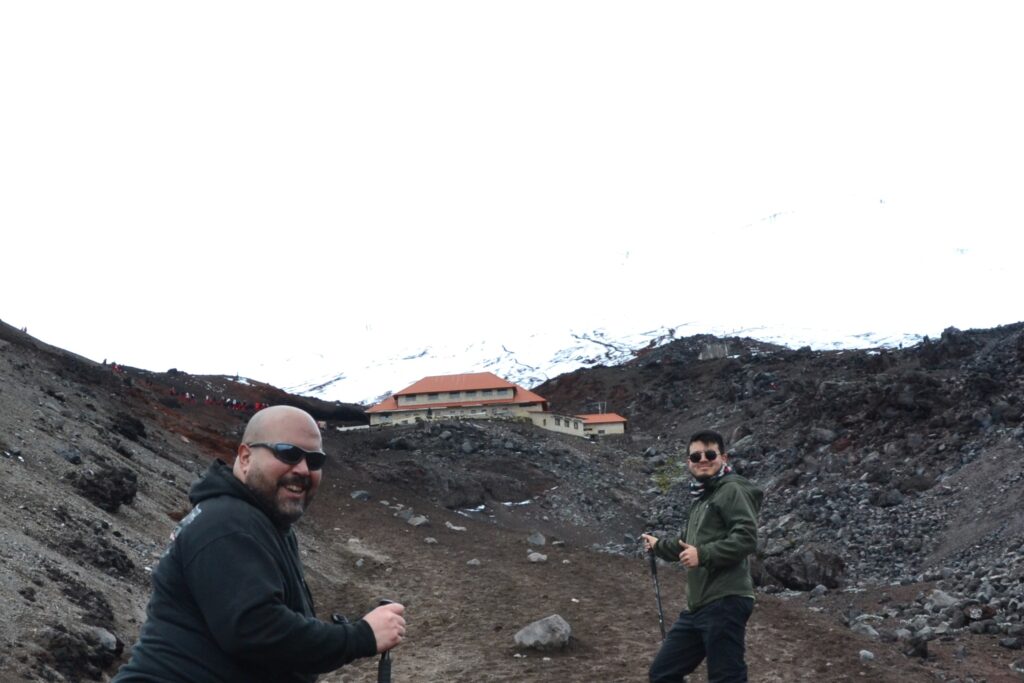
While that is true, it is important to note that the atmosphere is also thicker around the equator (the troposphere is about 10-11 miles high there, twice what it is at the poles), so it’s still altitude (and not distance from the core) that is going to impact humans and their equipment when adventuring in the high places of the world. As Ivan’s car struggled up the mountain, Christian explained to me that internal combustion engine cars have a harder time in low-oxygen environments, losing about 2-3% of their horsepower for every 1,000 ft gain in elevation. I was amused by the car’s increasing complaints as I contemplated that this day trip would be a new record for us; the previous one was our sunset trip up Mauna Kea, which represented a brutal transition from sea level to just under 14,000 ft in a matter of hours. [3] Even the Cotopaxi parking lot was higher than we had ever been, but “at least we started the day at 9,000 ft,” we thought.
It is true that healthy adults can begin adjusting to altitude within 24 hours, but we hadn’t even been in the country for 12 hours when we climbed into Ivan’s car. Ideally, when acclimating to higher altitudes, one should increase water intake, reduce alcohol intake, and limit physical activity for at least a few days, if not a week. [4] I will say that we were at least good about the water: we purchased a 5L jug when Ivan stopped for gas and emptied it in short order. In all seriousness, Acute Mountain Sickness is a legitimate risk for people adjusting to high altitudes, resulting in headaches, nausea, and fatigue. Those risks increase significantly when altitude is paired with extreme physical activity, which is why it is so important to be sufficiently prepared when adventuring.
Experience is the Best Teacher
In the end, we were fine, if humbled by the experience. We had no idea the day would involve a hike until we reached the parking lot (approximately 14,500 ft, according to Ivan). We got out of the car, admired the view, and Ivan told us that we would be taking a “short, 500 m hike” to base camp. I thought that 500 m (about 1,500 ft) was no big deal until a piece of garbage blew out of the back of Ivan’s car, and I tried to run after it. I didn’t make it very far – even as a former runner, I realized very quickly that a brisk walking pace would not be sustainable at this height. We also didn’t realize that the “500 m” was not the distance to be covered but the change in elevation.
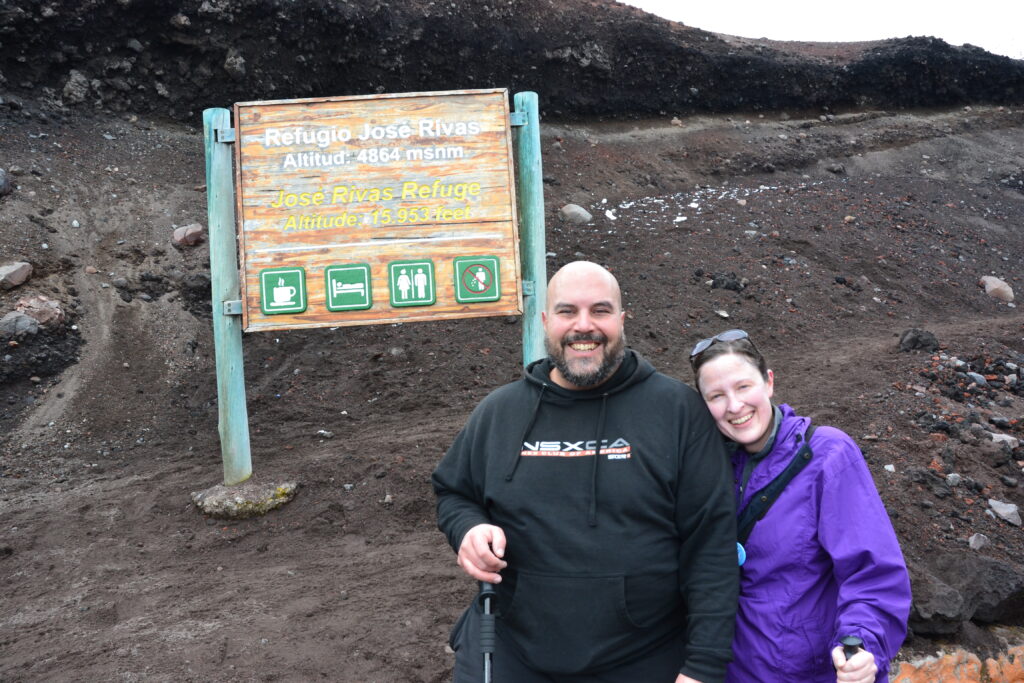
We moved very slowly, stopping every few steps to catch our breath, with the base camp shelter never looking any closer. Our progress was made even slower by the loose gravel of the volcanic cone – like climbing through sand dunes; our struggle was exacerbated by the fact that Ivan took us straight up a “short cut” instead of along the winding, packed-gravel switchbacks used by the rest of the tourists. No less than an hour later we were sitting at base camp (almost 16,000 ft), looking down on the gorgeous view, actually surprised that we did it – not just that we accomplished it, but that we agreed to it in the first place. That, however, is another important high-altitude consideration to keep in mind: poor decisions.
Humans struggle in various ways at high altitude conditions, losing physical capabilities first, as we pull less oxygen into our lungs, but mental capabilities start to go as well, with problem-solving skills and perceptual reasoning dropping off as the brain is deprived of oxygen. It’s certainly not the only reason people die trying to summit the world’s highest peaks, but making poor decisions during high-stakes situations is a significant factor, especially above 8,000 m (approx. 26,000 ft), also known as the “death zone.” [5] We were nowhere near risking our lives, but diminished cognitive performance and risk aversion have been noted at as low as 3,000 m (approx. 10,000 ft). [6] So it was interesting to consider that, once we were in the parking lot, we were probably more likely to say yes to the base camp hike in the first place. [7]
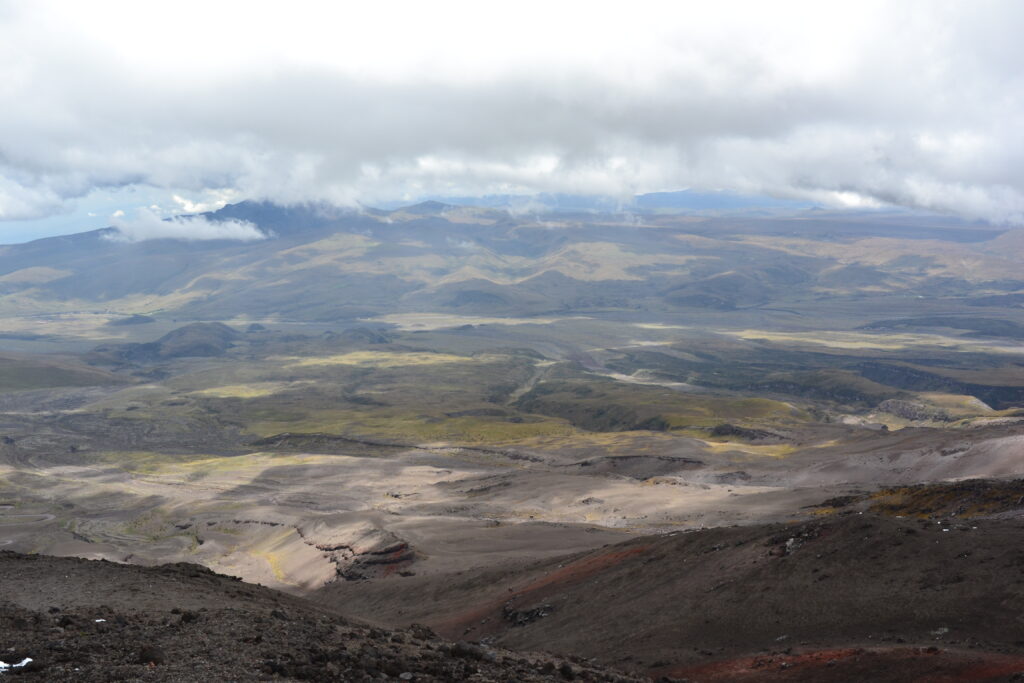
After we were back at our hotel that evening, huffing and puffing up the two flights of stairs to our room, collapsing in bed, and posting photos to social media, most of our friends were shocked that we made it up to base camp under our own power. (Honestly, neither of us took offense – we were both really out of shape in the middle of winter.) I wasn’t surprised at the fact that we struggled or that Christian got sunburned (typically a rare occurrence) in the thinning atmosphere, but there was one unexpected thing I did notice upon going through my photos: they looked different, as though the contrast and exposure were both turned up a lot. Of course it made sense that the images would turn out differently in thinner air, while my DSLR’s auto settings wouldn’t know that we were at a higher elevation.
Rare Air
In retrospect, I probably could have looked into it a bit beforehand if I had given it literally a minute’s thought, but it’s also nothing I can’t fix with some simple photo editing adjustments to contrast and saturation after the fact. Ultimately I chose not to make those edits because I think it’s a really cool feature of the changes that happen at altitude, as there is less atmosphere to scatter light from the sun. (It reminded me of how image sharpness increases during a solar eclipse, as the disc of sunlight narrows to a sliver.) But, if you’re looking more for a perfect photo than a cool educational story about these effects, there are a few things to consider, including impacts on battery life, camera settings, and equipment weight when trekking through extreme conditions.
The thin atmosphere at high altitudes scatters light less, and the increased amount of UV light reaching the camera can lead to overexposure of images; snow, if present, reflects a lot of light, exacerbating the problem. A UV filter can help cut down on UV light and glare to some extent, but I have one on my camera, so it clearly doesn’t fix everything. Based on what I read on photography sites and internet forums, there are polarized opinions about polarizing filters: they can reduce glare and increase color saturation so images aren’t washed out, [8] but above 13,000 ft they can make the sky look too dark if you don’t adjust them properly. [9] Ultimately, one of the favored suggestions on these sites is shooting in RAW format if possible in order to retain the uncompressed data from your camera’s sensors. That way you can make necessary adjustments using editing software after the fact.
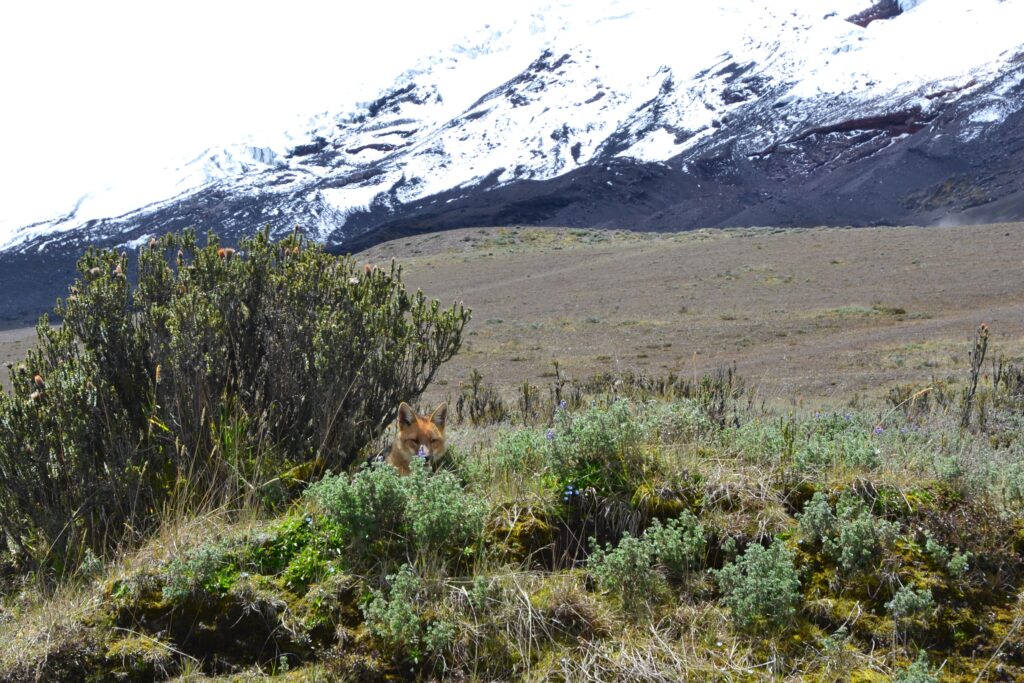
Morning and evening shooting can result in better photos, as sunlight has to travel through more atmosphere, which will result in a softer light as it scatters; similarly, overcast weather can provide better light conditions, as long as the clouds aren’t blocking your subject. But it’s also important to remember that battery life drops in the cold, meaning you should have multiple backups and store them close to your body, especially in the cooler hours of the day. However, you can’t always shift your travel around weather conditions, and those conditions can change very quickly. For that reason, many of these advice pages have as many tips for taking care of yourself as for your equipment, stressing proper acclimation practices and reminding readers that at high elevations “you’re going to be dumb and slow, and not know it.”
~
Fortunately, we had plenty more excitement ahead of us at more comfortable altitudes in the days to come. There will be more of those adventures and fun facts about the physics of our planet next week.
Thanks for reading!
[1] https://en.wikipedia.org/wiki/Cotopaxi
[2] https://radicalmoderate.online/from-one-city-of-bridges-to-another/
[3] https://radicalmoderate.online/where-the-earth-meets-the-sky/
[4] https://totalcarefc.com/how-long-does-altitude-adjustment-take/
[5] https://www.cnn.com/2018/06/04/health/altitude-sickness-everest
[6] https://www.ncbi.nlm.nih.gov/books/NBK232882/
[7] https://www.tandfonline.com/doi/full/10.1080/10253890.2019.1680634
[9] https://www.dpreview.com/forums/threads/high-altitude-photography.2761696/
2 Comments
When It Happens – Radical Moderate · October 3, 2026 at 10:41 pm
[…] Top of the World: CotopaxiJune 28, 2026 […]
Assessing Self Care: A New Year’s Resolution Update – Radical Moderate · October 3, 2026 at 11:11 pm
[…] as much as I did in February was because it included dancing at a wedding and hiking up Cotopaxi. [4] And most of the cardio I’ve gotten since then has been walking with friends, which is […]