Note: The bulk of the content for this post was outlined before the results from the midterm elections were available because I wanted a post with concepts that were going to be relevant and durable either way. I think I succeeded. I hope you agree.
No matter how you feel about the results of the US midterm elections, dear reader, you may agree that we are living in difficult times. However, I was recently told that the things making this a difficult time are also making it an important time. That concept was something I tried to keep in mind while writing this post, sitting on a bullet train on the morning of Wednesday, November 4: to my right, the Japanese countryside flying past my window, and to my left, my husband refreshing the news on his phone to see election results as polls were closing back home. I told him I didn’t want to know anything until it was all said and done – a tall order since we had a six-hour train ride with nothing to do except look at the news or the scenery.
I was thinking about how two years ago, after the last presidential election, I started reading Foundation by Isaac Asimov. [1] Good science fiction can serve as a fantastic mirror for the human experience, and I found this particular story comforting in a way. The (very simplified) premise of the book is that the course of human history can be tracked and predicted through a very complex set of calculations, marking advancements in technologies, religious and political maneuvering, and the rise and fall of empires. There was absolutely room for free will on the individual level, but the idea was that by zooming out far enough, it was possible to see that human nature resulted in very predictable trends on long enough time scales.
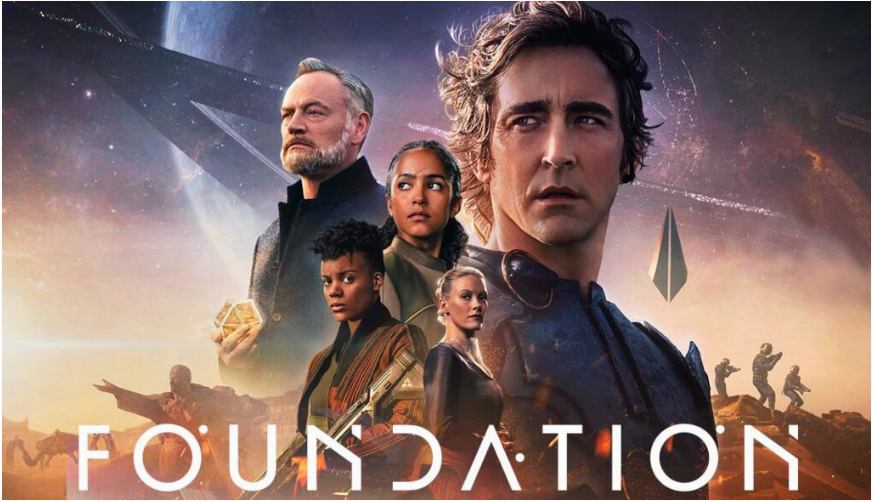
Image credit: [2]
Given the results of this analysis – no spoilers, we’re still very much in the premise of the book – it became clear that the existing empire would fall, plunging the galaxy into chaos. Consequently, there was an initiative to preserve human learning and culture in a way that would shorten that period of chaos. To be clear; the fall itself could not be prevented, but it would be possible to limit the length of the dark times to follow by creating a foundation of knowledge for the subsequent rise of civilization. Though I knew I was reading fiction, I still felt a strange sense of comfort at the idea of circularity – that some of the difficult things we’re seeing right now are a result of human nature and that humanity has gone through similar situations before.
Learning from History
Fast forward to this fall, to two separate Wednesday nights when I was sitting in Pittsburgh’s Heinz Hall for the first two guests in an annual speaker series: two former(?) politicians who felt like polar opposites of each other but still shared some similar perspectives about democracy in the United States and learning lessons from history. The one who made the comment about living in difficult but important times was a former Mayor of South Bend, Indiana, former US Transportation Secretary, and someone currently keeping mum about his political plans for 2028: Pete Buttigieg. The other, who spoke extensively about the importance of free and open democracies around the world, was a former Mayor of London, former Prime Minister in one of the world’s oldest monarchies, and someone currently living a life of “rustic obscurity”: Boris Johnson.
Given the timing of their lectures, the content of their remarks was necessarily open-ended, allowing for flexibility and relevance, regardless of what would happen on November 3. Fortunately, in my opinion, their perspectives were far broader than the big event that seemed to be looming in most attendees’ minds. And I say fortunately because I believe that we place too much pressure on presidential elections (and to a lesser extent midterm elections) at the expense of all of the other opportunities to participate in our democracy in the interim. (This opinion will come as no surprise to anyone who has read any of my other election posts. [3])
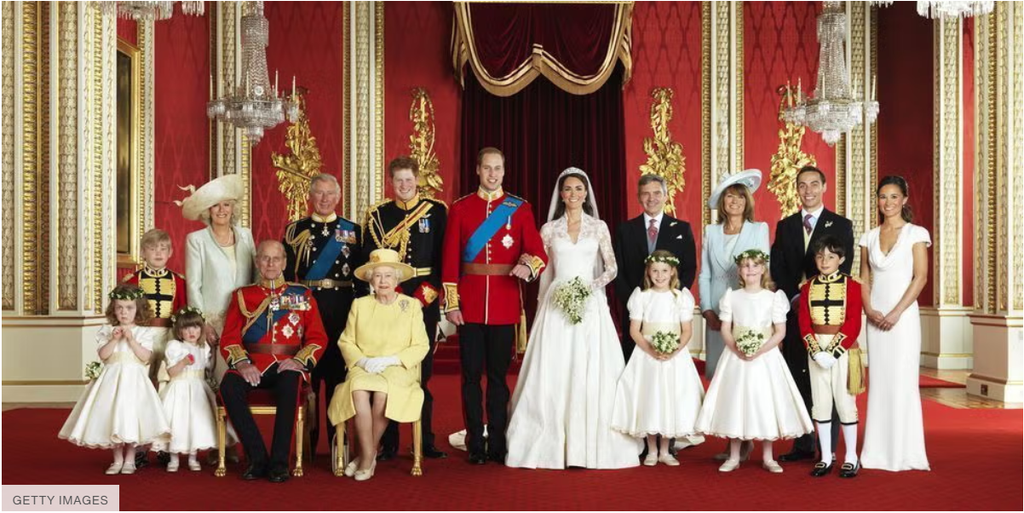
Image credit: [4]
Boris, who was shockingly poignant for someone who typically plays the buffoon as part of his public persona, spoke at length about the critical role that democracies serve in the world: maintaining fairness in government and accountability in public servants, while also driving collaboration and innovation. Large autocracies, he explained, can move quickly to enact their agendas, but those agendas are less likely to be stress-tested by healthy debate and competition, often resulting in ineffective and unfair courses of action. We have seen this dynamic play out ourselves in recent years as more power gets consolidated in our own executive branch: actions can be efficient but not just (an important point of comparison we examined in my Climate Lab two years ago). [5]
For that reason, Boris was very clear that he does not believe autocracies have the ability to maintain power on the world stage for extended periods of time. Now, while that’s a comforting thought, what constitutes long periods of time is certainly up for debate, and what such regimes are capable of doing in the short term is certainly cause for concern. On an unexpectedly related note, the reason I was in Japan was for a Climate Lab reunion that was held in conjunction with a forum on a “Free and Open Indo-Pacific,” [6] and it was clear that Boris’ optimism is not a common attitude everywhere, especially not in places significantly impacted by the economic and political dominance of one specific country that was neither named nor present in the discussions.
It Doesn’t Repeat, but it Does Rhyme
But therein lies the rub: we can observe objective benefits of democracy, and we can even state a preference for democracy, but when we look at history, Boris explained, we see that in times of crisis, humans tend to shift power away from the people and consolidate it in a small few. He listed examples of ancient Greece, Rome, England, France, Germany, and the United States that illustrated our tendency to back away from democracy when things get scary and cede that power to someone whom we think can fix it. Consider that in the newly independent United States, which had just fought a war to separate from a monarchy but was struggling to create something new, there was a suggestion of creating a monarchical state to stabilize the new government. [7]
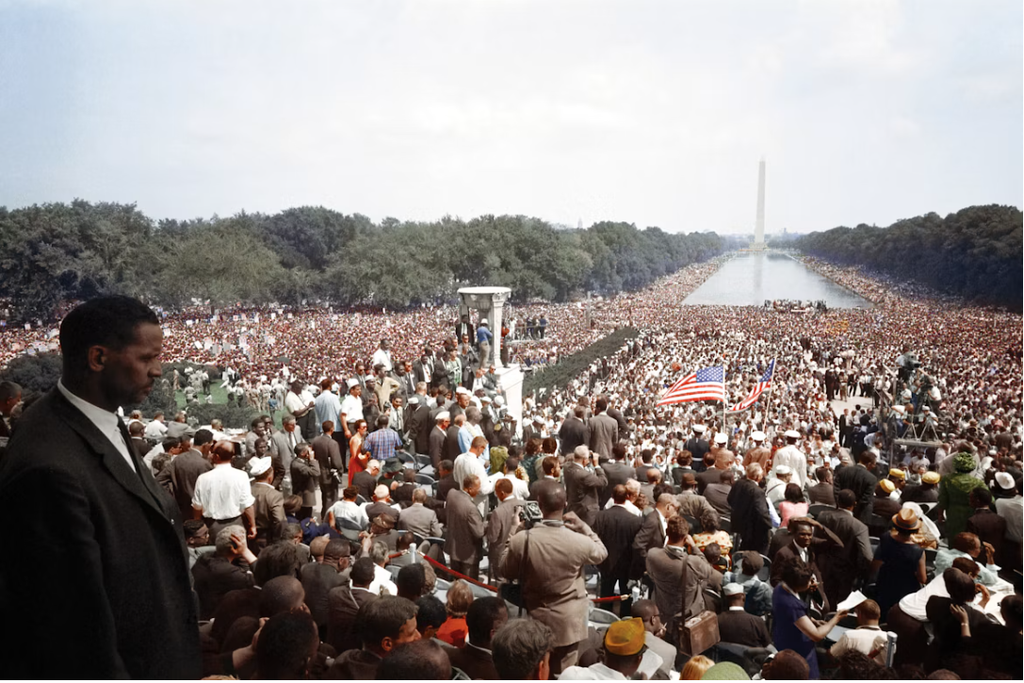
Image credit: [8]
I agree that it can be extremely comforting to believe that there are quick and easy solutions that work for everyone, and that if someone promises to fix something affecting you, it can be incredibly tempting to just let them do it (especially if it means you no longer have to worry about it). But my opinion on that subject is that no one person can fix our problems, though many of us seem to think so every time an election rolls around. While it may be harder and is certainly less efficient to have more collaborative, participatory processes for making decisions, the solutions are likely to be more creative, meaningful, and sustainable.
In thinking about solutions, I know that many people look to the election process as the sole way to get involved in politics. It is certainly the most obvious and structured way to hold politicians accountable and remove them from office when they’re not doing a good job. But, while changing who holds a given office can make a big difference, Pete used his speech to caution us against focusing too much on that aspect of politics, especially if comes at the expense of planning for how to move forward through these difficult times to arrive at something better on the other side. I was pleased to learn that Pete and I were on the same page, as I elaborated on that concept in a blog post earlier this year, specifically noting that regime changes often address the symptom but not the underlying causes that initially put that regime in place. [9]
Of course, thinking about solutions that will support everyone (not just people who agree with you) is an incredibly difficult ask, especially in the increasingly polarized, high-stakes world in which we live. But we’ll pick up there next week, with some more concepts from science fiction, politics, and my recent time in Japan. In the meantime, I’d love to hear what you think about any of the concepts raised here. Feel free to share your perspective in the comments – civilly, please, since we’re all navigating difficult but important times.
Thanks for reading!
[1] https://www.goodreads.com/en/book/show/29579.Foundation
[2] https://theplaylist.net/new-foundation-season-2-trailer-20230706/
[3] https://radicalmoderate.online/june-2020-election-guide-corona-edition-part-2/
[4] https://www.harpersbazaar.com/celebrity/latest/g14981394/royal-family-portraits/
[5] https://radicalmoderate.online/tag/climate-lab/
[6] https://www.jpf.go.jp/e/project/intel/exchange/jfipp/naramirai/index.html
[7] https://www.newyorkalmanack.com/2021/05/did-george-washington-turn-down-the-crown-at-newburgh/
0 Comments