As someone who hasn’t eaten meat for more than two decades now, I am familiar with the variety of meat substitutes available on the market and how they range from truly awful to pretty tasty, even though none of it tastes much like meat (not that I’d be able to tell at this point). Sure, I will try to replicate some meat recipes with artificial alternatives, but most of my favorite things to make are vegetable forward and don’t rely on meat substitutes, simply letting good blends of flavors speak for themselves on the plate. I use that approach with vegetarian recipes and even with my occasional foray into veganism. [1]
When I make vegetarian or vegan dishes at home, Christian will often rib me by trying it and then giving the following feedback: “You know what would make this taste better? Some meat.” During my recent experiments with zero-proof cocktails, his feedback was similar: “You know what would make this taste better? Some alcohol.” Although I’ve been cooking veg/vegan meals for years, using recipes where there’s no meat to miss, or with occasional meat alternatives following form, not flavor, I find it surprising that I didn’t immediately think to follow the same route with alcohol-free cocktails.
Don’t Even Bother
Alcohol’s flavor is distinctive, and even the best alternatives I’ve tried at this point still just don’t do the trick. If that’s what you’re looking for, you’re going to be disappointed. And there is absolutely something to be said for the disappointment that goes hand-in-hand with trying and failing to replicate a well-known recipe. If someone likes the taste of a meat dish or an alcoholic cocktail, the obvious lack of the central ingredient is enough to make people try and quickly give up. My recent cocktail experiments resulted in several “passable” (at best, but not necessarily good) drinks, but that was while attempting traditional recipes. I rapidly realized that I was going to need a different approach: notably one centered on different expectations.
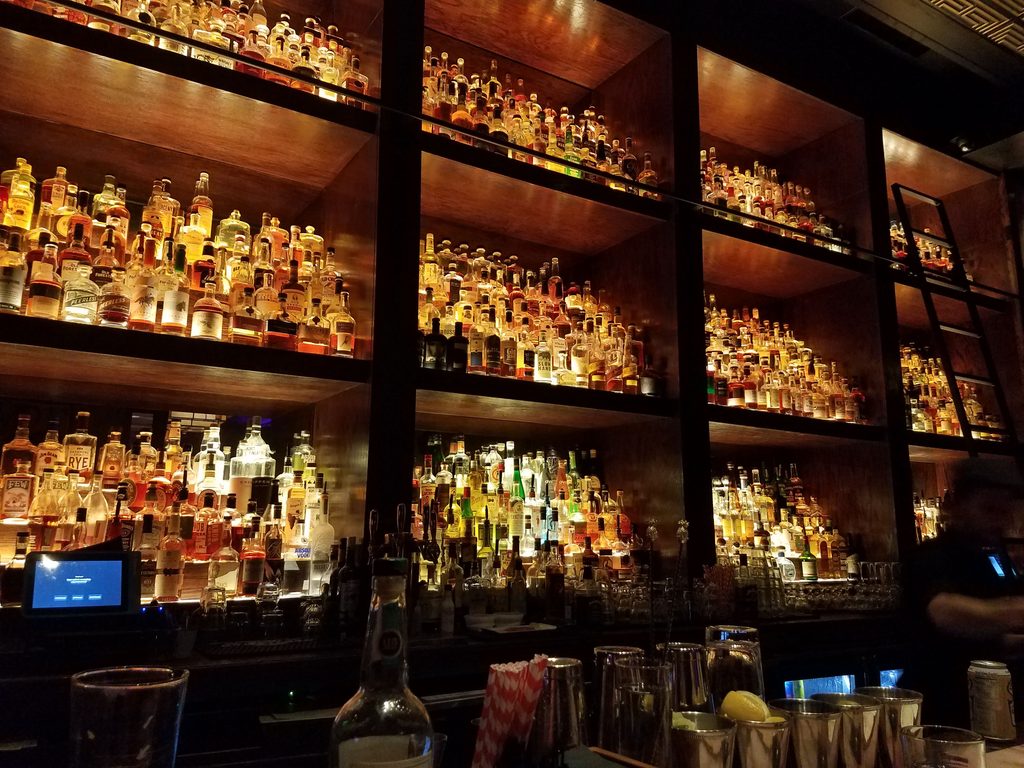
The key – at least for me – has been accepting that I’m not going to make something that tastes like the real thing, so instead, I can focus on something that tastes different but good in its own right. Like with my cooking, these drinks can incorporate certain flavors, textures, or even just vibes, and not try (and fail) to replicate something that I fundamentally can’t. For me, I also really like the process of mixing a tasty drink, and so I’ve tried to consider that, too: enjoying the experience of trying concocting something new, the presentation in fancy glassware with the right garnishes, and then taking a minute to sit back and enjoy whatever I’ve made.
Complex Flavors
For people who are confident and curious in the kitchen or behind the bar, it’s worth considering the different components that can make drinks legitimately interesting for your tongue. An online article about elevating mocktails listed a range of ingredients to consider, [2] including:
- Probiotic beverages, such as kombucha, for fizziness, and complex flavor
Note: depending on your alcohol sensitivity, these may not be an option - Egg white for thicker texture
- Spicy ingredients, such as jalapeno, or ginger for some bite
- Syrups, such as oleo-saccharum (which is quite easy to make with citrus peels and sugar) for depth of flavor
- Tea for bitterness
- Garnishes for fresh flavors and smells, as well as presentation
- Bitters for depth of flavor
Note: non-alcoholic bitters available, if a few dashes of standard (alcoholic) bitters aren’t an option. - Kava for earthy flavor and depressant properties
Note: I try to keep cultural appropriation in mind here – it is a sacred drink and meant to be consumed in a very specific way, not as an alcohol substitute
Unfortunately, I was at a bit of a loss for where to start. I’m the kind of person who is useless in the kitchen without a recipe to follow, and the vast majority of mocktail recipes I encountered online were pretty sad versions of traditional cocktails, not creative explorations of flavor and texture combinations. I found that to be a shame, since I recently discovered it is possible to make a good-tasting mocktail. I actually had one while I was out for dinner downtown a few weeks ago, made with (from what I could guess) apple cider, kombucha, and lemon. (Once I knew what I was looking for, I found a similar and enjoyable recipe online, which you’ll find below.)
Good Drinks
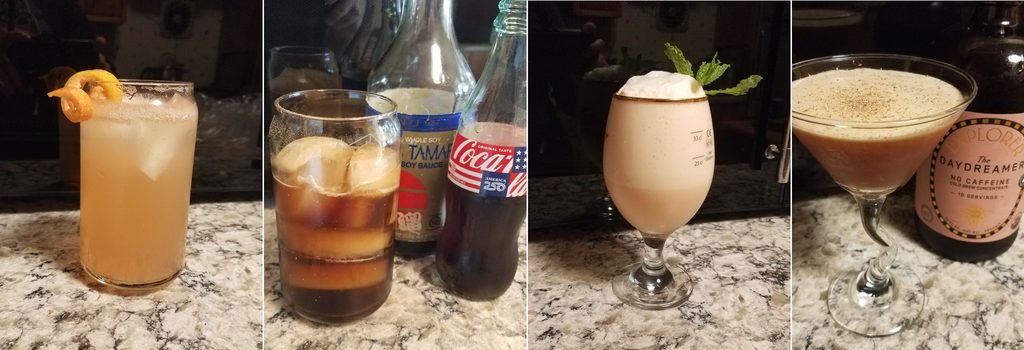
Fortunately, after reading Part 1 of this series, a friend of mine suggested a book that was just what I needed. I ordered it immediately so I could try some of the recipes for this post. The author of Good Drinks, Julia Bainbridge, traveled the country visiting different bars and trying their mocktails. [3] She consolidated the best of what she found in a well-organized volume that categorizes drinks by time of day / occasion, with a handy ranking system for how much of an effort they are to make. Since these drinks are creative and complex, it can take time to source rare ingredients and make specialty components from scratch. Given the time available before leaving town for a few weeks, I was limited on what I could find and make, but even some of the simpler recipes were quite good.
My favorites:
- “Billows & Thieves,” a mix of grapefruit juice, lemon juice, cold brew concentrate, cardamom syrup, smoked sea salt, and grated nutmeg on top
- “The Bicycle Gang,” a mix of orange juice (I used blood orange juice), whipping cream, and simple syrup, topped with soda water (I used a sprig of mint instead of the citrus twist called for in the recipe)
The interesting ones I might make again:
- “Nectar of the Gods,” made with grapefruit juice, lemon juice, sweet pickle brine, simple syrup, and soda water
- “Change of Address,” made with lemon juice, maple syrup, soy sauce, and Coca-Cola, with grated cinnamon on top
The ones I’m looking forward to trying, given a little more time:
- “Don’t Touch My Car Keys,” containing coconut milk, turbinado sugar, lime juice, soda water, and Angostura bitters, with a sprig of mint
- “Apple & Miso,” with apple juice, miso syrup, citric acid, and shiso leaves
Recipe: Near-Zero Proof Apple Cider-tini
As I said, I ordered something like this drink while out on the town and thoroughly enjoyed it. I consequently made a few for myself at home after finding a recipe online, which was easier to do once I knew what I was looking for. [4] The recipe is completely non-alcoholic, but I used kombucha and a dash of orange bitters (so it was probably still less than 0.5% ABV). I liked it so much that I made a batch of it to take to a Halloween party, where it got good reviews.
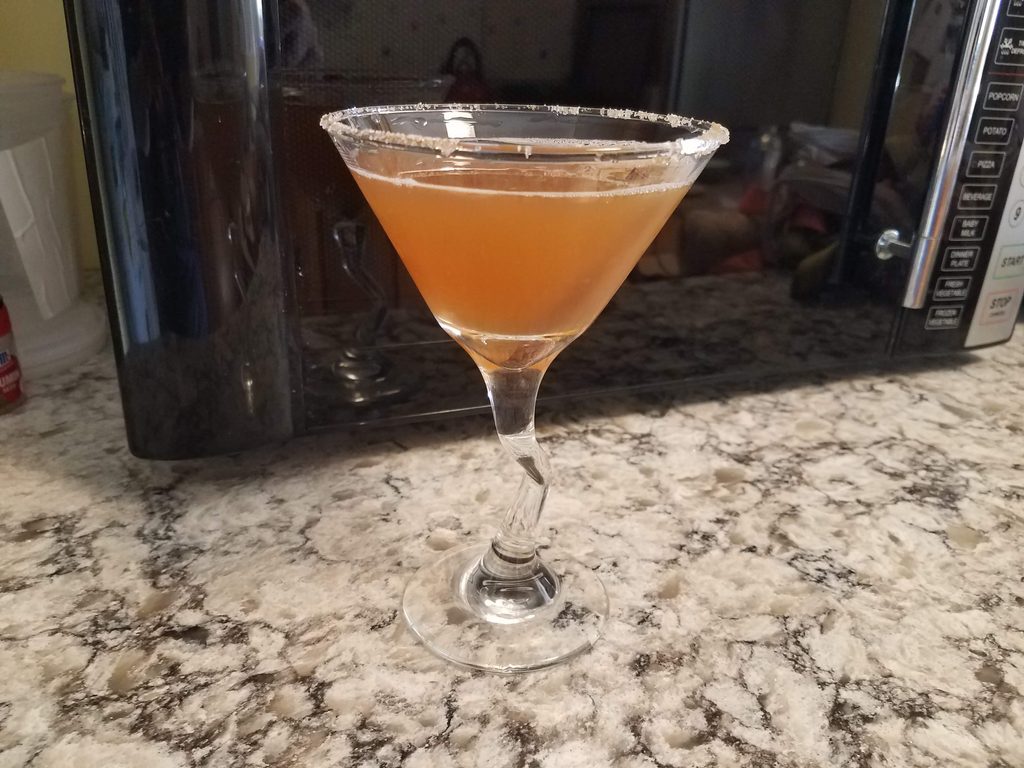
- 4 oz apple cider
- 3 oz kombucha
- 1 oz lemon juice
- 0.5 oz maple syrup
- Dash orange bitters
- Cinnamon-sugar rim on glass (sticks really well if you rub the lemon rind around the rim instead of dipping it in water)
- Cinnamon stick
Shake with ice, pour into rimmed glass, and garnish with cinnamon stick
I’ve enjoyed this exploration of non-alcoholic drinks over the last few weeks and greatly appreciate the advice I’ve received from friends, guiding me to better options than what I could find on my own. The only thing I’ll say as a word of caution is how quickly my tolerance for alcohol has dropped – I’ve now had two weekends in a row with unexpectedly strong reactions to two beers. Remember to hydrate!
Thanks for reading!
[1] https://radicalmoderate.online/fast-food-part-1-catholicism-and-italy/
[2] https://www.tastingtable.com/1500012/ingredients-upgrade-mocktails-at-home/
[3] https://www.goodreads.com/book/show/50482974-good-drinks
[4] https://www.mocktailsdaily.com/apple-cider-mocktail-recipe/
0 Comments