Disclaimer: Always use caution and common sense in your own kitchen when fermenting things. The internet is a great resource for more information on foodborne illness and what fermented food and drink are supposed to look and smell like.
I first heard about kombucha a little over a decade ago, around the time I was living closer to the city and had access to trendier grocery stores (including one where you could fill a growler from rotating kombucha taps). This tangy, fizzy, fermented tea was definitely having a moment in the 2010s, and I remember being surprised by all of the buzz about the myriad benefits that it and its byproducts conveyed, from curing cancer to cleaning counters. To be fair, I took this praise with a small grain of salt, recognizing that it probably had some benefits but was not a miracle drug.
Instead, I enjoyed it mostly on its own tastebud-tingling merits and even brewed some of my own for a while. I still search it out when I have digestive issues, but it hasn’t been a regular part of my diet for about a decade. It came back on my radar again this year as I was researching probiotics and gut health (for personal reasons [1]), and it seemed like a good time to revisit the science of this living drink to see what it does (and doesn’t do) for us.
Dividing Popularity
Even the background story of kombucha is up for debate. The name is Japanese (and I am probably the only person I know who pronounces it that way), but it is widely believed to have roots in traditional Chinese medicine to support digestive help – one if its names, wèibǎo, means “stomach treasure.” While common belief is that it is an ancient beverage (from BC, according to some sources), the lack of records before 1852 makes that claim questionable. [2] It gained popularity in the US during the AIDS crisis in the 1980s because of its purported benefits to the immune system, but it fell somewhat out of favor in 1995 when the CDC tied a lactic acidosis death to kombucha overconsumption. [3]
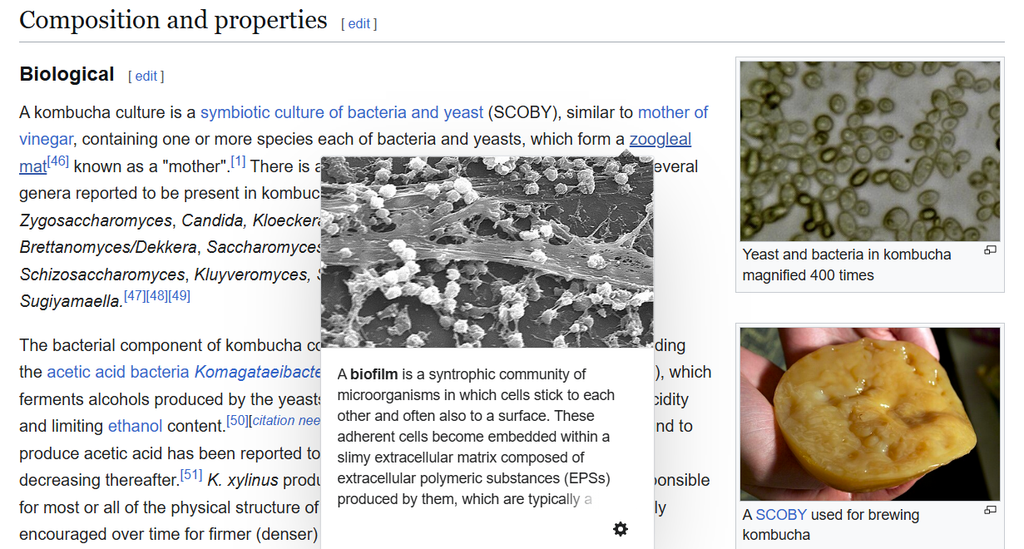
Image credit: [4]
In the early 2010s, its popularity was on the rise again, and new commercial formulations ensured that alcohol levels could remain below 0.5% (the regulatory limit), resulting in easier expansion and distribution. 2014 sales in the US alone broke $400 million, and subsequently several major beverage companies (e.g. Coca-Cola and PepsiCo), including Big Beer (e.g. AB InBev and Molson Coors), acquired or developed their own kombucha production. A 2025 projection expected kombucha to have a global market size of $9.1B by 2033 [5] – and that’s still despite all of the people who make it at home.
During this revival, there were plenty of new blogs and videos about how cheap and easy kombucha was to make yourself. It also raised a lot of eyebrows as people learned what exactly they were drinking. Fermentation happens when bacteria, yeast, and/or mold break down carbohydrates and convert them into acids, gases, or alcohol. Fermented foods, from soy sauce to blue cheese to cured meats to yogurt to wine and beer, have complex flavors because of one or more of these actors. In kombucha production, a “symbiotic culture of bacteria and yeast” (SCOBY for short) actually forms a protective layer on top while driving fermentation below. But because this biofilm resembles a jellyfish, I know several people who have chosen to permanently pass on drinking the resulting beverage.
Panacea or Placebo?
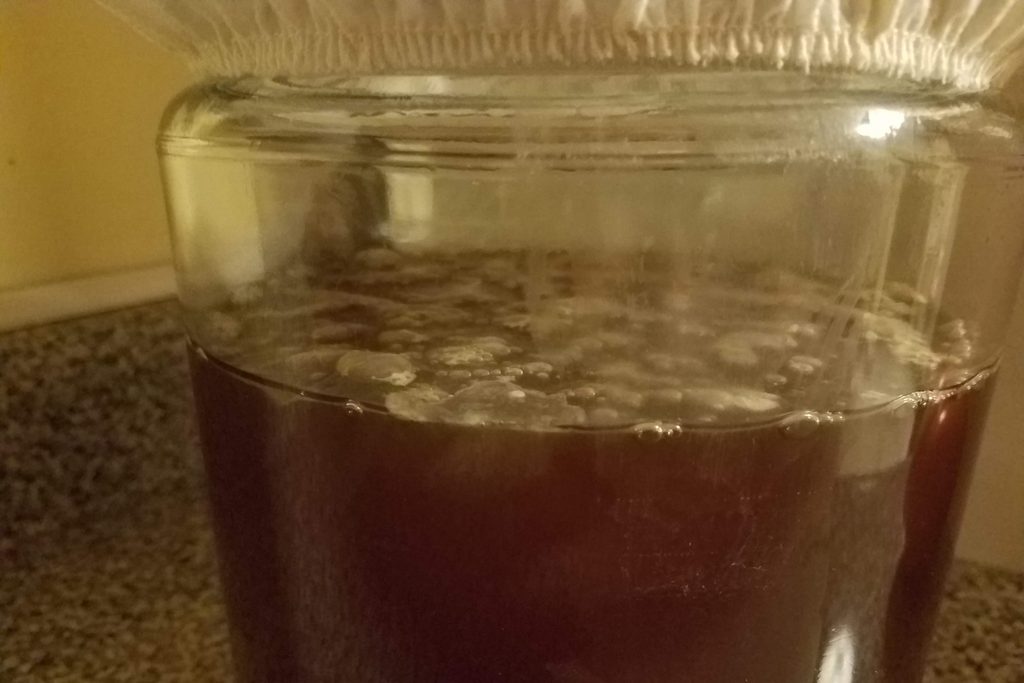
The SCOBY creeped me out a little bit until my first time through the cycle of brewing a batch myself; once I had handled it and even peeled off older layers during subsequent batches, I was far more appreciative than disgusted by it. And it does an incredible amount of work breaking down sugars in brewed sweet tea to create a range of beneficial compounds including organic acids (e.g. Vitamin C), probiotics, vitamins (especially B-complex), and antioxidants. While some enthusiastic kombucha fans have no doubt erred on the optimistic side when claiming certain health outcomes as a result of kombucha consumption, [6] we do know that these compounds are generally good for human health.
More reliable sources, such as Cleveland Clinic, list several probable health benefits, including reduced inflammation, better gut health, a stronger immune system, liver support in detoxifying the body, and limiting buildup of plaque in arteries. [7] When evaluating health claims, it is always important to remember what a study actually examines vs. what interpretations are made with the results. For example, we know that antioxidants help prevent cell damage, and that cell damage can potentially lead to cancer; that doesn’t mean that the antioxidants in kombucha will prevent cancer. Similarly, studies performed on cells in a lab can indicate promising associations, [8] but those make up a tiny component of the complex web of environmental exposures and genetic factors in a single human being.
My point is – as always – to be mindful of what you read because, while I am a big fan of kombucha, I simply want to celebrate it based on what we know about it and what is plausible given the available science. There is some interesting and promising information on multiple possible health benefits of this living drink, but it’s a long jump to imply that it can prevent or cure certain diseases. Consequently, moderation is still important, especially if you’re sensitive to alcohol or caffeine (though it does seem that the fermentation process breaks down some caffeine, [9] which is great news because I certainly don’t need any more than what I’m already getting.)
Recipe: Kombucha; or, “The Neverending SCOBY”
If the SCOBY descriptions and photos haven’t scared you off, kombucha is one of the easiest things to make in your kitchen. There are any number of recipes available online, but I am sharing details (and lessons learned) from my brewing journal. Prior to this fall, I attempted kombucha twice before: once without a SCOBY and once with. My first attempt, without a SCOBY, ended with fruit fly contamination because the cloth I used on top had a very loose weave. My second attempt, with a SCOBY from my friend Kelly, turned out very well and lasted until I got overwhelmed with the amount of kombucha I was making. (I guess it didn’t really occur to me at the time that I could just make smaller batches…)
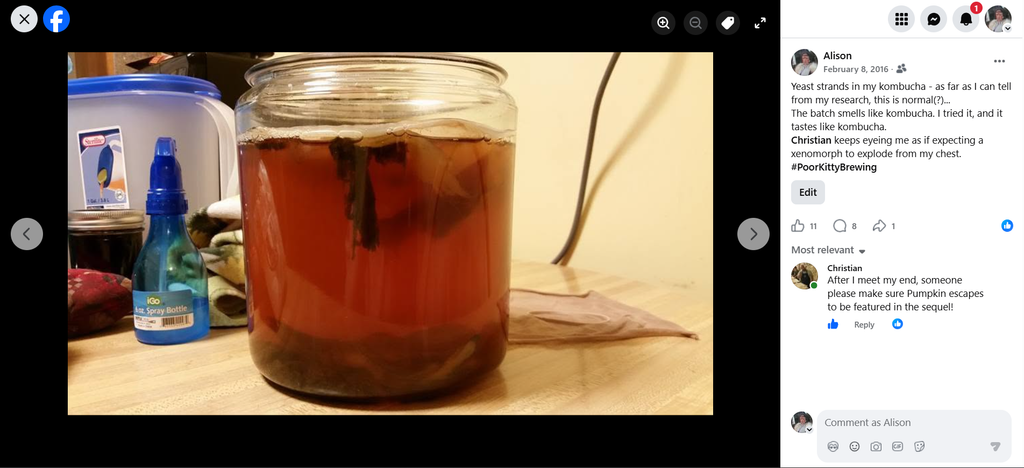
This fall was my first successful attempt at growing my own SCOBY (since none of my friends had one to share). My understanding is that the risk of contamination is higher if you’re starting without a SCOBY (because it sits on top to protect to form a protective layer, but I would think the risk is still just as present later because you could introduce new bacteria at any point in the process of making subsequent batches). You can make kombucha from scratch without a SCOBY to start, and it should work fine as long as your equipment is properly sanitized, and it’s properly protected while it’s fermenting (which should always be the case anyway.)
Ingredients:
- 3.5 qt water
- 1 c sugar
- 8 bags of black tea
- 2 c kombucha (if using store-bought, make sure to look for words like “live culture” and “unpasteurized”)
- Other flavorings, if desired (I typically use 1 lemon and 1” ginger)
Equipment:
- 1 gallon jar/container (preferably glass)
- Breathable fabric large enough to cover mouth of jar, string to secure
- Measuring cups
- Plate
- Strainer
- Growler or sealable jug
- Bottles for smaller servings, if desired
Boil water, dissolve sugar, steep tea for 3-5 minutes (steeping black tea for longer than 5 minutes makes it more bitter – if you want it stronger, add more tea bags, not more time). Let cool, pour into a sanitized 1gal jar/container along with kombucha. Cover securely with breathable fabric (I use a cotton cover that looks like a shower cap), place somewhere out of the way at room temperature, and check every few days for signs of mold or fruit flies. A thin SCOBY should form in approx. 2 weeks.
When SCOBY looks thick/sturdy enough to remove from the jar, make your second batch of sweeet tea and let it cool. Sanitize hands and equipment; gently remove SCOBY and place on the plate; reserve 2 c kombucha for the next batch. Taste the initial batch of kombucha – if it is too vinegary, you can pour it in your compost, use it for cleaning (I have never done that), or try adding some sugar to make it more to your liking – but be careful about adding sugar and then putting it in a sealed container! If it is palatable, transfer it to a jug/growler along with any flavorings you like, and store in the refrigerator for 3-5 days.
Clean the gallon jar, add reserved kombucha and new cooled tea, gently replace the SCOBY on top, cover jar, and let batch #2 do its thing for another 10-14 days.
Check the flavor of batch #1 in the growler after 3-5 days, strain out any solids, package as desired (growler or smaller bottles), and store in refrigerator. The sooner you drink it, the sweeter it will be – over time, it will become more vinegary and more carbonated.
Keep a record of fermentation times and ingredient quantities so you can adjust the recipe and process to your taste as you go.
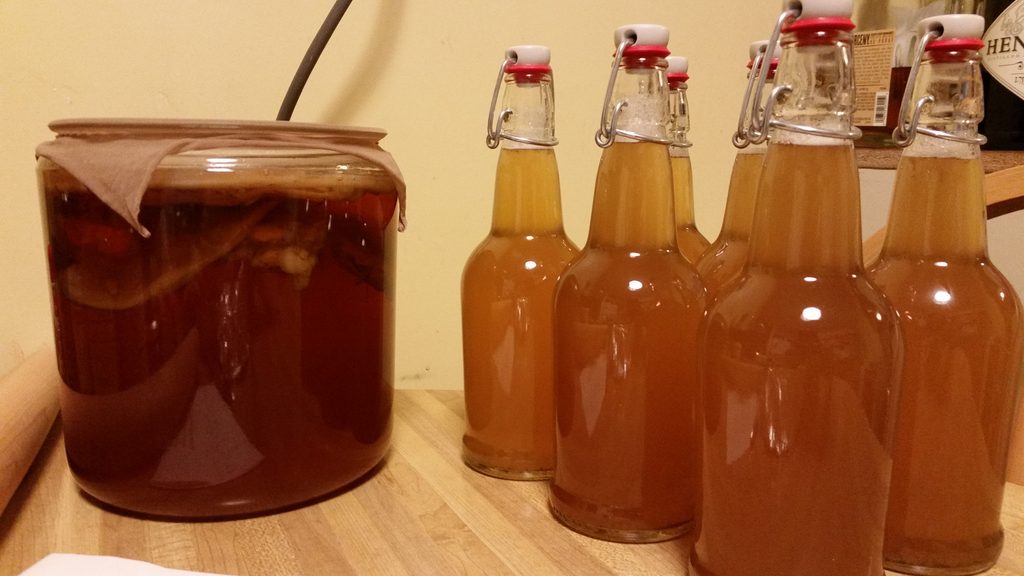
The SCOBY will thicken with each successive batch – and you can peel off the older layers to share with friends who want to start their own batches. Once you run out of interested friends (that was two for me), you can use them for gardening (add to compost or bury near plants to lower soil pH). Or you can get even more adventurous than I have, using them in cooking to make jerky or sushi, [10] or in beauty products, such as a face mask or moisturizer. [11] Like kombucha, apparently there is no end to what the SCOBY can do…
Are you a kombucha fan, and have you made your own? I’d love to hear about your own favorite flavors, recipes, and plans for old SCOBYs.
Thanks for reading!
[1] https://radicalmoderate.online/gut-health-a-strong-offense/
[2] https://en.wikipedia.org/wiki/Kombucha
[3] https://www.britannica.com/topic/kombucha
[4] https://en.wikipedia.org/wiki/Kombucha
[5] https://www.grandviewresearch.com/industry-analysis/kombucha-market
[6] https://www.tuasaude.com/en/benefits-of-kombucha/
[8] https://pmc.ncbi.nlm.nih.gov/articles/PMC6956236/
[9] https://www.sciencedirect.com/science/article/abs/pii/S2212429226005584
[10] https://foodprint.org/blog/kombucha-scoby/
[11] https://kombucha.com/blogs/recipes/uses-for-leftover-pellicles
1 Comment
Coffee, Tea, My Kidneys, and Me – Radical Moderate · October 3, 2026 at 11:15 pm
[…] Kombucha: Home-Grown Health?September 13, 2026 […]