I was not in a good place when 2026 started, and I’m not proud of how I showed up for the new year. I was feeling pretty burned out and even resentful of those around me who were getting to create and celebrate new holiday traditions while my family continued to shrink and our traditions started to fade. I knew that these feelings were a result of being burned out, and I also knew that this burnout was coming, in part, as a result of working to take care of others without making my own needs known or carving out time to take care of myself. As Brené Brown says, resentment comes from poor boundaries – something I regularly remind others but rarely remind myself. [1]
Self Defense
I knew 2026 was going to be a hard year for many reasons, and I didn’t want to start it and have to deal with new obligations when I hadn’t even had a chance to catch my breath from 2025. But time has a frustrating way of moving forward, and life continues to put challenges in our paths. I know those challenges are helping me to grow (I’m “leveling up,” in D&D parlance, as a dear friend often likes to remind me), but I also can’t recall a time when I felt like I was in a lull between waves. Since the beginning of the pandemic (at least), each successive year of my life has been challenging in a new and more extreme way, and I know I can’t count on the Universe giving me a break – I have to make that happen for myself.
It’s something I regularly say to my coworkers: you need to take that time for yourself because things aren’t going to slow down on their own – there’s always the next crisis/deadline/obligation waiting in the wings, and if you’re waiting for a good time to take a break, it’s not going to present itself. Furthermore, simply taking a break to recover from overwhelm isn’t a long-term strategy: it’s a last line of defense, as the Nagoski sisters describe in their book Burnout. [2] Alternately, building resilience to chronic stress comes from routine self-maintenance, physically and mentally. That means eating well, exercising, getting enough sleep, processing emotions, and taking time to have fun and be unproductive – all things we tend not to do when things get stressful.
Recognizing that no one was going to take care of me except me, I devised a set of New Year’s resolutions for 2026 to support my own wellbeing and resilience to stress on a number of fronts: physical health, mental health, simplifying the space around me, nurturing relationships, and learning / giving back to the world around me. [3] And, yes, I recognize the irony of developing a matrix of daily, weekly, and monthly activities in five separate areas out of a desire to address chronic stress. Unfortunately, I can’t exactly confirm that this approach has been helpful because the ones I probably need the most are the ones I’ve most often let slide.
Crunching Data
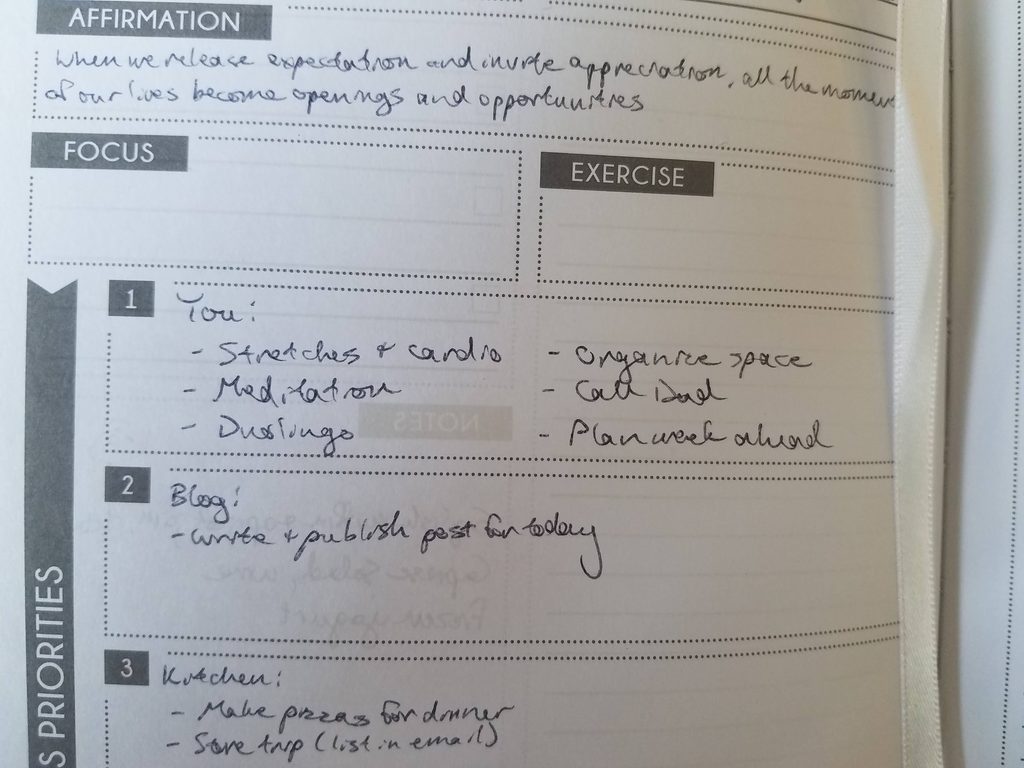
When I set these resolutions almost nine months ago, I knew that I’d have a better chance of success if I built some level of accountability and reassessment into the process. Given the success I had in 2025 by writing my set of six intentions in the Weekly section of my planner every Sunday, I applied that process again this year by writing unique Daily, Weekly, and Monthly objectives as the top priority in the respective pages of my planner. As I achieve these objectives, I check them off. If I don’t get to them, that doesn’t mean I give up on the resolution entirely (as I’ve often done in the past); it means I try again the next day/week/month. And checking off my progress means that I can take time to assess my progress…
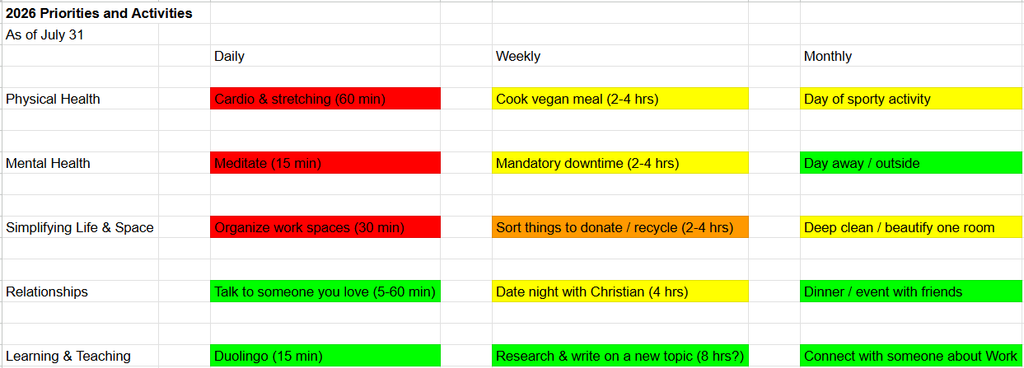
It will come as a surprise to absolutely no one that I am all about intensity over consistency. For that reason, my once-monthly novel activities have a higher success rate than my daily activities (e.g. deep cleaning a specific room vs. spending 15 minutes a day to tidy/organize as needed). I have always been that way – it’s much harder to summon the motivation to clean if my space isn’t frustratingly or embarrassingly bad… and the payoff doesn’t feel as good either if it’s just a small improvement. I’ve also just always hated cleaning, and the reason I’ve done as well as I have on the monthly task so far this year is that for two of those months in question, “cleaning a room” was actually weeding the garden (which is something I genuinely enjoy.).
Also, the activities that involve other people or some level of public accountability have met with much more success than the ones that simply require me taking the time to do them (e.g. daily Duolingo vs. daily cardio). I knew that going in, and it’s a common piece of advice for setting and keeping resolutions: having a gym buddy ensures better success rates for maintaining workout routines. This blog is maybe the best example of a consistent activity that I have maintained over a long period of time: I absolutely benefit from the process of researching and considering new topics, navigating my emotions through the process of writing, and the pride of having done it whether or not anybody else reads it, but the act of publishing and promoting a post each week ensures that I actually carve out the time for an activity I genuinely enjoy.
Evaluation and Adjustment
I’m really glad to see that I’ve been able to stick with priorities related to learning/teaching and maintaining relationships. (Though, apologies to Christian – date night seems to be the first thing to slip when we get busy.) With that said, the things I probably need to do the most are the things I’m the worst at: taking care of my physical health and maintaining my physical space. More solid advice for keeping resolutions includes focusing your attention on what you’re getting, not what you’re sacrificing. I’ve been there, and I know how good I feel when I’m physically active and not surrounded by clutter. While I understand the benefit of doing these things, my excuse is that I don’t have the time or energy (more often the latter).
I recognize that forcing myself into Plan A is doable in the short term, but it takes a lot of willpower and executive function to just get up and do something I “have to do” when I’m wiped out. I managed to get an aerobic workout 12 times in January and 4 times in February, which is not at all surprising, given the type of workout: what I was doing in January (riding the exercise bike while reading the news) was not realistically going to last. The only reason I got as much as I did in February was because it included dancing at a wedding and hiking up Cotopaxi. [4] And most of the cardio I’ve gotten since then has been walking with friends, which is great and fun when it works out – it’s just not realistically something I can schedule 5 times a week.
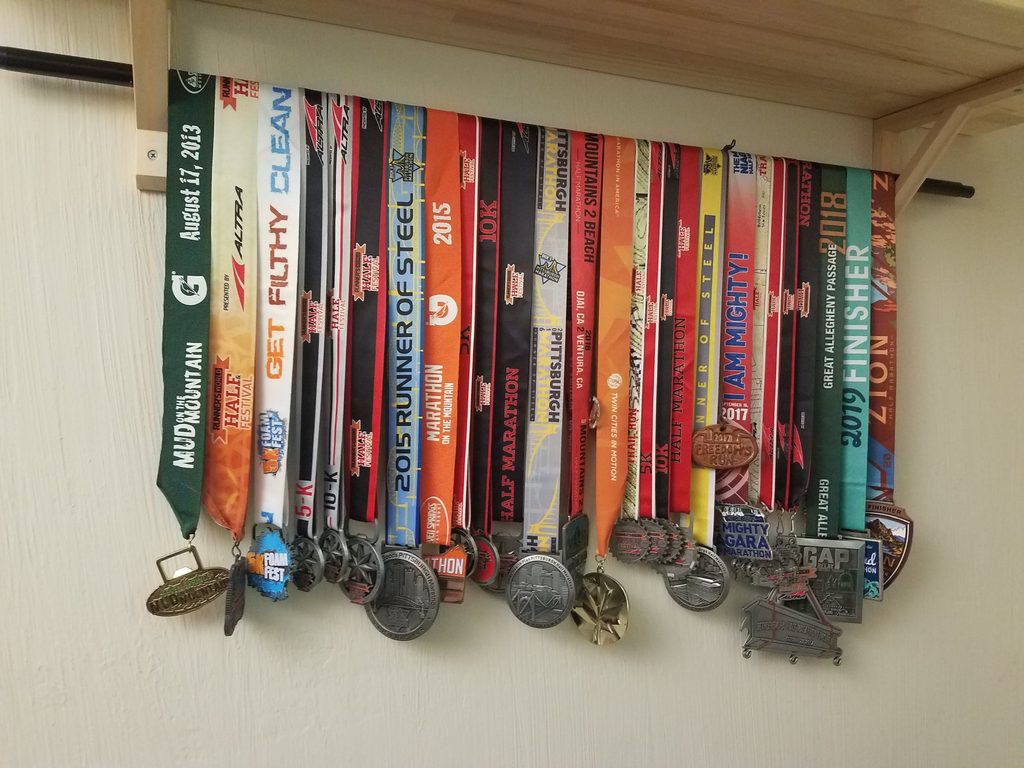
The best piece of advice I’ve seen for resolutions is to evaluate them regularly, recognize that failure will happen, and assess what needs to change in order to support more realistic goals, make activities more enjoyable, and remove barriers to success. [5] I genuinely enjoy walking and running (I actively miss my marathon days), so it’s certainly not an enjoyment factor, and I always feel more energized after I’m done, so it’s not (entirely) accurate to say I’m too tired to go. I definitely could make the time to do it (even by setting a boundary and stepping out for a bit between meetings), but I usually lack the will power once I’m done with work, when I want to sit down with a drink and be unproductive and irresponsible. Given that, I’d probably have better luck if I did it in the morning before work, when I have the most energy and executive function… and I’d probably be in a better mental state for work, too.
It sounds like the biggest obstacle is not the activities I’ve set out for myself but, rather, being clear with others about needing the time to do them. That’s going to be my biggest challenge as I try to take better care of myself through the remainder of 2026, but I’ll be here to let you know how it goes in a few months.
~
How about you? What have you found to be the biggest challenges related to resolutions, and where have you found success by modifying an approach? I’d love any ideas or advice you have to share!
And thank you for reading!
[3] https://radicalmoderate.online/surviving-2026/
[4] https://radicalmoderate.online/top-of-the-world-cotopaxi/
[5] https://medium.com/@lausuperlectura/why-new-years-resolutions-fail-ba1a62d4a6ba
1 Comment
Cheryl · August 24, 2026 at 8:41 am
My personal favorite thing to do is say “f-it” the minute I don’t flawlessly complete a resolution, rather than just starting again the next day. I am doing better, but sometimes I need a stern talking to