Anyone who knows me knows I am a big fan of well-made cocktails. Some of my favorite Pittsburgh restaurants are my favorites by virtue of the fact that they mix truly excellent drinks. Some of my favorite travel stories involve happening upon bars and restaurants that offered unique and exciting beverages, served by people who were skilled at the craft. Once the pandemic hit, and we were stuck at home, I made it a point to up my cocktail game so we could still excite our taste buds with a variety of flavors. But while I tried a range of different concoctions from the overflowing bar cart in my dining room, I kept coming back to classics that were simple and spirit forward.
Tick Tock
I really do, at the end of the day, just enjoy high quality spirits, and that is obvious with what I typically make at home (and usually order when we’re out): old fashioned, boulevardier, negroni, gin & tonic, and the very occasional and very cautiously consumed Oppenheimer martini. [1] Sadly, while I love how high quality liquor tastes, I don’t like how it makes me feel. And while I don’t think I drink a lot, I have experienced far less of a tolerance for alcohol since entering my 40s, compared to the resilience I had in my younger days. Even after only one drink, I most certainly feel physically and mentally slower the next day.
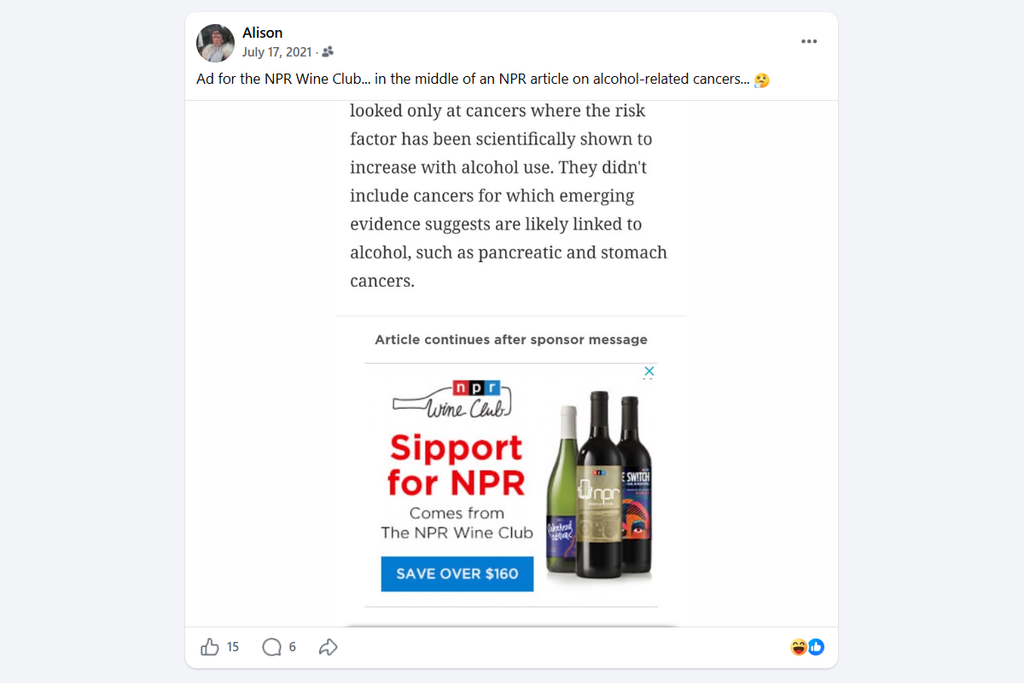
I’m also aware that alcohol has numerous drawbacks for health. We, as a society, have simply accepted the casual use of mild poisons, caffeine and alcohol among them. Certainly, we know about the more concerning health impacts that can result from chronic, heavy alcohol consumption, including liver damage and high blood pressure, but more recently the scientific community has been drawing clearer lines between alcohol use and multiple types of cancer, notably in the mouth, throat, and digestive tract, the liver, and the breasts and ovaries. A meta analysis found no “safe” level of consumption, though greater use came with greater risk. [2]
Now that I’m officially middle aged, I am trying to be more mindful of lifestyle factors that can impact my health, notably getting sufficient sleep, exercise, and healthy food. I’ve also been keeping a closer eye on my annual lab tests, and, while there’s nothing there concerning to my doctor, I always think I can be doing better. When examining a handful of lab results and health factors I felt could do with some improvement (e.g. white blood cell counts, liver stress markers, vitamin B absorption, breast cancer risk, irregular heart rhythm, body weight, and gut health [3] to name a few), I learned that every single one of them could be negatively impacted by alcohol consumption.
Substitutes and Alternatives
Does this new information mean I’m completely giving up alcohol? No.
Does it mean I see value in cutting back? Yes.
Does it mean I took this opportunity to do some research for a blog post? You know it.
Did I have fun in the process? Yes and no.
Whether it’s drinking a glass of wine while I cook or relaxing with a cocktail at the end of a long day, I’m drinking because I enjoy the taste of alcohol, not because I feel like I need it. Consequently, if I had a legitimately delicious alternative, I could see myself choosing it probably at least half the time. But therein lies the problem: I have tried some reasonably tasty non-alcoholic drinks in recent years that I would consider to be “good, for a mocktail,” but not necessarily “good” in their own right, i.e. not something I would choose to drink if given multiple options.
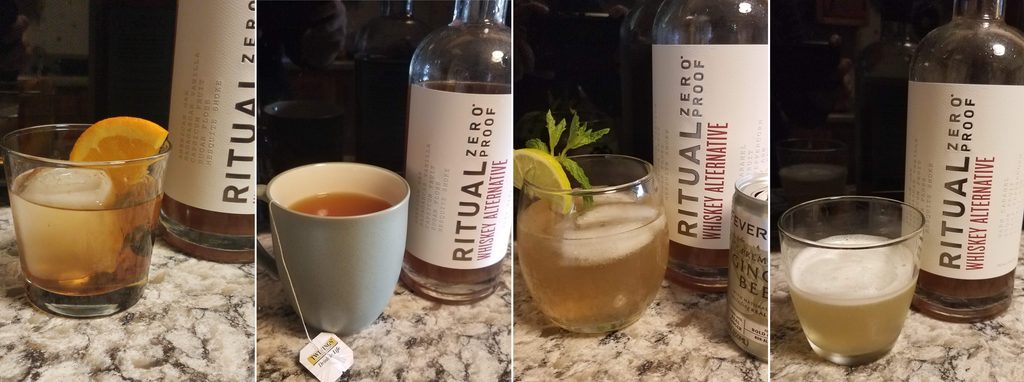
For a couple years before I actively started my research for this post, I had seen some “zero proof” spirit alternatives advertised in my social media feeds, so I figured I would start experimenting with names I recognized. Unfortunately, my local state store* didn’t carry any, so I had to call around before confirming that a store half an hour away that had both Ritual “Zero Proof Whiskey Alternative” [4] and Seedlip “Grove 42” (a gin-esque infusion of citrus and botanicals) [5] in stock. Once I had those in hand, I decided to try some of the drink recipes on their websites – surely, they would know best how to showcase their products.
*Readers who don’t live in Pennsylvania may not know that wine and liquor are sold through a state-run system of retailers here, hence “state store.”
Managing Expectations
When I was buying the bottles, the clerk who helped me asked if they tasted like the real deal. I admitted I had never tried them, but I was sure they would not; that they might nail aspects of the flavor profile, but they’d certainly lack the bite. I didn’t expect either of these non-alcoholic liquors to shine, and I was right. The biggest problem, in my opinion, was that Ritual’s website simply suggested a basic 1:1 substitution of their whiskey alternative in traditional whiskey drinks, and the whiskey drinks I like are about as close to straight whiskey as you can get. The first cocktail I tried was my favorite: an old fashioned. Since the whiskey alternative was already sweetened, I skipped the simple syrup and just added bitters, orange, and a cherry. “Disappointing” is probably the nicest word I can find to describe the experience.
I was similarly disappointed when I put it in a hot toddy, where I thought it might complement the tea and lemon juice (again, I skipped the honey because it was already sweet, but that probably would have helped). Part of the problem was that I genuinely didn’t like the taste of the whiskey alternative on its own, and there’s really no way to clear that hurdle if it’s supposed to play a starring role in a cocktail. Finally, I tried some recipes where it could support some of the other ingredients: a Kentucky mule (with lime juice and ginger beer [6]) and a Boston sour (which is a whiskey sour shaken with egg white [7]). Interestingly, I learned that egg white was often added to cocktails during Prohibition to mask the taste of poor quality liquor, [8] so it comes as no surprise to me that the Boston sour was the best-tasting drink of the bunch.
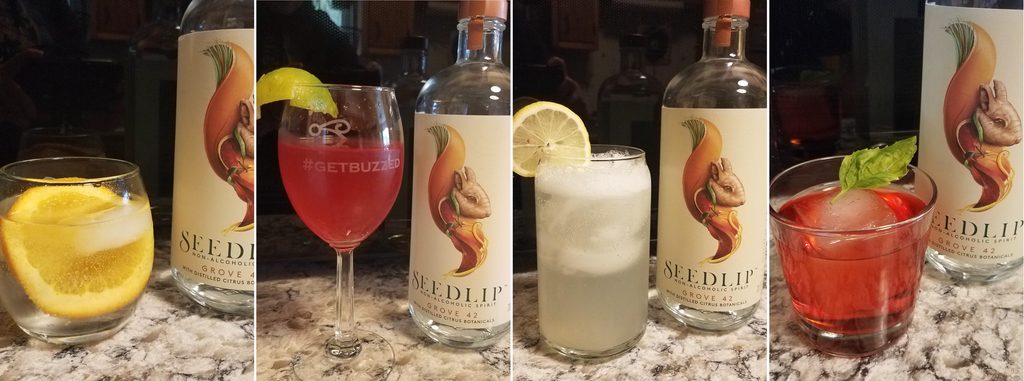
The Seedlip started off with a distinct advantage over the Ritual: I found the flavor agreeable, even though it only tasted like flavored water. I started off with a Spritz [9] and a Cosmo, [10] and both were fine but clearly missing something: gin. I followed up with a Tom Collins (probably the first cocktail I ever had), [11] and this NA version just tasted like elevated lemonade. But I found it interesting that not all of the recipes on Seedlip’s website tried to recreate traditional cocktails which I think is a good approach. The “Grove Fix,” a Seedlip original recipe, caught my interest because of the combination of more complex flavors, such as rooibos tea, blood orange, and shiso (though I made some substitutions based on what I had available). [12] It tasted like an elevated fruit juice, not a cocktail, but I still appreciated the fact that my brain wasn’t anticipating the flavor of a specific drink and then feeling disappointment when it fell short.
With that all said, I do think that more outside-the-box thinking is what is needed in this ongoing experiment, both to manage expectations and develop more satisfying flavors. And there will be more on that next week.
In the meantime, do you have a tried-and-true mocktail recipe you like? I’d love to hear about it below… and try it myself.
Thanks for reading!
[1] https://losalamoshistory.org/oppie-made-famous-martinis/
[2] https://pmc.ncbi.nlm.nih.gov/articles/PMC6705703/
[3] https://radicalmoderate.online/gut-health-a-strong-offense/
[4] https://www.ritualzeroproof.com/pages/products#bottles
[5] https://www.seedlipdrinks.com/en-us/shop
[6] https://www.cocktailcontessa.com/whiskey-mocktails/
[7] https://www.ritualzeroproof.com/blogs/cocktails/sweet-sour
[8] https://smallhandbartender.blogspot.com/2009/06/egg-white-situation.html
[9] https://www.seedlipdrinks.com/en-us/recipes/seedlip-grove-spritz
[10] https://www.seedlipdrinks.com/en-us/recipes/seedlip-cosmopolitan
[11] https://www.delish.com/cooking/recipe-ideas/a40656644/tom-collins-recipe/
[12] https://www.seedlipdrinks.com/en-us/recipes/seedlip-grove-fix
0 Comments