Part 2
Disclaimer: I am not a medical professional. The content of these blog posts is based on my own experience, research, conversations with my doctors, my subsequent questions, and anecdotes from friends and readers. Always talk to your doctor before making any changes to your medications, diet, or activity. There’s also a lot of conjecture and curiosity in these posts, with more questions than I have answers on this evolving topic.
We began this series with an exploration of stress management through better care of the body’s Endocannabinoid System (ECS). [1] Knowing that certain plants have compounds that can support ECS health, that brought us down a path of trying to better understand the pros and cons of the plant with the most potent ECS impacts and why we don’t know more about it. [2] Although the human race has been using cannabis for some 5,000 years, modern legal policies have restricted its use and examination.
The resulting lack of information can lead to misconceptions about health harms, missed opportunities for health care, and (worst case scenario) unanticipated drug interactions [3] – because there are things we simply don’t know. But, as is the case in the world of science, the answers we get are defined by the questions we ask, meaning that we may get seemingly contradictory results until we assemble a more robust body of evidence to better understand the subject at hand.
Body of Knowledge
We do know that there are detrimental effects associated with using marijuana before age 25, while the brain is still building connections for functions like attention, memory, and learning. [4] Any concerns I have about cannabis use now, at my age, should be fairly small compared to risks my brain faced as a teenager. Still, that fact does not completely assuage my concerns about potential detriments (incremental though they may be) to my brain function and skill with the English language (since I use both of those for my day job, as well as my Work of leaving the world better than I found it).
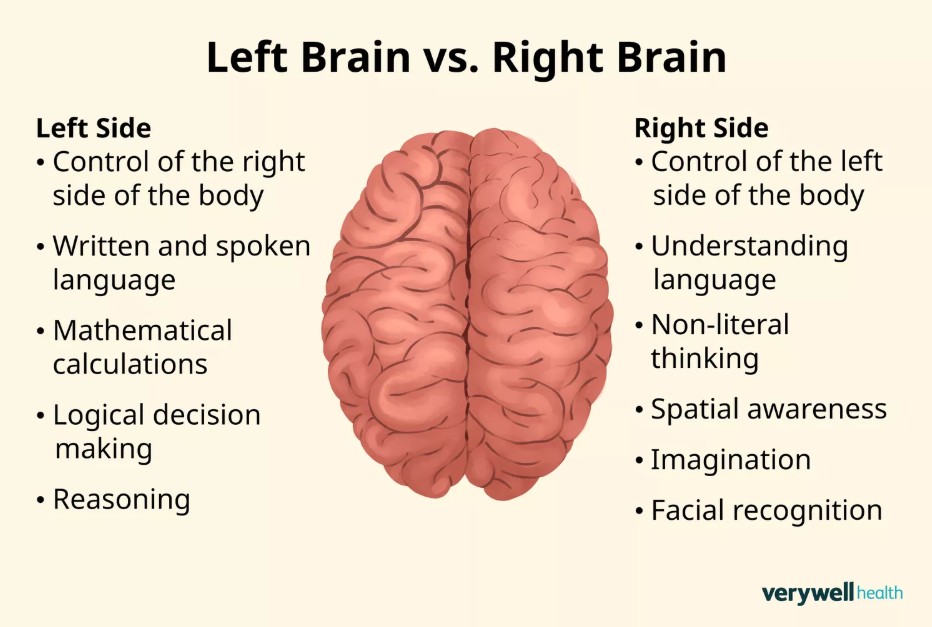
Image credit: Illustration by Tara Anand for Verywell Health [5]
Ironically, after almost a century of political fearmongering and downplaying available science, there is now some evidence that certain cannabis compounds may actually help improve capacity for learning [6], and even grow or regenerate certain brain cells. [7] The average brain contains about 100 billion cells, and the adult hippocampus can produce about 700-1,500 new neurons each day. [8] The bulk of adult brain cell growth happens in the hippocampus, which is responsible for verbal memory in the left hemisphere and spatial memory in the right.
Neurodegenerative diseases, including Alzheimer’s and Parkinson’s are related to hippocampal decline, and many doctors recommend brain exercises to support activity in the hippocampus, especially for seniors and people with dementia. [9] From the standpoint of prevention or treatment of cognitive decline, it also appears that natural and synthetic cannabinoids have the capacity “to increase neuronal population, by replacing the cells that were lost and/or regenerate a damaged nerve cell.” [10]
I want to be clear that (according to several groups that understand the issue far better than I do) there is no evidence that CBD can prevent or cure conditions like Alzheimer’s or dementia, [11] though some of the research indicates that it might help with management of some of the symptoms. [12] I mention these studies here because of the potential benefits associated with brain health in certain situations, rather than brain damage.
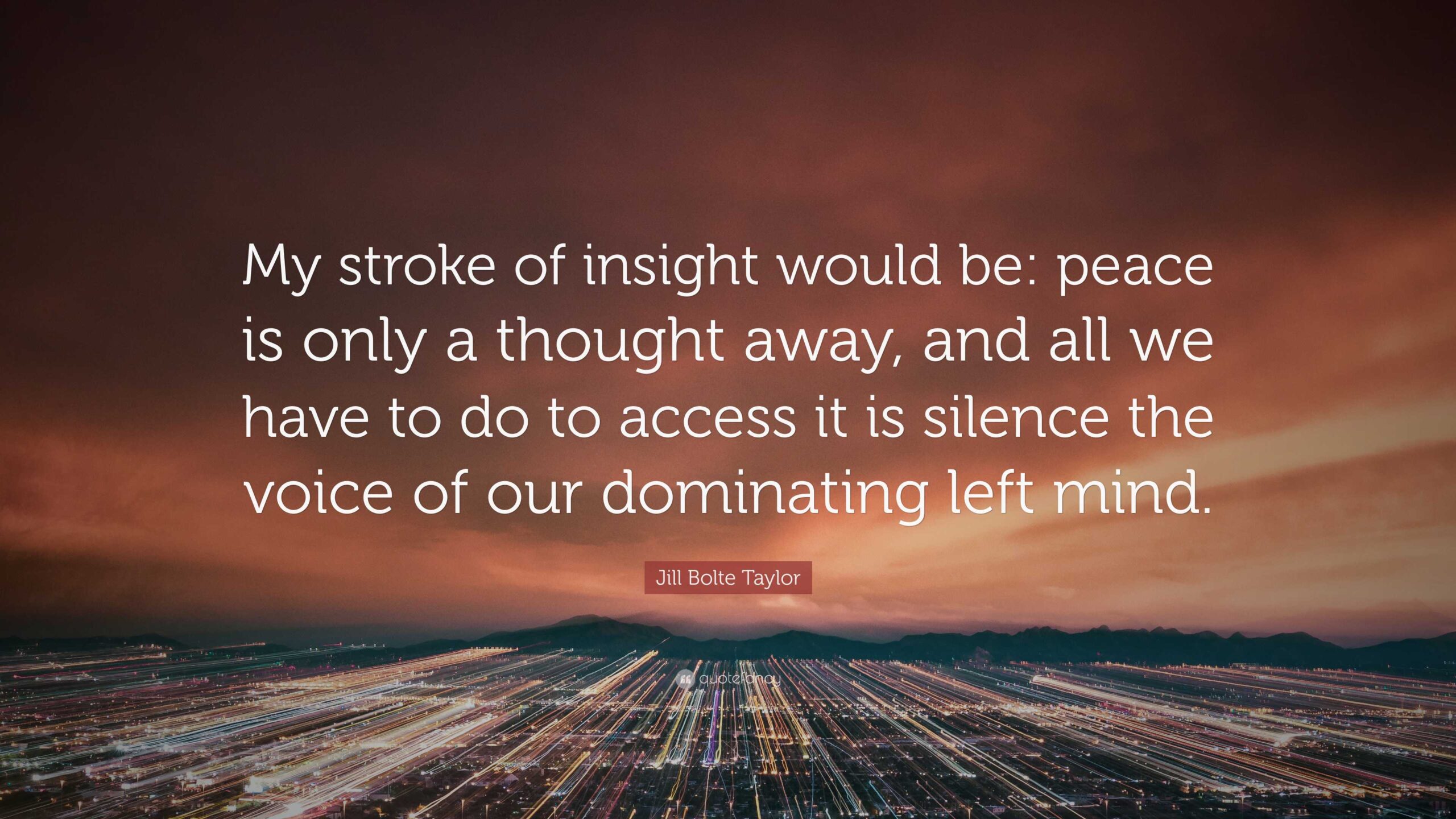
Image credit: [13]
Once again, I think much of that perception of whether cannabis hurts or harms us comes down to what questions we’re asking as we do research: are we looking at adolescent or adult brains, IQ scores or grey matter activity, effects of CBD or THC, short- or long-term impacts, etc? And while we’re talking about what questions we’re asking, I’d like to share some of my own, now that I’ve delved so deeply into the available science that I have arrived in the realm of metaphysics.
In Our “Right” Mind
Here’s where (I think) it gets interesting: marijuana use is associated (at least in the short term) with specific negative impacts to verbal memory, which is managed in the left hippocampus. Studies on impacts to spatial memory (right hippocampus) are far less common, but there is indication of performance improvement in certain circumstances. [14] That leads me to wonder if cannabis affects the left and right hemispheres of the brain differently. There is evidence to indicate that it does, based on a study of right-handed males (of which I am neither). [15]
The division between functions of the two hemispheres of the brain is well-documented: the left hemisphere (which controls the right side of the body) is more responsible for logical, analytic, linear processing, while the right hemisphere (which controls the left side of the body) is responsible for more visual, experiential, parallel processing. That differentiation is the foundation for the common perception that left-handed (right-brained) people are more creative and artistic than right-handed (left-brained) people. The theory that people have a dominant brain hemisphere has been rebutted in recent years [16] (in a study that noted no difference between male and female subjects but made no mention evaluating subjects by left- or right-handedness).
Based on the experience of neuroanatomist Dr. Jill Bolte Taylor, it is clear that we regularly use both sides of our brain and that there can be profound impacts when that balance shifts. In her book My Stroke of Insight, [17] she describes the experience of ego death during a stroke in the left side of her brain. Her consciousness shifted away from normal reality to a state in which she felt “at one with the universe” but had no capacity for language, memory, or communication. Obviously she has since recovered in order to describe the experience and share her insights with others. [18] Dr. Taylor’s account of the experience reminded me of things we tend to see in pop culture around marijuana use: stoners with poor memory and verbal recall, while also feeling more connected to others.
Image credit: [19]
Again, that leaves me with more questions than answers: does cannabis (particularly THC) shift users into a more right-brain-dominant state, where ego and analytics become quieter, allowing for more holistic, big-picture, creative thinking? Furthermore, are cognitive tests used to measure reduced brain function under the influence of cannabis inherently geared toward left-brain activities? And do our measures of “success” in daily life (particularly those around productivity and output) favor functions of the right brain over the left?
Jill Taylor’s words impress upon me more than ever that there is a severe need for the function of our right brain, but it seems to be less accessible in our burnout society where we prize productivity above wellbeing. Obviously we still need to contribute, communicate, and work together as part of a society, but it is important to remember that there are different ways to do that, and they don’t always have to look the same. [20] I personally understand the value of thinking more holistically, especially when shaping long-term solutions and strategies. That said, those strategies need to be communicated and carried out at the tactical level – and even after all of this research, I still have concerns about retaining my ability to effectively convey whatever insights I uncover, insights that need to be applied in order to be useful.
It seems to me that there needs to be some kind of balance between both sides / worlds / perspectives as well as an ability to move back and forth more easily to really unearth our greatest potential. And in order to do that, I believe we really do need to evaluate how we define success for ourselves – so we’re achieving some kind of balance of rest and reflection between periods of productivity, rather than burning ourselves out trying to attain constantly increasing (and often unrealistic) external standards. No matter how we as individuals decide to do that, the choice to do it brings us back to where this whole series started: with taking care of ourselves.
~
I wasn’t expecting this blog series about stress management and biochemistry to go everywhere it did, but I’d love to know what you think about any or all of what we’ve covered in these posts. What did I miss, and what questions do you have?
Thanks for reading!
[1] https://radicalmoderate.online/stress-management-endocannabinoids/
[2] https://radicalmoderate.online/stress-management-phytocannabinoids-part-1/
[4] https://www.cdc.gov/cannabis/health-effects/brain-health.html
[5] https://www.verywellhealth.com/left-brain-vs-right-brain-7093257
[6] https://pmc.ncbi.nlm.nih.gov/articles/PMC5766723/
[7] https://www.frontiersin.org/journals/behavioral-neuroscience/articles/10.3389/fnbeh.2020.00109/full
[8] https://www.health.harvard.edu/mind-and-mood/the-book-of-neurogenesis
[9] https://neuraleffects.com/blog/memory-exercises-for-dementia/
[10] https://pmc.ncbi.nlm.nih.gov/articles/PMC8541184/
[12] https://www.alzra.org/blog/can-cbd-treat-some-alzheimers-symptoms/
[14] https://www.nature.com/articles/1300871
[15] https://www.sciencedirect.com/science/article/abs/pii/0024320577901606
[16] https://journals.plos.org/plosone/article?id=10.1371/journal.pone.0071275
[17] https://www.goodreads.com/book/show/142292.My_Stroke_of_Insight
[18] https://www.youtube.com/watch?v=mYD7Y9CXeUw
[19] https://tenor.com/view/cabin-in-the-woods-fran-kranz-marty-mikalski-gif-4908044
[20] https://radicalmoderate.online/climate-lab-hawaii-insights-continued/
0 Comments