As always, opinions shared on this blog are my own and not that of any organization with which I am affiliated.
This past spring, a proposed plastic waste processing facility in Erie, PA was scrapped in part due to the Trump Administration’s federal funding cuts and tariffs. [1] The project had been promised a $182M loan from the Department of Energy through the Inflation Reduction Act; the facility would have gathered plastic waste from 750 miles around and used it to create a product that would be incinerated for steelmaking in Gary, IN. [2] While some framed the news as a step backward for environmental cleanup efforts (I believe John Oliver was among them, if I remember correctly), many environmental groups hailed the news as a win [3] – as did I.
Plastic “Recycling”
Indeed, every stage of the plastics lifecycle is fraught with environmental and/or health issues for people living near facilities that create or “recycle” it and for people using the products that are created. [4] And we have known for years that the plastic industry has benefited greatly from the widespread and erroneous perception that 1) plastic is largely recyclable, and that 2) if we only recycled more of it, we would effectively deal with our global plastic waste problem. On the contrary, plastics are produced from fossil fuels, break down into microplastics with wear, and are almost impossible to recycle in a 100% closed-loop process.
For those reasons, I was excited to hear International Recycling Group’s decision to cancel their project in Erie. It was interesting to me, however, that the reasons cited included new federal-level policies. While the current administration has in no uncertain terms demonstrated an aversion to clean technology, the IRG facility would have ultimately benefitted the oil and gas industry, creating a product out of waste plastic. In recent years, we have seen projections for plastic production increasing, despite clear environmental and public health risks of continuing with business as usual. [5] And why, one might ask, would we need to continue creating more virgin plastic if plastic recycling is expanding through new options for hard-to-recycle plastics being discussed in the realm of so-called “advanced recycling”?
In last year’s Plastic-Free July series, we covered chemical recycling processes and the fact that they are, for the most part, limited in their commercial viability, scalability, and ability to recycle the plastic back into plastic. [6] That hasn’t stopped the plastic industry from marketing such projects as viable options to 1) reduce plastic waste, 2) reduce the need for virgin plastics, and 3) justify our continued, guilt-free consumption of single-use plastics. The Trump Administration may not have had an opinion about this particular facility, but if anyone chose to slow-roll funding because of its touted environmental benefits, it shows that the federal government is just as susceptible to greenwashing as the average American consumer.
The Hardest Change
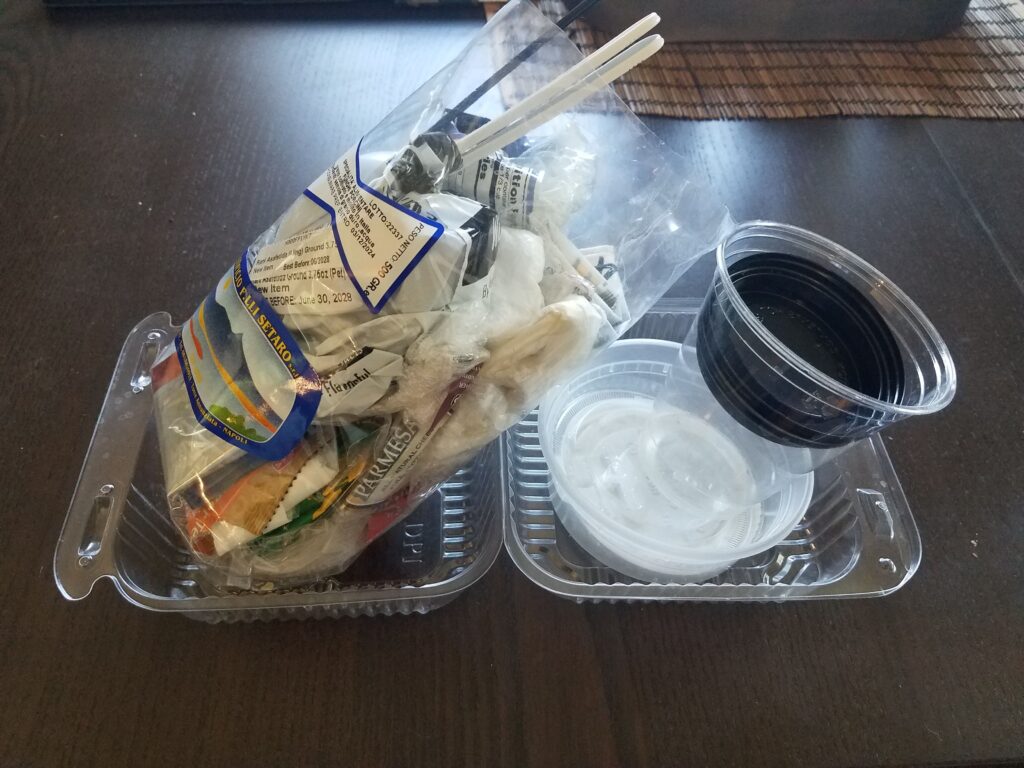
For years I have said that the best thing we can do when it comes to plastic is simply not use it in the first place. (I write that, sitting on an airplane, having just unwrapped a cookie from a plastic sleeve. What was I going to abandon: my principles or a free Biscoff? You know the answer.) But food packaging especially proves a continual challenge when it comes to our plastic consumption. Once again, this year I gave up single-use plastic for Lent, and, since it is impossible to avoid it altogether, I assemble a little “stash of shame” to help provide a visual of my personal impact during that time, adding to it whenever I did find myself with a wrapper, cup, or straw I didn’t ask for.
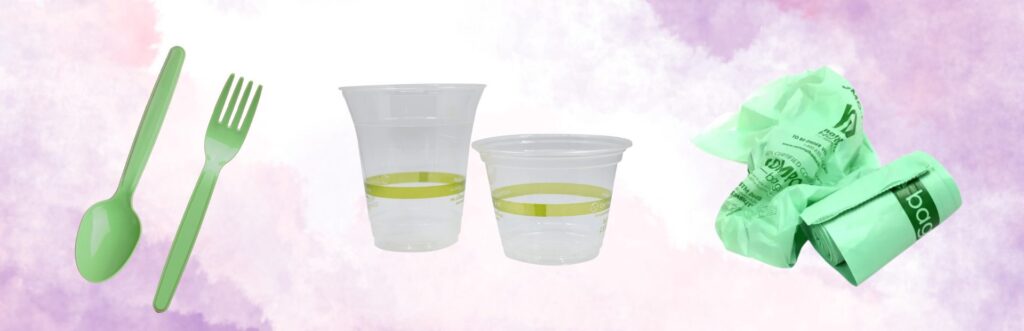
Image credit: [7]
The stash I assembled during Lent this year was almost exclusively food packaging. Certainly, there were a couple containers that could have been more easily avoided (e.g. when my dad brought me coffee and my husband brought me dessert), but there were plenty more difficult-to-avoid examples of plastic wrappers in my daily life, particularly around ingredients (e.g. cheese, mushrooms, etc.). And while I was proud of myself for limiting large amounts of plastic packaging from highly processed foods, I was still running into it in seemingly unavoidable situations if I wanted to use certain ingredients.
To that end, there have been efforts for years to develop more environmentally friendly options for food packaging: items that are made from plants and are advertised as compostable, while also retaining some of the desired qualities that plastics provide – otherwise known as “bioplastics.” Such products (especially service wear, including cups and utensils) have been available for years, and I have purchased them for work events and even my wedding reception. I have always been aware that they’re not perfect, but some additional research of late has opened my eyes to even more issues with that class of product.
Room for Improvement
Common bioplastic materials include polyhydroxyalkanoate (PHA, made from algae) and polylactic acid (PLA, made from sugar in corn and sugarcane), but they don’t have the strength of conventional plastics. [8] They also don’t biodegrade unless they are in the right conditions. “Certified, compostable bioplastics are engineered to fully decompose within 12 weeks at a commercial composting facility,” [9] but, based on personal experience, I am quite certain that the vast majority of them wind up in a landfill, where they can take 100 to 1000 years to decompose in that anaerobic environment. [10] I personally have explained to more than one caterer and facility manager that it doesn’t make sense to spend extra money on a compostable product only to send it to a landfill, where it effectively won’t biodegrade.
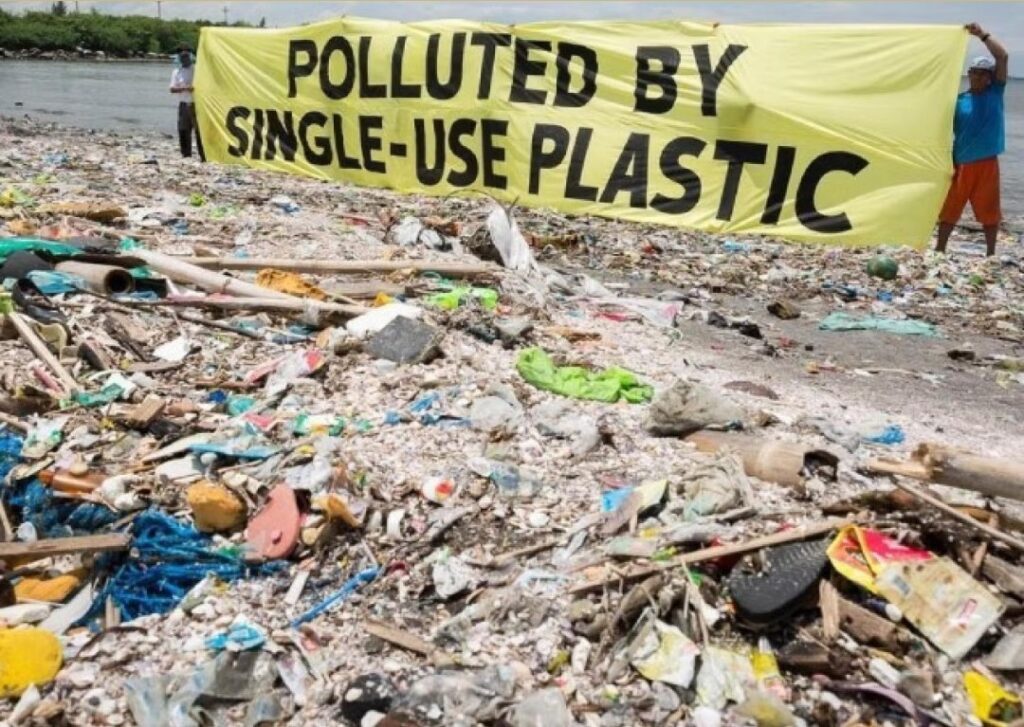
Image credit: [11]
But I thought the biggest issue with bioplastics was the lack of education for consumers and limited logistics options to get the materials to a commercial composting facility. Unfortunately, it appears that there are bigger concerns with the health and environmental impacts of the products themselves. First, let’s consider the fact that terms like “biodegradable,” “compostable,” and “eco-friendly” are not clearly defined or regulated. As a result, there is little required transparency about what is actually in them (including, potentially, chemical additives to give it more plastic-like qualities), [12] and some investigations have discovered that some “bioplastics” can actually contain a majority of fossil fuel-derived plastic. Also, since food crops can be used to create them, they can contain pesticides and other chemicals that were used on the crops. [13]
As with so many issues I’ve covered on this blog, there is really no silver bullet solution. The most effective approach we as individuals can take at this point is to stay informed about the current state of knowledge of a given subject so we can understand the impacts of our decisions (and make the right ones that reflect our priorities.) I’m clearly still learning, myself, but researching this post has served as a great reminder as we head into another Plastic-Free July [14] that plastic recycling is largely a myth, and that we are limited on our options for alternatives. So, given that, I would suggest the following steps to consider if you want to push for incremental improvement on multiple fronts:
- Shop with your brain turned on. Just because something is called “eco-friendly” doesn’t mean it is. I have explained to so many people that there are no regulations around terms like that (or “biodegradable” or “compostable”). If a product manufacturer is making a claim, ask yourself (and them) what are they saying, why is that allegedly a good thing, and what are they not telling you? (Generally if something seems to good to be true, it’s not.)
- Avoid single-use plastic when you can, both regarding take-out food and grocery store purchases. I have been known to switch product brands if I have a choice between plastic and glass packaging, for example. (I’m looking at you, Fresh Thyme olive oil).
- Advocate for single use plastic bans or “on-request” policies (i.e. servers don’t automatically give customers a straw unless they ask for one). There are broader efforts like these at city and state levels, but you don’t have to get legislation passed in order to get individual restaurants on board; you can just ask the manager or staff of a restaurant you frequent. (Places where I’m a regular know not to offer me a straw, even if everyone else still gets one automatically.)
- Advocate for reusable item options (e.g. I go to several coffee shops where I ask for a reusable mug to use while I’m there.) [15]
If you choose to change your behavior for the month of July this year, I’d love to hear what you’re doing – and if you learned anything new in this post.
Thanks for reading!
[1] https://www.ehn.org/recycling-erie-pa
[2] https://www.beyondplastics.org/press-releases/cancellation-erie-pa-waste-facility-april-4-2025
[5] https://www.nature.com/articles/s43247-025-02169-5
[6] https://radicalmoderate.online/plastic-free-july-2024-misnomers-and-monomers/
[7] https://rethinkwaste.org/2023/06/15/the-problem-with-bioplastics/
[8] https://e360.yale.edu/features/why-bioplastics-will-not-solve-the-worlds-plastics-problem
[9] https://www.beyondplastics.org/fact-sheets/bad-news-about-bioplastics
[10] https://www.treehugger.com/pros-cons-corn-based-plastic-pla-1203953
[11] https://www.colorado.edu/ecenter/2023/12/15/impact-plastic-climate-change
[12] https://www.beyondplastics.org/fact-sheets/bad-news-about-bioplastics
[13] https://www.ehn.org/problems-with-bioplastics
[14] https://www.plasticfreejuly.org/
0 Comments