Content warning: mentions of the Holocaust and WWII – no details
My heritage has been on my mind a lot this year, mostly because I had the opportunity to visit Switzerland, Germany, and Austria on a road trip this fall. I wanted to do what I could to research relevant history before the trip, soak up local culture while I was there, and share insights afterward with anyone willing to listen. (Thank you, by the way!) One of the biggest things I wrestled with before departing for this vacation was dealing with the darker pages of German history in the last century – not only how I would engage with it while traveling but how I would talk about it after returning home.
During my first trip to Germany in grad school, our class visited a Holocaust museum, which pulled no punches about the horrors of Nazi Germany. Over the years I have been consistently awed by the level of candor and accountability on the part of many German individuals and organizations on the subject of World War II. And for many, their recognition of those atrocities often serves as a foundation for a commitment to ensuring that nothing like that ever happens again, anywhere. I feel like we’re not used to that much accountability from people in power in the United States, let alone a willingness to talk about uncomfortable topics if we don’t have to, which is something I’m working on myself (as you’ll see here).
Note: with that said, I will also be the first to admit that I am not a historian, and I speak with no authority on this weighty subject. Like many, I am still learning, and if you see something in this post that is patently false or grossly limited in perspective, I invite you to share additional information below. Thank you in advance.
Dress for the Occasion
Of course, planning our road trip schedule meant arranging stops around our friends’ availability in different German cities. Although our original intention was to avoid big touristy events to the best of our ability, our schedule put us in Stuttgart during the second-biggest Oktoberfest in the country… and in Munich during the biggest. I, of course, would need something appropriate to wear. Of the 6-7 million attendees at Munich’s Oktoberfest each year, the majority wear some kind of traditional clothing, including lederhosen for men and dirndl for women. [1] Consequently, I began doing research about where I could buy a traditional dirndl (since what some tourists wear are decidedly not traditional, with inappropriate fabric, colors, and cuts that make the dress look less like a nod to German culture and more like a caricature of it.) As I began typing, my search engine suggested a search prompt: “why is wearing a dirndl controversial?”
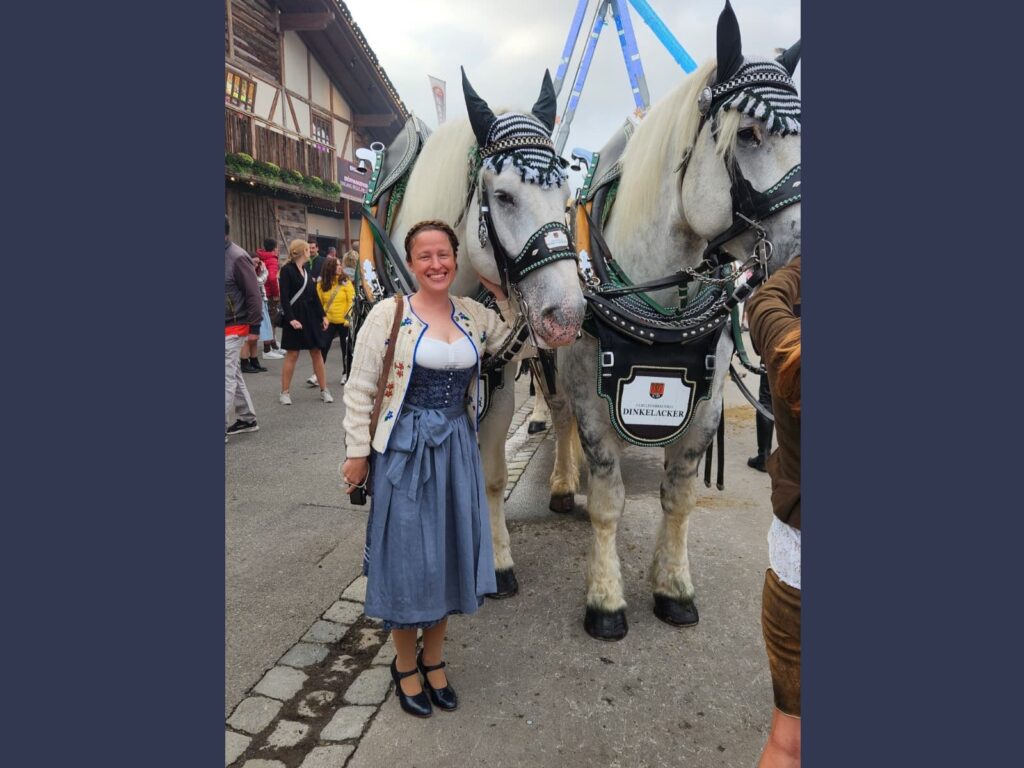
Photo credit: Chris Kessler
Until that point, it had not occurred to me that wearing this traditional German dress in Germany might be controversial. Certainly, when touring a foreign country, one should show respect for one’s hosts. For instance, if you’re going to dress up, that means wearing traditional clothing as a way to participate in their culture, not using it as a costume. (Having lived in Japan and worn traditional clothing there, I already understood that much about the difference between cultural appreciation and cultural appropriation.) When it comes to Bavaria and the surrounding region, the dirndl was originally a practical garment dating back to the 18th century and worn by maids in rural areas. Its original form is a far cry from some of the bright-colored, short-hemmed, cheap quality dresses worn by many tourists in modern times at beer festivals in Germany and in the United States.
But that was not the controversy that came up in my research. Rather, it was how this traditional dress had been co-opted by the Third Reich as a symbol of cultural purity and the ideal of “the perfect German woman.” In the 1930s, Jewish women were banned from wearing them, which made the garment itself a way to designate in-group vs. out-group identity. [2] For years it has frustrated me that the enjoyment of beautiful art and cultural symbols can become problematic if a hate group appropriates them, but with nationalist rhetoric gaining more traction in the United States and abroad in recent years, I became more concerned about the optics of wearing a dirndl myself and whether the decision to do so would unintentionally telegraph support of positions and actions that I find to be abhorrent.
Dog Whistles
I discussed my concern with some trusted friends, including some who live in Germany, as well as my therapist. While several responses I received were along the lines of “I think you’re overthinking this situation” and “why do you care what other people think?” I tried to convey that my biggest concern was whether people might feel less safe around me if they see me wearing problematic clothing (such as the dirndl, which was appropriated by Nazi Germany), visiting problematic locations (such as the Hofbräuhaus, where Hitler gave his early speeches and was elected Führer), [3] or even listening to problematic composers (such as Richard Wagner, a known antisemite during his lifetime, whose music was appropriated by Nazi Germany after his death). [4]
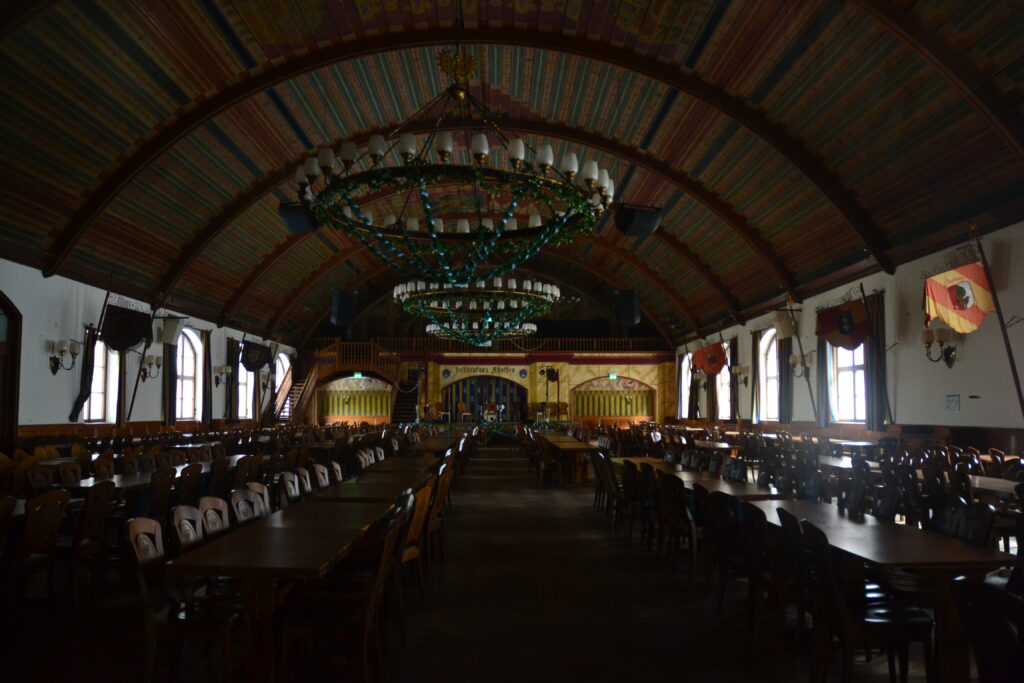
People who know me personally know my values, but there are a lot more people in the world who don’t know me and can easily make assumptions based on something taken out of context, especially if I allow any ambiguity about my personal politics. (For the record, I think I can be more ambiguous than most when it comes to my politics because I want to leave the door open for conversations with others, particularly those who disagree with me.) My therapist’s suggestion was, in part, to be more explicit about highlighting the things I experienced in Germany and describing what aligned with my personal values in order to lessen the chances of any potential misinterpretations. I tried to do that with a few social media posts during the trip, and it’s what I’m trying to do here with this blog post.
For the record, I have been to German-style beer events in the United States, and the line between heritage and nationalism among some of the attendees can get concerningly blurry. I used to patronize a local establishment specializing in German beer where an actual neo-Nazi meeting took place. (I have it on good authority that management elected to do nothing, even after someone complained, so I don’t go there anymore.) Suffice it to say, I am familiar with certain vibes I want to avoid, and I did not get that feeling once in Germany. The people we encountered on our travels to these festivals (whether German or not) seemed to be celebrating culture – or, at the very worst, checking a box as a tourist. We did make an effort to find more traditional and less touristy locations at festivals [5] and in the various cities where we stayed, so I like to think this perspective may be based on a slightly more authentic experience than what your average tourist might get.
Death of the Author
What I experienced from the people in Germany was a welcoming attitude toward visitors from different countries who wanted to experience and celebrate German culture. I never got a sense of being excluded from anything by virtue of being “not German.” What I saw at multiple car museums (because we absolutely went to multiple car museums) were companies taking responsibility for past actions, such as complicity with propaganda demonstrating German “cultural superiority” through quality engineering (at Mercedes-Benz), [6] as well as the use of forced labor for production during WWII (at BMW). [7] And, again, the overwhelming feeling when addressing elements of this dark past was a clear belief that those things can never be allowed to happen again.
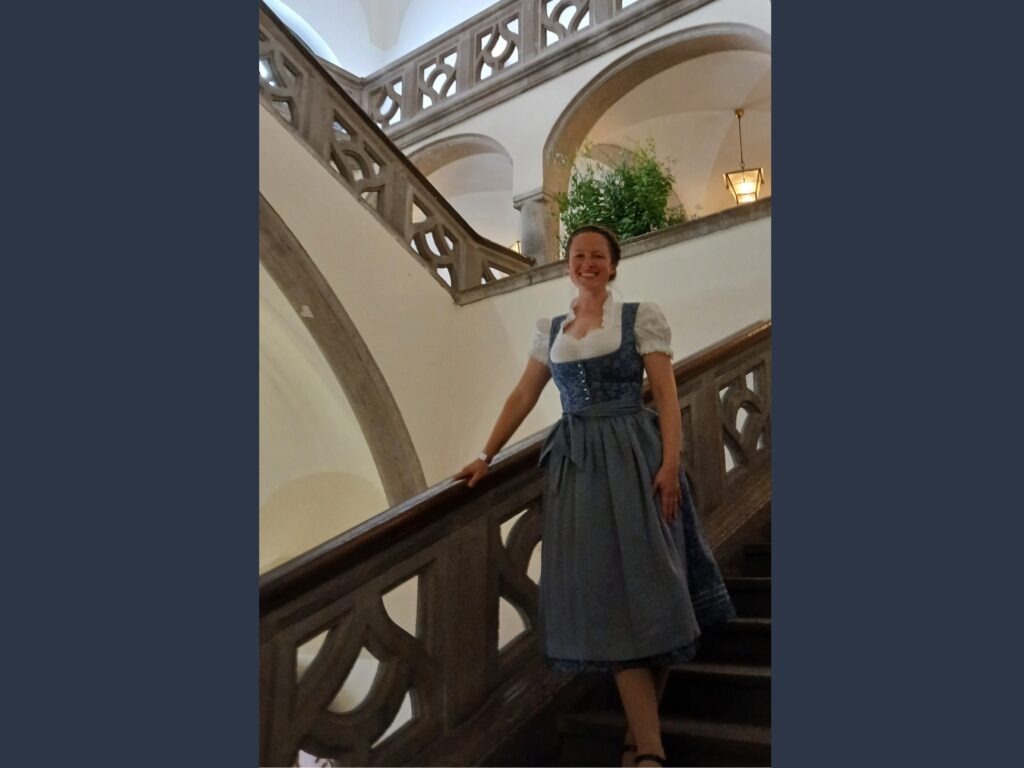
Photo credit: Christian Korey
For the reasons stated above, I was simultaneously feeling enthusiasm and anxiety about sharing some of these stories and photos from Germany. Despite the advice I received, and despite my intention to talk about my personal values more explicitly, I recognize that it is an extremely delicate topic, that my own understanding of it is still limited, and that whatever I say is permanent once it’s out on the internet. I’ll be writing more about this topic in next week’s post (specifically in the context of historical fiction), so I’m sure I’ll have plenty more opportunities to stick my foot in my mouth. But for now I’ll say that I am grateful you’re reading along with this exploration of history and ways we as a society process truly horrific events and move forward in their wake. I would welcome (gentle) feedback in the comments if you have it.
But I’ll close this post with an interesting thought that arose as a result of the aforementioned conversations with my therapist and the writing of this post: considering what remains of me in my work after I send it out into the world. I’ve been sharing qualitative research and interpretation for almost seven years on this blog, and I’ve only really viewed those posts as being educational about the subject in question – it never really occurred to me that what I share and how I share it could serve to illustrate who I am. Maybe long-term readers of this blog can tell me how much what I see and what I say here reveals about me as a person, but I hope there’s at least a sense that I enjoy celebrating the beautiful things in this world, while also recognizing opportunities to do better by others.
Thank you for reading.
[1] https://en.wikipedia.org/wiki/Tracht
[2] https://dirndlonlineshop.com/blogs/blog/what-is-the-dirndl-controversy
[3] https://en.wikipedia.org/wiki/Staatliches_Hofbr%C3%A4uhaus_in_M%C3%BCnchen
[4] https://en.wikipedia.org/wiki/Richard_Wagner
[5] https://curiositysavestravel.com/introverts-survival-guide-oktoberfest/
[6] https://www.mercedes-benz.com/en/art-and-culture/museum/
0 Comments