2025 has been a year. Again. It is the eighth year of my pollinator garden project, but – like 2024 – I did not spend much time in my happy place. [1] For the second year in a row I spent the summer largely on the couch, grieving a death in the family and recovering from COVID. That one-two punch – again – not only kept me from gardening; it removed my desire to do one of the things that makes me happiest and keeps me grounded.
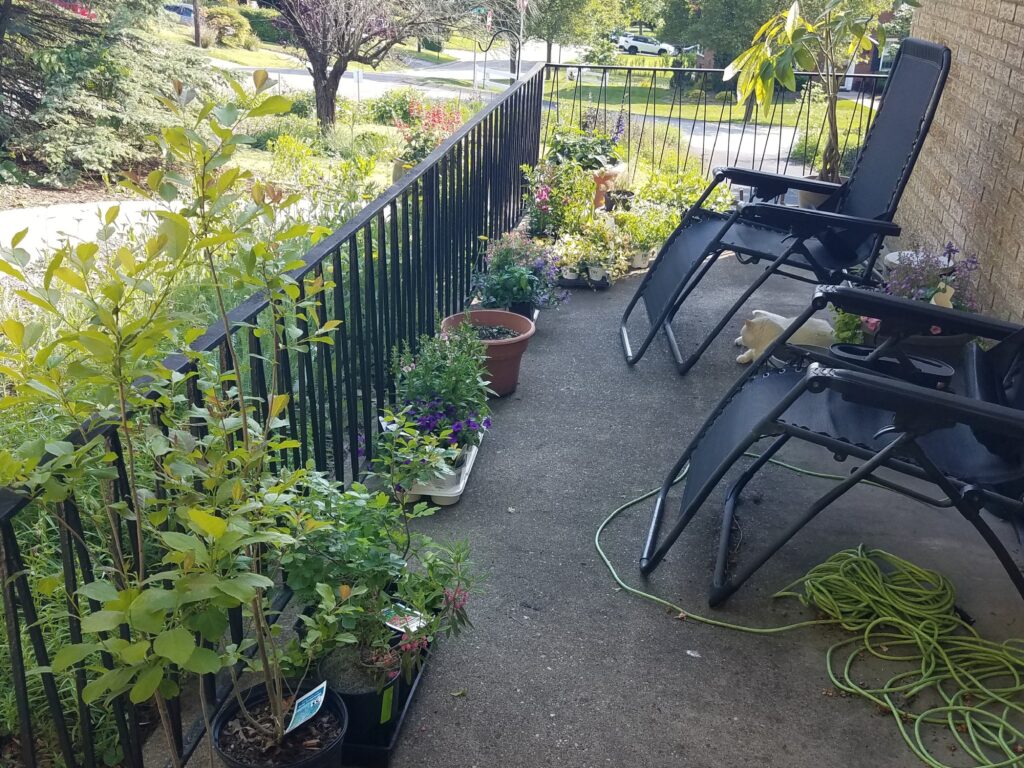
I like to believe that if I didn’t have extenuating circumstances, I would probably be able to stay on top of all of the weeding, which seriously takes far more time and attention than I ever think it will… and far, far more time and attention than actually planting. It remains to be seen if I could actually stay on top of the weeding sans curveballs in my life – I’d love it if next year I could gather that data point. But, we also know that life happens, and the likelihood that I will have sufficient time to adequately care for my 2000+ square feet of garden without distractions is probably near zero unless I quit my job.
Still To Do
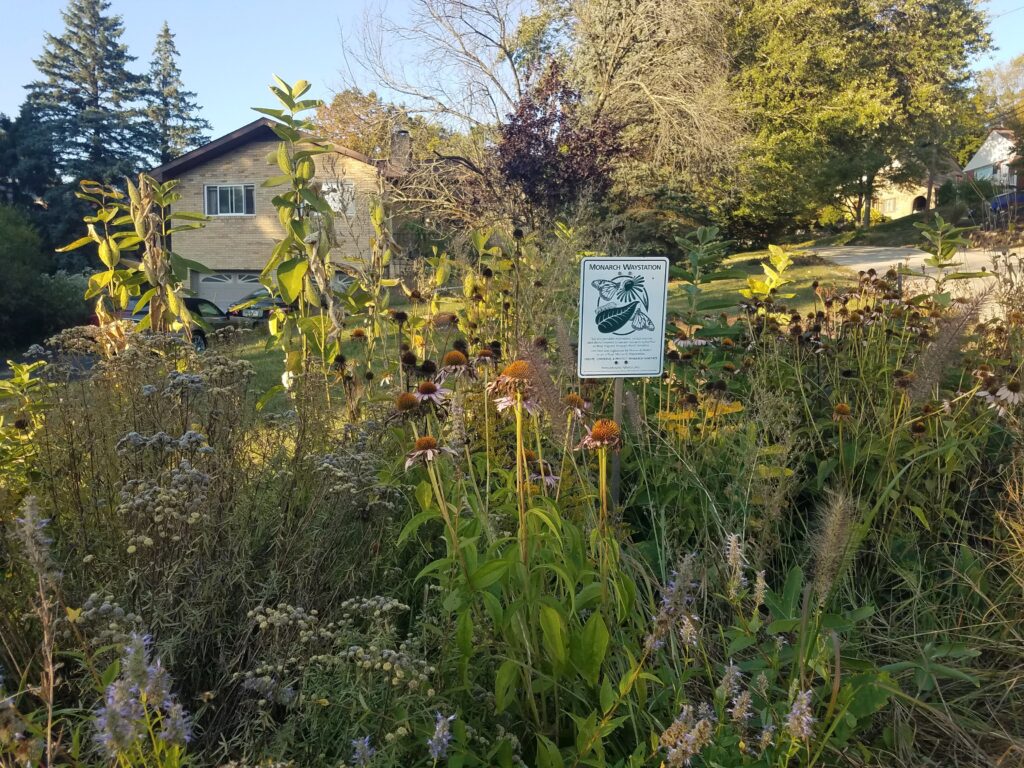
This post is not intended to be an extended complaint about my inability to spend time in my garden, but rather an exploration of what gardeners can do when they have clearly bitten off more than they can chew. For me, as this post goes live, I have still not planted the flats of native plants I bought for my birthday in May. For two years now I have let grasses and other weeds take over in the two large garden beds along our driveway and the corner of our property. (I think the Monarch Waystation sign [2] is the only thing keeping us from getting a nasty letter from our borough about poor upkeep.)
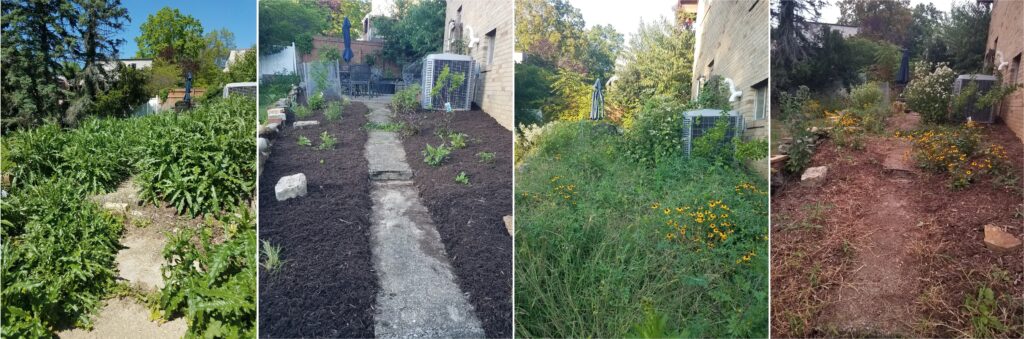
The reason the “new” plants have yet to go in is that I need to first clear spaces for them. But with my very linear approach of “weed everything first, then plant” doesn’t lend itself to planting if I never finish with the weeding. I also make it harder on myself by getting eight yards of mulch delivered in the spring, so I can weed, then mulch in order to limit the new weeds that will pop up where I’ve already been. But, again, with my delays this summer, I only finished spreading mulch after Labor Day, and by that point, the two areas I had successfully tackled before Memorial Day were so overgrown that the paths were no longer visible.
To my credit, I did replace two dead spicebushes in my slow-growing back hedge this spring, [3] and I added a sweetbay magnolia [4] in a part of the yard I think could benefit from a large shrub / small tree. I cleared weeds in the garden beds close to the house (twice), and cleared and mulched a new section of garden (twice). If you’re wondering why I would add a new section of garden when I can’t even properly maintain what I already have, I will say that’s a great question – one I’ve been asking myself.
Shifting Expectations
There’s more talk recently about “rewilding” yards, which is something I’ve been doing for years, even if I wasn’t using that term. The process of rewilding involves restoring or supporting natural ecosystems, which has multiple benefits for native flora and fauna, as well as humans. [5] One of the things I love about it (aside from the clear environmental benefits) is that it sounds like some kind of fancy process, but in many ways it ultimately justifies my laziness because it focuses on letting nature take over. The principles around rewilding include: [6]
- Avoiding chemical pesticides and fertilizers (less work)
- Leaving leaves and spent flowers where they are for the winter (less work)
- Letting grass and weeds grow (I draw certain lines here and work to remove invasive weeds, but I absolutely support the concept of a lawn full of flowers!)
- Converting unused sections of lawn into meadow (which requires less mowing and maintenance)
- Planting native plants (which require less water and less maintenance once they’re established)
Although I’ve been complaining about the level of work I’ve brought on myself for the first half of this post, it’s important to note that my garden goals have involved maintaining huge garden beds and trying to keep them looking like maintained gardens. I have absolutely been making things harder on myself when it comes to self-assigned work. But, in the last two years, when I’ve been largely unable to work in two huge garden beds that are farther from the house, they’ve managed themselves surprisingly well.
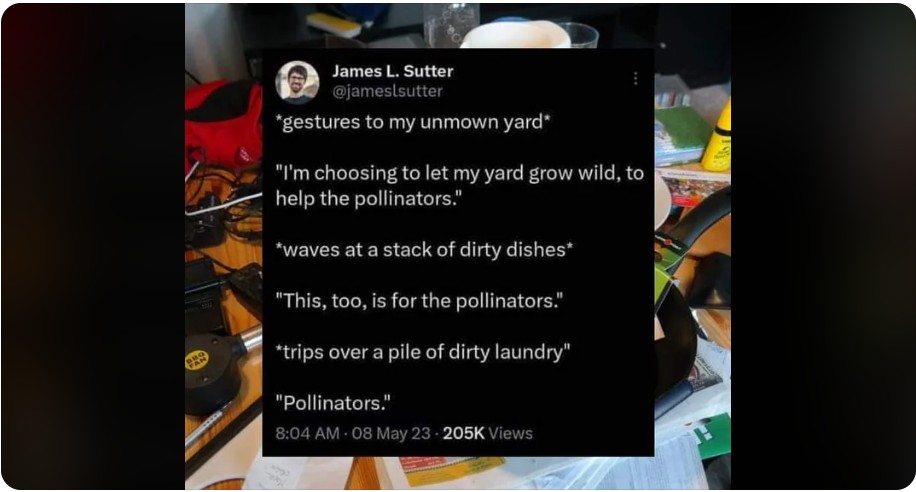
Image credit: [7]
There are a lot of grass patches coming up, and I do want to remove those, but I’ve also got native plant volunteers coming up everywhere, filling in empty spaces. I haven’t needed to plant because some of the flowers I absolutely love are reseeding prolifically. In that sense, once certain native plants are established, the garden can take care of itself. I personally think it looks a little too wild, but we haven’t heard anything from the borough yet, and I’ve had at least one unsolicited compliment (from a fellow native gardener).
Live and Let Live
I’m certainly going to continue doing my best to keep pace with the weeds in future years. I will absolutely need to keep eliminating invasives (e.g. various thistles [8] and Rose of Sharon [9]) and thinning out the more aggressive natives (e.g. milkweed [10] and pokeweed [11]). But I’m starting to think that I might go the route of keeping the beds adjacent to the house a little more tidy and just letting the ones farther out stay a little more wild. Even if that doesn’t result in any less actual work for me at the end of the day, I may ultimately go a little easier on myself and feel less overwhelmed with the amount of work that has to slide when life happens.
The Garden will never be done, but at least it’s something I love to do – it’s a peaceful, meditative, and (literally and figuratively) grounding experience. And when I do occasionally complete a task, I truly enjoy the resulting satisfaction and beauty. (When I recently rescued my back walk from grass and thistle to uncover beautiful natives that had been struggling for space all summer, I was positively giddy.)
And as for the rest of this year, here’s what will be going in the ground sometime this fall (provided they make it that long):
- 13 wild petunias – Ruellia nudiflora [12]
(Five of the initial 18 went into the ground and were rapidly demolished by some kind of local fauna, despite deer repellant) - 2 winterberry – Ilex verticillata [13]
(I put in two last year, but they didn’t make it to spring, along with several other plants) - 1 “gro-low” sumac – Rhus aromatica [14] – cultivar
- 3 royal ferns – Osmunda regalis [15]
- 5 wood poppies – Stylophorum diphyllum [16]
- 1 Echinacea purpurea ‘Cheyenne Spirit’ [17] – a seed-grown cultivar [18]
- 1 Salvia darcyi ‘Windwalker Royal Red’ [19] – not native to the eastern US… I might put it in a pot on the porch where I can watch the hummingbirds enjoy it
Thank you for coming along on this journey as I work to build something beautiful and beneficial in my little corner of the world, slow-going though it may be. Reflecting on the garden’s progress in spite of my care has been a nice reminder to take care of myself as well as the flowers.
~
Do you have native plants or rewilding practices you love? Please share them below!
And thanks for reading!
Keep Reading About the Garden –>
[1] https://radicalmoderate.online/pollinator-garden-update-2024/
[2] https://radicalmoderate.online/monarch-waystations/
[3] https://radicalmoderate.online/spicebush-planting-a-native-hedge/
[4] https://www.wildflower.org/plants/result.php?id_plant=MAVI2
[5] https://ncceh.ca/resources/evidence-briefs/urban-rewilding-and-public-health-considerations
[6] https://www.bobvila.com/articles/rewild-your-suburban-plot/
[7] https://www.reddit.com/r/adhdmeme/comments/13k7tdj/pollinators/
[8] https://radicalmoderate.online/thinning-a-thicket-of-thistle/
[9] https://radicalmoderate.online/bad-fences-make-good-neighbors-rose-of-sharon/
[10] https://radicalmoderate.online/monarch-waystations/
[11] https://radicalmoderate.online/bad-fences-make-good-neighbors-catchweed-and-pokeweed/
[12] https://www.wildflower.org/plants/result.php?id_plant=RUNU
[13] https://www.wildflower.org/plants/result.php?id_plant=ILVE
[14] https://www.wildflower.org/plants/result.php?id_plant=RHAR4
[15] https://www.wildflower.org/plants/result.php?id_plant=OSRE
[16] https://www.wildflower.org/plants/result.php?id_plant=STDI3
[17] https://www.wildflower.org/plants/result.php?id_plant=ecpu
[18] https://radicalmoderate.online/planting-a-pollinator-garden-part-1/
[19] https://www.shootgardening.com/plants/salvia-windwalker-royal-red-windwalker-series
0 Comments