It’s that time again: odd-numbered years in Pennsylvania mean judicial elections, which historically have lacklustre participation. Every two years in the fall, I dust off this particular soapbox and feel like a broken record, reminding Pennsylvanians of the critical importance of these elections – and the critical danger of staying home while living in a democracy. As a bumper sticker outside the recent No Kings rally in my hometown read, “History is made by those who show up.”
Judicial Retention 101
If it feels like there is some extra attention on this year’s election, it is probably because three of the seven justices in Pennsylvania’s Supreme Court are reaching the end of their 10-year terms, which means that all three are showing up on ballots across the state with a simple question: “Shall this justice be retained for an additional term as Justice of the Supreme Court of the Commonwealth of Pennsylvania?” In Pennsylvania, voters are given the opportunity to retain judges for additional terms until they reach the mandatory retirement age of 75, a process I described in more detail on this blog six(!) years ago. [1]
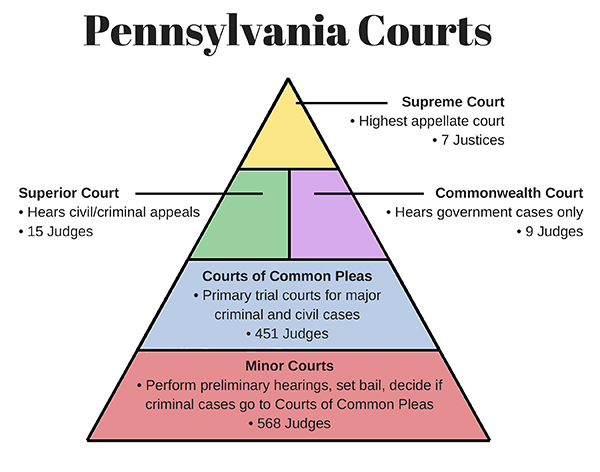
Image credit: [2]
From the Court of Common Pleas all the way up to the State Supreme Court, judges face the same process: candidates run for a 10-year term on the bench; at the end of that term, they can stay in the position for an additional term if voters choose to “retain” them in the position. The intention behind this system is that judges still need to answer to the electorate – a spot on the bench is not guaranteed for life. However, since judges up for retention are not running against another candidate, and since comparatively few Pennsylvanians get involved in judicial elections (less than half the turnout of presidential elections, by my count [3]), they tend to succeed with pretty healthy margins.
In fact, there has only been one appellate court judge in Pennsylvania’s history not to be retained since the retention vote system was created in 1968: Justice Russell Nigro. Interestingly, it appears that Justice Nigro’s ouster had nothing to do with his own behavior but was instead a referendum on an unpopular action by the state legislature, something in which he had no role. It just happened that this unpopular pay raise for state government was enacted during an odd-numbered year, and none of the legislators or the governor responsible for it were up for reelection. As a result, Nigro, who was up for retention, caught the brunt of the electorate’s ire. [4]
If a judge is not retained, the governor can appoint a judge to fill the vacancy until a special election can be held, provided that appointment is approved by the State Senate with a two-thirds majority. But in the next odd-numbered year, that judge will have to run for formal election to that seat in order to keep it. If you are a voter in Pennsylvania, you may have noticed that, while judges running for election are listed with one or more party affiliation, judges running for retention are not. The former situation is intended to provide information to voters about the judge’s positions, while the latter is intended to make the process nonpartisan, with decisions based on the judge’s record. At least that was the intention.

Image credit: [5]
Decisions, Decisions
Political ads about this year’s retention election feel anything but nonpartisan – because the ones I have seen are blatantly not. For the record, I try to keep my election blog posts as nonpartisan as possible, with the goal of educating voters and letting them make their own decisions. I even leave party affiliations off of my own personal research spreadsheet (linked below) when I am preparing to vote because I prefer to vote on someone’s record and merits, rather than base my decision solely on a letter after someone’s name.
But what upsets me about this election is that, even though the judiciary is supposed to be insulated from partisan politics once they’re on the bench, we have external entities that still view them based on a party label, and there is currently a strong push against retention for all three of these justices at once, based on party affiliation, not merit. Their removal would immediately open three seats on the seven-seat bench, forcing a special election for all three in 2027. (The three seats could remain vacant in the interim if our Republican Senate does not confirm our Democratic Governor’s appointments.) The obvious goal of the anti-retention effort is to create an opportunity fill those seats with justices of the other party’s affiliation. (I will note that Christine Donahue will turn 75 in 2027, and there will be an election for her seat at that time, regardless of what happens this November.)
While I tend to take Bar Association recommendations with a grain of salt (since they can be influenced by politics and personal connections), we the people don’t often have much insight into the black box of judicial proceedings and consequently have to rely on recommendations for or against retention when we vote. For that reason, it seems worth noting that the PA Bar Association has recommended all three of the Supreme Court justices for retention. In order to help voters make an informed decision, the records of all three have been covered in news outlets across the state, with Donahue, Dougherty, and Wecht being described respectively as being “of impeccable character,” possessing “a temperament and demeanor that is respectful and professional,” and discharging duties “as a justice with fairness.” [6]
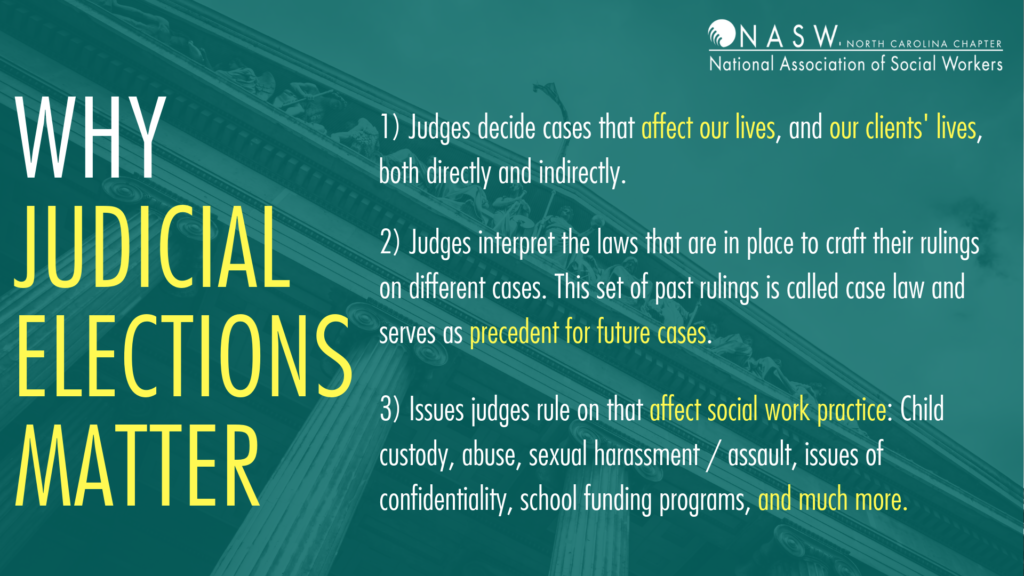
Image credit: [7]
But, of course, I regularly encourage you, dear readers, to do your own research when it comes to elections and not just take my word for it. And there are plenty of resources available for that purpose, including a conversation with all three justices, [8] their biographies, [9] and their responses to PA Bar Association questionnaires. [10] I also encourage you to take a look at the down-ballot races as well, including elections and retentions in the Superior and Commonwealth Courts and, depending on where you live, a Court of Common Pleas. For more detail on what to look for in a judge who reflects your values, I have a blog post for that too (one of my most popular ones). [11]
If you have ever held your breath in anticipation of a US Supreme Court ruling, you need to exercise your voice in the makeup of lower courts. If you can vote, there is no election too small for your attention. If you live in Pennsylvania, please make note of these rapidly approaching deadlines: [12]
- Last day to register to vote: Monday, October 20, 2025
- Suggested last day to request a mail-in or absentee ballot: Monday October 20, 2025
- Deadline to request a mail-in or absentee ballot: Tuesday, October 28, 2025
- Election Day: Tuesday, November 4, 2025
- Your mail-in ballot must be received by your county by 8pm on Tuesday, November 4, 2025
And in case it’s helpful to you, I have included my own election research, covering the State of Pennsylvania and Allegheny County:
Thanks for reading!
[1] https://radicalmoderate.online/november-2019-election-guide-part-1/
[2] https://whyy.org/articles/explainer-how-does-pas-court-system-work/
[3] https://www.electionreturns.pa.gov/General/SummaryResults
[4] https://en.wikipedia.org/wiki/Russell_M._Nigro
[5] https://www.youtube.com/watch?v=Yw_CtUR9Lh0
[6] https://whyy.org/articles/pennsylvania-election-2025-supreme-court-retention-2/
[7] https://www.naswnc.org/page/JudicialElections
[8] https://www.youtube.com/watch?v=TD8ms91fto4
[9] pacourts.us/courts/supreme-court/supreme-court-justices
[10] www.pabar.org/site/For-Lawyers/Committees-Commissions/Judicial-Evaluation/Resources/JEC-Ratings/2025
[11] https://radicalmoderate.online/may-2021-election-guide-pa-primaries-part-3/
0 Comments