Part 2 – Across the Chasm
When I was writing Part 1 of this series, I was about as angry as I could be, given the energy I had available to expend on emotions. I was frustrated that I had caught COVID-19 for the second time in two years (while traveling, despite additional precautions I take during travel), that public guidance about how we should continue to deal with the virus is (I believe) hard to find and unclear, and that there is now uncertainty about what resources for prevention will even be available to Americans in the days to come. I am happy to say that – health-wise – I am on the upswing (not great; not terrible) while writing part two, but the negative emotions about our larger situation remain.
Do Your Part
My first order of business once I learned I was positive was to figure out the latest guidance for isolation and preventing the spread. Taking the reins of a public health organization at the beginning of March 2020 meant I had to get up to speed on the virus, preventative measures, and treatment options very quickly; the same was true when we started going back into the office in Summer 2021 after vaccines were available. I have not, however, stayed up to date with guidance as it has become more lax over time – partially because I like to err on the side of caution when the health of others at stake and partially because there’s simply too much else to keep track of these days.
As I mentioned in last week’s post, successful variants of the virus have become less lethal over time, as successful viruses tend to do. (It doesn’t do much good for a virus to kill its host before it can spread to another one.) The modern flu killed almost 4,000 people in the US in 2023, [1] which is a far cry from the 675,000 killed in 1918 by the Spanish Flu, widely believed to be its predecessor. [2] That doesn’t mean that those 4,000 deaths aren’t a big deal – especially for those 4,000 people and their families. Similarly, while there weren’t sufficient testing supplies to confirm the true count of COVID-19 deaths in 2020, there were more than 500,000 excess deaths in the United States that year; [3] compare that to 76,000 COVID-19 deaths in 2023.
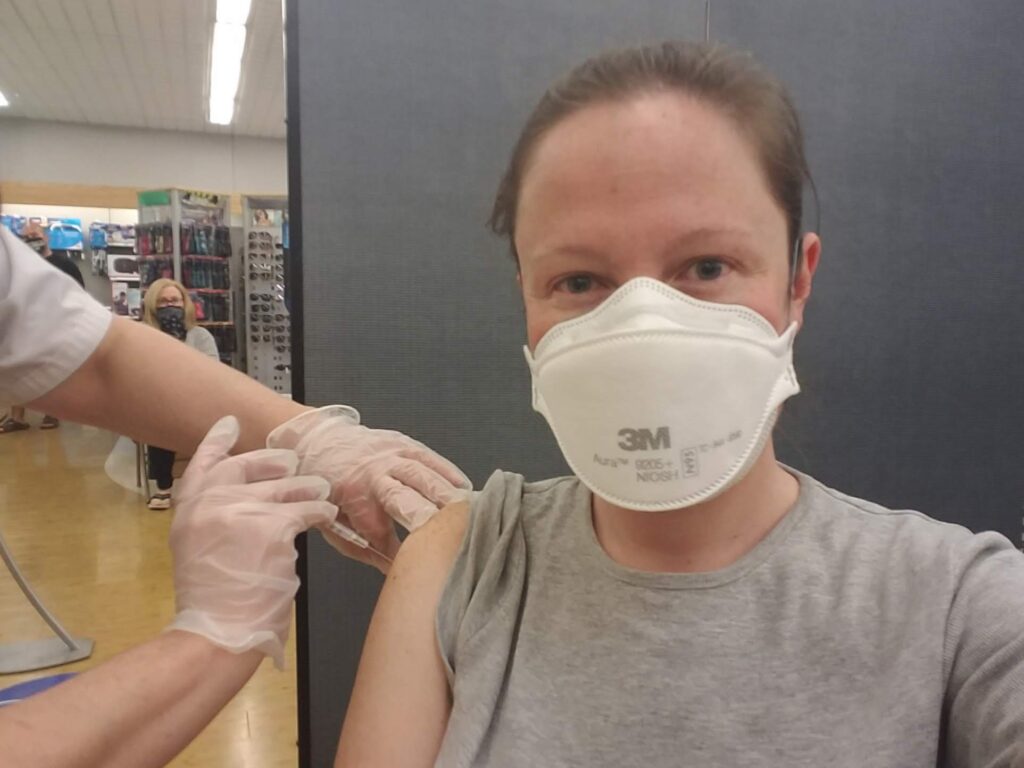
With all that said, part of the fight against infectious diseases involves doing our part to fight them, not just waiting for them to become less lethal. Christian and I have exercised additional caution over the years while traveling because neither one of us wants to be responsible for killing someone’s grandma. A big part of fighting back against the spread of these viruses is annual vaccinations. Unfortunately, only about half of American adults tend to get the annual flu vaccine (the goal is 70%), [4] and less than a quarter got the latest COVID-19 vaccine during the 2024-25 season. [5]
Mother, Should I Trust the Government?
Yes, there are people with certain medical conditions who should not be getting certain vaccines for medical reasons, but that segment of the population is incredibly small, and the more people who can and do get vaccinated means a safer environment for people who can’t. I fully admit that while I believed in the standard panel of vaccinations that are required for kids for school, I was a flu vaccine skeptic for many years, believing that they didn’t work or could even make you sick. It wasn’t until I did a bunch of research on vaccines during lockdown that I started to understand the nuances of vaccine development and deployment – and how those skeptical perceptions can easily arise from anecdotal evidence that is grounded in coincidence, not causality. [6] Having learned more about the subject than I ever thought I would, I got my first-ever flu shot in tandem with my first COVID-19 booster in the fall of 2021 (and have gotten one every year since).
Vaccines do help prevent the spread of the virus, but they aren’t the only thing that does – and multiple measures should be used in conjunction with each other. Guidance from the Centers for Disease Control and Prevention in March 2025 was still recommending staying up to date on vaccines, practicing good hygiene, and taking steps for cleaner air. [7] “Good hygiene” involves covering your nose and mouth while coughing and sneezing (but makes no specific mention of wearing masks), washing hands thoroughly, and cleaning surfaces (note: last I checked there was still no evidence of surface transmission of COVID-19, but it’s still a good practice for other illnesses). [8] Cleaning the air involves improving ventilation by opening windows, using air purifiers (note: some are effective in preventing the spread of COVID-19, and some aren’t, depending on filter quality), and gathering outside. [9]
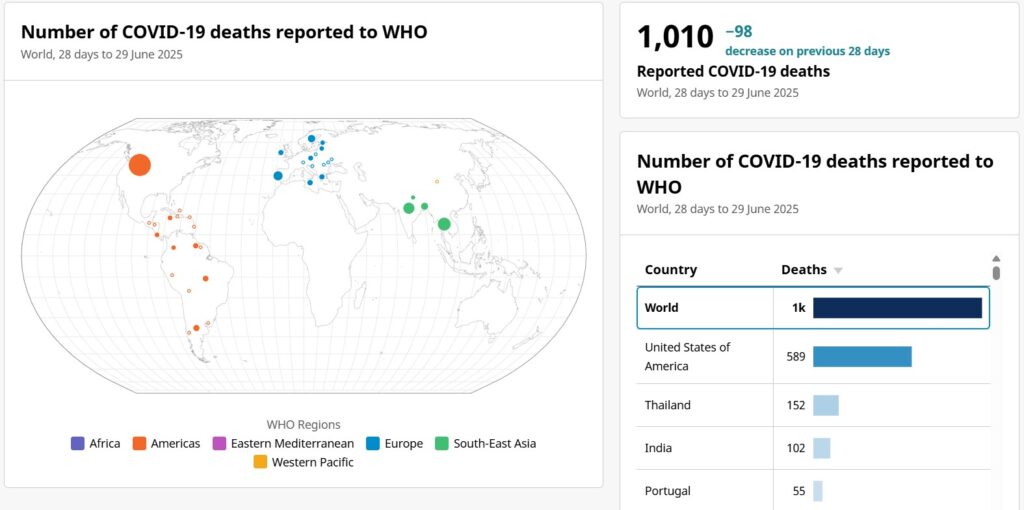
Image credit: [10]
However, the field of public health has become hyper-partisan in the time of COVID-19, and we are seeing policy decisions informed by political platforms, not available science – a trend that will have potentially serious consequences for the health of those across our country. We already had a COVID booster rate below 25% this past winter, but in May “Health and Human Services (HHS) Secretary Robert F. Kennedy, Jr., announced the vaccine will no longer be recommended for healthy children or pregnant women, a move that breaks with previous expert guidance.” Also in May, the Food and Drug Administration published a framework stating that only people over 65 and those with at least one high-risk medical condition would have COVID-19 boosters available to them. [11] It remains unclear whether people outside those categories will even be able to get boosters if they want them, and, if they can, whether insurance will pay for them.
In the midst of this research and my despair over the state of public health in our country, I was still simply trying to figure out when I could go back to work and see other people in person. I am not an authority in this subject, but I will tell you that my decision was based on my interpretation of the incredibly vague guidance that was out in March 2024. Granted, these guidelines struck me as a little loose and subjective, but I also recognize that the administration that put them in place was trying to balance negative health consequences of having sick people working with negative economic consequences of having sick people staying home. (Don’t get me started on the fact that there are negative economic consequences to sick people getting other people sick. But I digress…) Nevertheless, CDC’s isolation guidance at the time for people contracting COVID-19 was as follows:
- Once your symptoms (if you have them) begin to improve or your fever (if you have one) goes away, wait 24 hours, and then you can resume normal activities with added precautions (e.g. masking, physical distancing) [12]
- Masks are encouraged as an additional strategy for when 1) incidence of illness is high, 2) you / those around you are sick or recovering, 3) you / those around you have high risk factors for severe illness. [13]
Where Do We Go From Here?
After everything I’ve shared about our high skepticism of available science, low vaccination rates, and unclear, difficult-to-find guidance on preventing the spread of COVID-19 in the US, it should be no surprise that we are still seeing unreasonably high death counts from the virus. In fact, of the approximately 1,000 global COVID-19 deaths reported to the World Health Organization for the month of June 2025, over half of them were in the United States. [14] And while several hundred deaths a week is small compared to the early days of the pandemic, each one is still a tragedy for the families involved – and a largely preventable tragedy at that. For those reasons, I don’t understand why there is so much resistance to what I would consider to be minor inconveniences of wearing a mask and getting a shot.
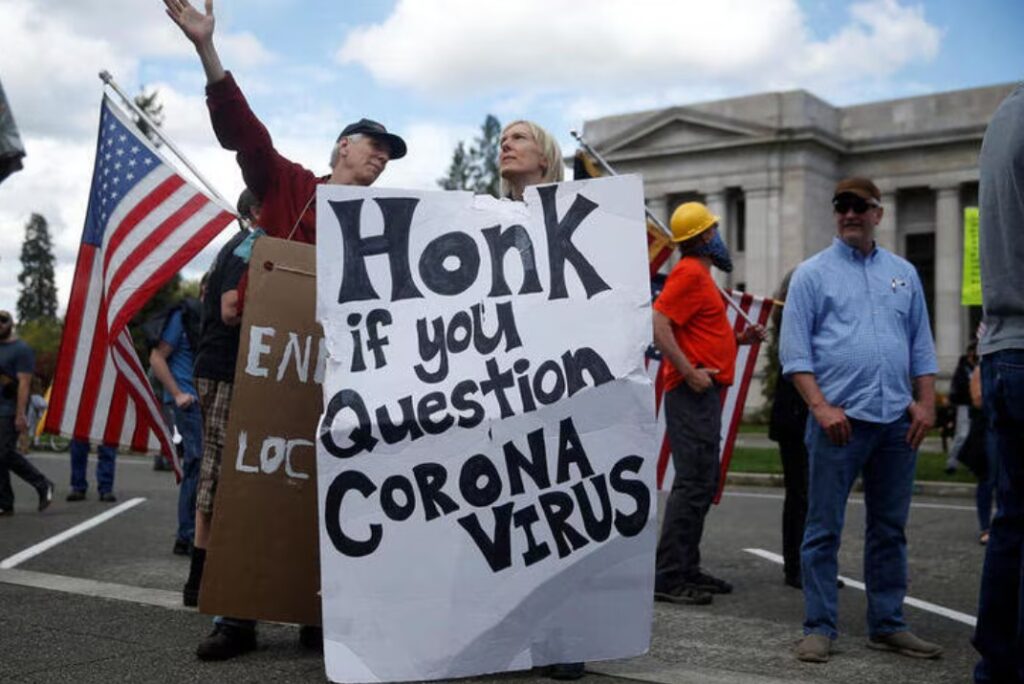
Image credit: [15]
But… with all that said… I recognize that everyone has different lived experiences and responds to similar situations differently – and just because my experiences are mine doesn’t make them more valid than anyone else’s. Some people distrusted the last administration; some distrust the current one; some distrust them all. In the age of so much available information (with so little of it reliable) it can be difficult to know whom to trust. And when you raise the stakes by adding death as a possible outcome, it is much more comforting to cling to certainty in something (even if it is unfounded) than admit that we don’t know everything and recognize that science only answers the questions we ask. Humans are inherently emotional beings, and we generally react with heightened emotions in times of heightened stress – which is why shouting facts at someone who disagrees with you generally doesn’t work. (It can make you feel good in the moment, but it is ultimately unproductive.)
My biggest takeaway from last year’s Climate Lab program was the reminder that anger and denial are stages of grief. [16] If you’re encountering someone who is angry about masking guidance or denies the efficacy of vaccines, they may be grieving a COVID-related loss or a potential loss (of a family member, job, way of life, or something else). And if I’ve learned anything about grief over the last two years, it’s that the most effective way to respond to it is to see it, name it, and bring it into the light. You may not have the emotional bandwidth to dive into the concerns of someone who disagrees with you on a fundamental level (and that person may not feel enough trust to be open with you if you make the offer), but I will say that you do not have to agree with someone or justify their worldview in order to give them a little grace. And – speaking from experience – once someone feels seen, heard, and understood, they may be a little more open to seeing, hearing, and understanding you.
~
What are your thoughts? I’ve gotten some really negative feedback on that last opinion before, and I’m curious how you feel – or if you plan to do anything differently as a result of this post.
Thanks for reading!
[1] https://www.cdc.gov/nchs/fastats/flu.htm
[2] https://www.paho.org/en/who-we-are/history-paho/purple-death-great-flu-1918
[3] https://en.wikipedia.org/wiki/COVID-19_pandemic_in_the_United_States#Statistics
[5] https://abcnews.go.com/Health/300-people-us-dying-covid-week/story?id=122068959
[6] https://radicalmoderate.online/why-i-got-vaccinated/
[7] https://www.cdc.gov/covid/prevention/index.html
[8] https://www.cdc.gov/respiratory-viruses/prevention/hygiene.html
[9] https://www.cdc.gov/respiratory-viruses/prevention/air-quality.html
[10] https://data.who.int/dashboards/covid19/deaths
[11] https://www.bu.edu/articles/2025/covid-vaccine-guideline-changes/
[12] https://www.cdc.gov/respiratory-viruses/prevention/precautions-when-sick.html
[13] https://www.cdc.gov/respiratory-viruses/prevention/masks.html
[14] https://data.who.int/dashboards/covid19/deaths
[15] https://www.abc.net.au/news/2020-05-03/coronavirus-sceptics-continue-to-downplay-covid19/12201344
[16] https://radicalmoderate.online/climate-lab-hawaii-insights/
0 Comments