Disclaimer: I am not a medical professional – just a curious researcher and adventurous eater. Always follow proper preparation instructions for foraged ingredients and seek medical advice before consuming foods with known human toxicity.
I’m always looking for new and interesting things to do in my kitchen and in my garden, particularly when it involves historic uses of plants. When those worlds intersect, the result will most certainly show up here on this blog. I recently learned that certain species of milkweed are edible – and that parts of the plants were used for medicinal purposes by Native Americans. Since patches of common milkweed are now expanding throughout my yard, [1] I had a ready source for ingredients in potential recipes.
Asclepias, a Panacea?
The genus to which milkweed belongs is named after Asclepius, the god of medicine in ancient Greek mythology. (You will probably recognize the Rod of Asclepius, a snake-entwined staff, used by medical organizations as a symbol of medicine and healing.) [2] Asclepias, the genus, contains some 200 species of milkweed that are native to widespread locations around the globe, including North America, South America, and Africa. Most species are toxic to humans (and other animals), but certain parts of certain species, if prepared properly, can be eaten in moderation and have been used throughout history to treat a variety of health conditions. [3]
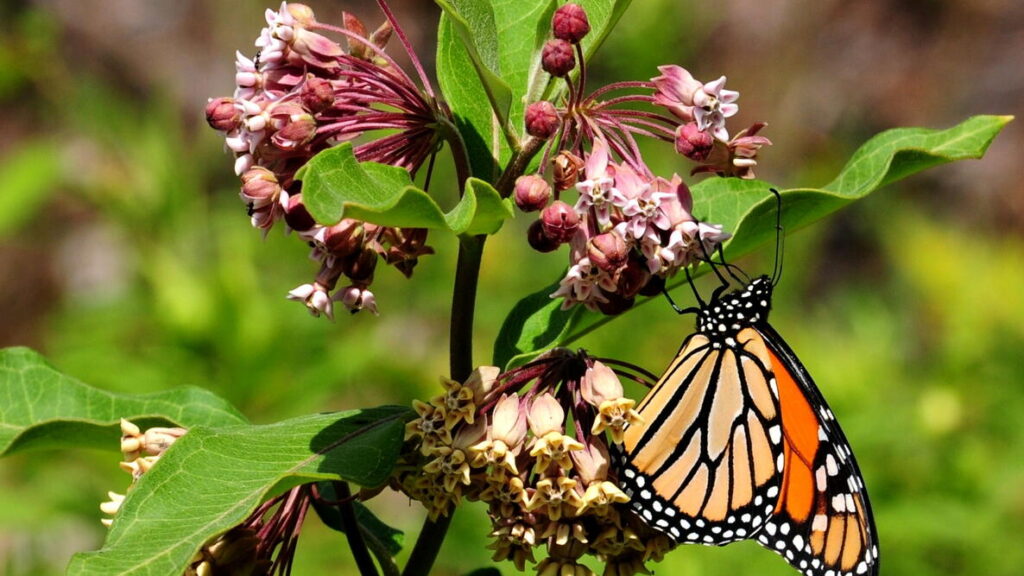
Image credit: [4]
Of the three milkweed species I have in my yard (all native to my region, thank you), “butterfly weed” (Asclepias tuberosa) seems to be referenced most frequently online in content concerning medicinal uses, particularly related to breathing (which, I assume, influenced the species name). It was used by the Omaha and Poncas tribes to treat bronchial and pulmonary troubles [5] and was included in the National Formulary through 1936 as a treatment for pleurisy (inflammation of the lining around the lungs). [6]
However, “common milkweed” (Asclepias syriaca) seems to have been used for a wider range of issues, if the US Department of Agriculture summary sheet is any indication. Various parts of the plant and preparations of them were used by many tribes throughout North America to treat a variety of issues, including backaches, stomachaches, chest discomfort, gravel (kidney stones), dropsy (edema), mastitis, venereal diseases, warts, ringworm, and bee stings. It was also used as a laxative, a “female remedy” (now there’s a euphemism I haven’t heard before), and a contraceptive. [7]
Asclepius, Heal Thyself!
In reading I’ve done over the years about historic medicines and the use of various plants for remedies, there are many instances where a little bit of something is beneficial, while a lot of it is harmful. Indeed, as the old adage goes, “the dose makes the poison.” And although there is historic evidence for milkweed being used to treat or prevent certain health conditions, it can also be incredibly harmful to humans and other animals in large quantities. The compound of concern in the plant is called a cardiac glycoside, which can be found in the genera (plural of genus!) Asclepias (milkweeds) and Digitalis (foxgloves). Cardiac glycosides can reduce heart rate, making them lethal in high doses… or beneficial for treating arrhythmias in the correct amount.
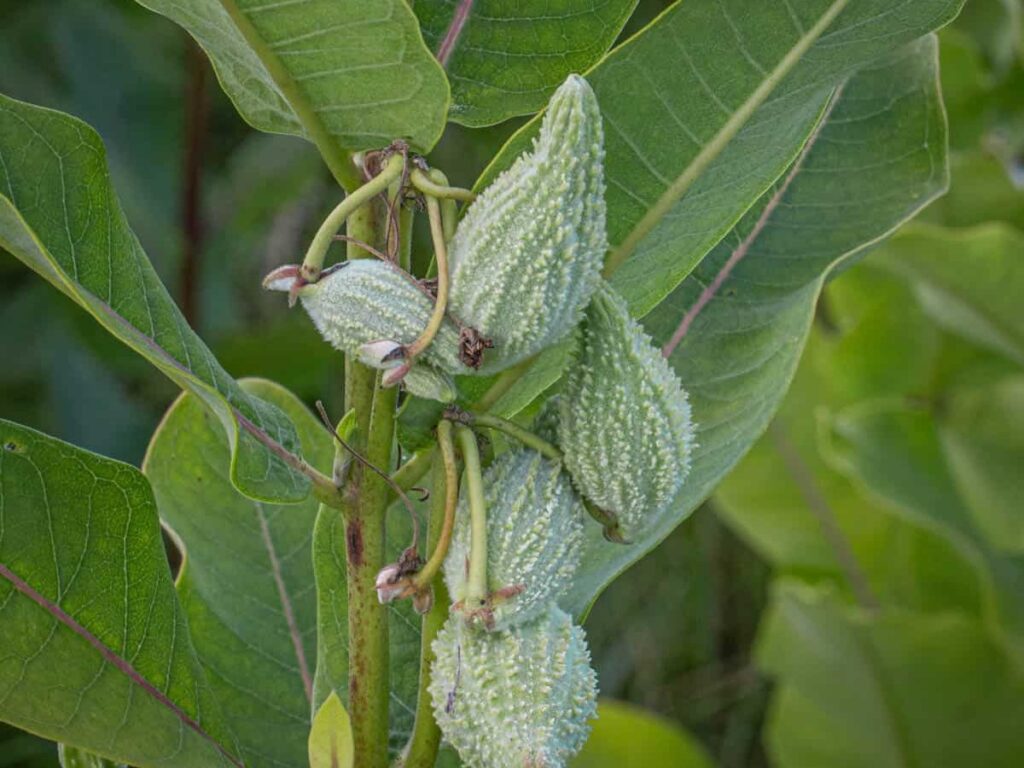
Image credit: [8]
It should go without saying, again, that you should always forage at your own risk. Milkweed is not the first toxic plant I’ve brought into my kitchen, [9], [10], but it is still important to be completely sure you have the plant you think you have, to do your research about how to process ingredients to reduce or remove hazards, and to consume them in moderation. Many poisons taste bitter to humans, [11] which may help with not eating too much in one sitting, but it doesn’t exactly recommend them for culinary experimentation, either. (Although, some of us like bitter flavors, which apparently means we may need our own warning labels… [12])
In multiple instances, I have seen similar recommendations for avoiding or reducing exposure to plant toxins, including picking younger leaves, shoots, etc., as well as blanching or parboiling them before cooking with them. Both of those recommendations were the case with common milkweed when I looked into it for this experiment, though that may have been more for ease of consumption than safety reasons. [13] Apparently you can cook with the spring shoots (of which I always have plenty when I thin them out), the flower buds (which I won’t do, since the whole Garden Project [14] was built around having milkweed for pollinators), and the seed pods (which I was more than happy to try, since it’s always a chore in the fall to pick them before they start exploding all over my garden.)
Recipe: Summer Spaghetti with Milkweed Pods
Milkweed pods should come from plants you know to be safe and not covered with insecticides, herbicides, or car exhaust. Pick them when they are small (1-2 inches long), and don’t use any that are already split open. The seeds inside should still be white. [15] After traveling for a week and then spending about a week on the couch with COVID-19, [16] I was a little late to get myself a big crop of small milkweed pods. But I picked about 12 ounces, which was enough for this recipe, which I modified from Forager Chef. [17]
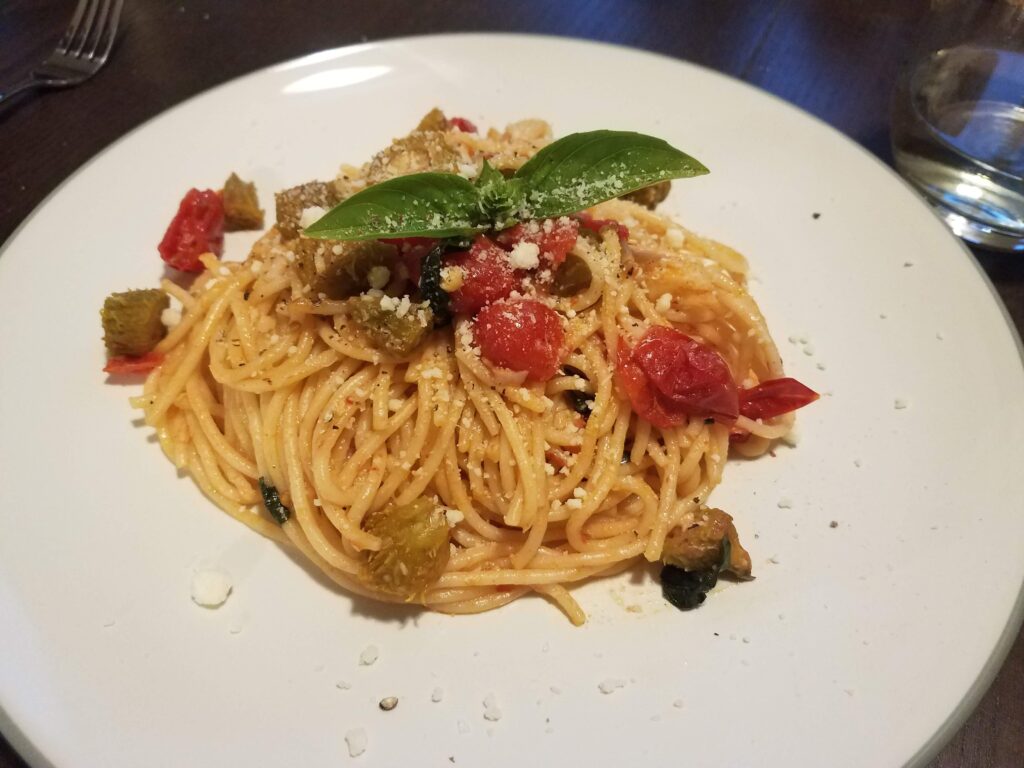
Here’s what I did, with the caveat that if it’s your first time eating milkweed, you should start with small quantities and blanch them first:
- 1 lb pasta
- 1/4 c olive oil (you may need more, but beware that the milkweed will soak up what you give it, making the dish very heavy)
- 1 bulb garlic, sliced
- 12 oz milkweed pods (if they’re longer than 1″ slice them into 1/4″ rounds)
- 1.5 lbs cherry or plum tomatoes, sliced
- Salt, pepper, crushed red pepper
- Handful basil leaves, torn
Boil 1 lb pasta in salted water for 2 minutes less than package instructions. Heat olive oil in large pan, sauté garlic for a few minutes, add milkweed pods and stir until they’re bright green (reduce heat if necessary), add tomatoes and stir, add spices to taste, add basil leaves at the end when pasta is ready. Reserve 1 c pasta water and add to pan, toss pasta to coat. When serving, top with additional basil (and pecorino if you’re not trying to make it vegan!)
Some websites have described milkweed pods as a delicious treat or as non-slimy okra (which I hate). I thought they were fine but didn’t taste like anything in particular – fibrous and flavorless. Mostly I just got a kick out of cooking with something from my yard, especially something that is aggressive and needs to be thinned out and dead-headed anyway. Christian (my test subject) was not a fan of the dish – he described the pods as “weird,” and I finished what he didn’t. I’ll be curious to try some more recipes next year, including some with asparagus in the spring, to see if I can find something that makes this ingredient as tasty as it is plentiful.
(And as for the pods’ medicinal effects, I can only speak to some very mild laxative properties… or maybe that was a result of eating almost half a pound of fiber. Who’s to say?)
~
Have you tried cooking with milkweed? What did you think, and do you have a recipe to share? I’d love to hear about it below.
Thanks for reading!
[1] https://radicalmoderate.online/milkweed-monarchs/
[2] https://en.wikipedia.org/wiki/Asclepius
[3] https://en.wikipedia.org/wiki/Asclepias
[4] https://www.almanac.com/common-milkweed-uses-and-natural-remedies
[5] https://plants.usda.gov/DocumentLibrary/plantguide/pdf/pg_astu.pdf
[6] https://www.motherearthgardener.com/plant-profiles/milkweed-benefits-ze0z1801zols/
[7] https://plants.usda.gov/DocumentLibrary/plantguide/pdf/cs_assy.pdf
[8] https://foragerchef.com/milkweed-pods/
[9] https://radicalmoderate.online/yarrow-drug-of-the-future-and-the-past/
[10] https://radicalmoderate.online/may-feast/
[11] https://www.sciencedirect.com/science/article/abs/pii/B978012375003700008X
[12] https://pubmed.ncbi.nlm.nih.gov/26431683/
[13] https://foragerchef.com/milkweed-pods/
[14] https://radicalmoderate.online/pollinator-garden-update-2023/
[15] https://foragerchef.com/milkweed-pods/
[16] https://radicalmoderate.online/nimbus-two-thousand-and-twenty-five-part-1/
[17] https://foragerchef.com/spaghetti-with-milkweed-pods-heirloom-tomatoes-garlic-oil-and-basil/
0 Comments